In the dynamic realm of art industries, the integrity and performance of rollers play a pivotal role in ensuring the smooth execution of various processes. Roller welding repair emerges as a crucial service that not only extends the lifespan of these essential components but also maintains the high - quality standards required in artistic production. As a dedicated Roller Welding Repair supplier, I am well - versed in the multifaceted requirements of this specialized field.
Material Compatibility
One of the fundamental requirements for roller welding repair in art industries is material compatibility. Rollers used in art - related processes can be made from a variety of materials, including steel, aluminum, and specialized alloys. Each material has its own unique properties, such as melting point, thermal conductivity, and hardness.
When performing welding repair, it is essential to select a filler material that is compatible with the base material of the roller. For instance, if the roller is made of stainless steel, a stainless - steel filler wire should be used. Using an incompatible filler material can lead to issues such as poor fusion, cracking, and reduced mechanical properties. This can ultimately compromise the performance of the roller and affect the quality of the artistic output.
Moreover, the surface condition of the roller also matters. Before welding, the roller surface must be thoroughly cleaned to remove any contaminants, such as grease, oil, rust, or paint. Contaminants can interfere with the welding process, causing porosity, inclusions, and other defects in the weld. A clean surface ensures better wetting and adhesion of the filler material, resulting in a stronger and more reliable weld.


Precision and Accuracy
Precision is of utmost importance in roller welding repair for art industries. Rollers often need to meet strict dimensional tolerances to ensure proper functioning in the artistic equipment. Any deviation from the specified dimensions can lead to problems such as uneven pressure distribution, misalignment, and poor product quality.
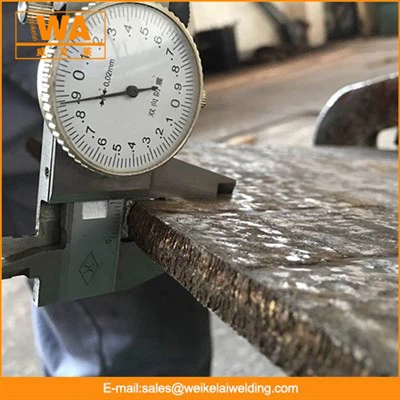
During the welding repair process, accurate measurements must be taken to determine the extent of damage and the required amount of filler material. Advanced measuring tools, such as calipers, micrometers, and coordinate measuring machines (CMMs), can be used to ensure precise measurements. Additionally, proper fixturing and clamping techniques should be employed to hold the roller in place during welding, preventing any movement that could affect the accuracy of the repair.
The welding process itself also requires a high level of precision. Welders need to control parameters such as welding current, voltage, travel speed, and wire feed rate to achieve a consistent and uniform weld bead. Even small variations in these parameters can lead to differences in the weld quality, such as bead width, height, and penetration. For example, an excessive welding current can cause over - penetration and distortion of the roller, while a low current may result in insufficient fusion.
Aesthetic Considerations
In art industries, the appearance of the rollers can be as important as their functionality. After welding repair, the roller should not only perform well but also have an aesthetically pleasing finish. This is especially crucial for rollers that are visible in the final artistic product or in the production environment.
The weld area should be carefully finished to blend in with the rest of the roller surface. This may involve grinding, polishing, or machining the weld bead to achieve a smooth and uniform appearance. Surface treatments, such as painting or coating, can also be applied to improve the visual appeal of the roller and protect it from corrosion.
Furthermore, the color and texture of the roller should match the overall design requirements of the art project. For example, in a high - end art installation, the rollers may need to have a specific finish that complements the surrounding environment. As a Roller Welding Repair supplier, we understand these aesthetic requirements and work closely with our clients to ensure that the repaired rollers meet their visual expectations.
Quality Assurance
Quality assurance is a non - negotiable requirement in roller welding repair for art industries. We implement a comprehensive quality control system to ensure that every repaired roller meets the highest standards.
This includes pre - welding inspections to assess the condition of the roller and identify any potential issues. During the welding process, in - process inspections are carried out to monitor the quality of the weld, including visual inspections for defects such as cracks, porosity, and lack of fusion. Non - destructive testing methods, such as ultrasonic testing (UT), magnetic particle testing (MT), and dye penetrant testing (PT), can also be used to detect internal and surface defects that may not be visible to the naked eye.
After the welding repair is completed, a final inspection is conducted to verify that the roller meets all the specified requirements, including dimensional accuracy, mechanical properties, and aesthetic appearance. We also provide detailed documentation of the repair process, including welding procedures, inspection reports, and test results, to ensure traceability and accountability.
Industry - Specific Requirements
Different art industries may have their own unique requirements for roller welding repair. For example, in the printing industry, rollers are used to transfer ink onto paper. These rollers need to have a smooth and uniform surface to ensure consistent ink transfer. Any irregularities in the roller surface can result in streaks, smudges, or other printing defects.
In the textile industry, rollers are used in various processes such as dyeing, printing, and finishing. The rollers need to be resistant to chemicals, abrasion, and high temperatures. Welding repair in this industry requires the use of materials and techniques that can withstand these harsh conditions.
In the glass art industry, rollers are used to shape and form glass. The rollers need to have a high - precision surface to ensure accurate glass shaping. Welding repair in this industry must be carried out with extreme care to avoid any damage to the roller surface that could affect the quality of the glass products.
Our Services as a Roller Welding Repair Supplier
As a Roller Welding Repair supplier, we offer a wide range of services to meet the diverse requirements of art industries. Our team of experienced welders and technicians is trained to handle different types of rollers and welding processes.
We provide Welding Rebuild On Roller services, which involve restoring damaged rollers to their original condition or even improving their performance. Our welding techniques are designed to minimize distortion and ensure a strong and durable weld.
We also specialize in the repair of Coal Pulverizer Tables and Repair Coal Mill Table Liners. Although these are more commonly associated with industrial applications, they can also be relevant in some art industries where coal - fired processes are used for heating or energy generation.
We understand that time is of the essence in the art industries. That's why we offer fast turnaround times without compromising on quality. We work closely with our clients to understand their specific needs and provide customized solutions. Whether it's a small - scale art project or a large - scale industrial application, we are committed to delivering the best roller welding repair services.
Conclusion
Roller welding repair in art industries is a complex and specialized field that requires a combination of technical expertise, precision, and attention to detail. From material compatibility and precision to aesthetic considerations and quality assurance, every aspect of the repair process must be carefully managed to meet the unique requirements of the art industries.
As a Roller Welding Repair supplier, we are dedicated to providing high - quality repair services that not only extend the lifespan of rollers but also enhance the performance and appearance of these essential components. If you are in need of roller welding repair services for your art - related projects, we invite you to contact us for a consultation. We look forward to working with you to meet your specific needs and exceed your expectations.
References
- ASME Boiler and Pressure Vessel Code, Section IX - Welding and Brazing Qualifications
- AWS D1.1/D1.1M:2020 Structural Welding Code - Steel
- ISO 9001:2015 Quality management systems - Requirements