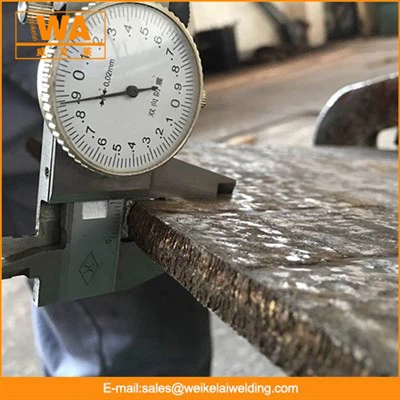
In the industrial landscape, wear resistant pipes play a pivotal role in various applications where the conveyance of abrasive materials is a daily occurrence. As a leading Wear Resistant Pipe supplier, I've witnessed firsthand the critical importance of these pipes in ensuring the smooth and efficient operation of industrial processes. In this blog, I'll delve into the standards for wear resistant pipes, shedding light on what makes a high - quality wear resistant pipe and why it matters for your business.
1. Material Composition
The material of a wear resistant pipe is the cornerstone of its performance. Different materials offer varying degrees of wear resistance, corrosion resistance, and strength.
1.1 Alloy Steel
Alloy steel is a popular choice for wear resistant pipes. It contains elements such as chromium, nickel, and molybdenum, which enhance its hardness and toughness. Chromium, for instance, forms a hard carbide phase that resists abrasion. The addition of nickel improves the pipe's ductility and corrosion resistance. Molybdenum further enhances the strength and hardenability of the steel. High - quality alloy steel pipes are heat - treated to optimize their microstructure, ensuring consistent performance. For applications in mining, where the pipes are exposed to sharp and abrasive minerals, alloy steel pipes can provide reliable service. Our Wear Resistant Pipe made of premium alloy steel undergoes strict quality control to meet the highest industry standards.
1.2 Ceramic - Lined Pipes
Ceramic - lined pipes are another excellent option for extreme wear conditions. These pipes consist of a ceramic lining bonded to a steel outer shell. Ceramics, such as alumina or silicon carbide, are extremely hard and have excellent wear resistance. They can withstand high - velocity impacts and abrasive particle flow. In industries like power generation, where coal ash and other abrasive materials are transported, ceramic - lined pipes can significantly extend the service life of the piping system. The bonding between the ceramic lining and the steel shell is crucial. A strong bond ensures that the ceramic lining remains intact and provides continuous protection against wear.
1.3 Hardfacing Materials
Hardfacing is a process of applying a wear - resistant layer to the surface of a pipe. Hardfacing Abrasion Elbows are a prime example of this technology. The hardfacing materials are typically alloys with high levels of tungsten, chromium, and other hardening elements. These materials are deposited on the pipe surface using processes like welding or thermal spraying. The thickness and quality of the hardfacing layer are important factors. A well - applied hardfacing layer can provide a long - lasting barrier against wear, especially in areas where the pipe is subject to high - stress abrasion, such as elbows and bends.
2. Dimensional Accuracy
Dimensional accuracy is essential for wear resistant pipes. Incorrect dimensions can lead to installation problems, leaks, and reduced performance.


2.1 Outer Diameter and Wall Thickness
The outer diameter of a wear resistant pipe must be within a specified tolerance range. This ensures that the pipe can be properly connected to other components in the piping system. For example, if the outer diameter is too large, it may not fit into the flanges or couplings. If it is too small, there may be leaks. The wall thickness is also a critical dimension. A uniform wall thickness is necessary to ensure consistent wear resistance throughout the pipe. Our Wear Resistant Straight Pipe is manufactured with high - precision machinery to achieve accurate outer diameters and wall thicknesses.
2.2 Length and Straightness
The length of the pipe should be as specified by the customer. Any deviation from the required length can cause problems during installation. Straightness is also important, especially for long pipes. A pipe that is not straight may cause flow disturbances, which can increase wear and reduce the efficiency of the system. Special manufacturing processes and quality control measures are employed to ensure that the pipes are straight and meet the length requirements.
3. Wear Resistance Performance
The primary function of a wear resistant pipe is to resist wear. Several factors contribute to its wear resistance performance.
3.1 Abrasion Resistance
Abrasion resistance is the ability of the pipe to withstand the rubbing or scraping action of abrasive particles. This is typically measured using tests such as the ASTM G65 standard, which involves a dry sand/rubber wheel abrasion test. Pipes with high abrasion resistance can handle abrasive materials like sand, gravel, and coal without significant wear. The material composition, surface hardness, and microstructure of the pipe all affect its abrasion resistance.
3.2 Erosion Resistance
Erosion occurs when the pipe is exposed to high - velocity fluid flow containing abrasive particles. Erosion resistance is crucial in applications such as slurry transportation. Pipes with good erosion resistance can withstand the impact of the particles and maintain their integrity over time. The design of the pipe, including its shape and internal surface finish, can also influence its erosion resistance. For example, smooth internal surfaces can reduce the turbulence of the fluid flow and minimize erosion.
3.3 Impact Resistance
In some applications, the pipes may be subject to impact loads. Impact resistance is the ability of the pipe to absorb and withstand these impacts without cracking or breaking. This is important in industries like mining, where the pipes may be hit by large rocks or other heavy objects. The toughness of the pipe material and its ability to deform plastically under impact are key factors in determining its impact resistance.
4. Surface Finish
The surface finish of a wear resistant pipe can have a significant impact on its performance.
4.1 Smoothness
A smooth internal surface reduces friction and turbulence in the fluid flow. This not only improves the efficiency of the system but also reduces wear. When the fluid flows smoothly, the abrasive particles are less likely to cause damage to the pipe wall. Special polishing and finishing processes are used to achieve a smooth surface finish on our wear resistant pipes.
4.2 Coating and Linings
In addition to the base material, the surface of the pipe may be coated or lined with materials that enhance its wear resistance. For example, a polymer coating can provide additional protection against corrosion and abrasion. The quality of the coating or lining, including its adhesion to the pipe surface and its thickness, is important. A well - applied coating or lining can significantly extend the service life of the pipe.
5. Quality Control and Testing
Quality control and testing are integral parts of the manufacturing process for wear resistant pipes.
5.1 Non - Destructive Testing
Non - destructive testing methods, such as ultrasonic testing, magnetic particle testing, and radiographic testing, are used to detect internal defects in the pipes. These tests can identify cracks, porosity, and other flaws that may affect the performance of the pipe. By detecting these defects early, we can ensure that only high - quality pipes are delivered to our customers.
5.2 Destructive Testing
Destructive testing, such as tensile testing and hardness testing, is also carried out to evaluate the mechanical properties of the pipes. Tensile testing measures the strength and ductility of the pipe material, while hardness testing determines its resistance to indentation. These tests provide valuable information about the quality and performance of the pipes.
6. Conclusion
As a Wear Resistant Pipe supplier, we understand the importance of meeting the highest standards for wear resistant pipes. The material composition, dimensional accuracy, wear resistance performance, surface finish, and quality control are all key factors that determine the quality of a wear resistant pipe. By adhering to these standards, we can provide our customers with pipes that offer reliable performance and long - term durability.
If you are in need of high - quality wear resistant pipes for your industrial applications, we invite you to contact us for a detailed discussion. Our team of experts is ready to assist you in selecting the right pipes for your specific needs. We are committed to providing you with the best products and services to ensure the success of your projects.
References
- ASTM International. (20XX). ASTM G65 - Standard Test Method for Measuring Abrasion Using the Dry Sand/Rubber Wheel Apparatus.
- Various industry whitepapers on wear resistant materials and pipe manufacturing processes.