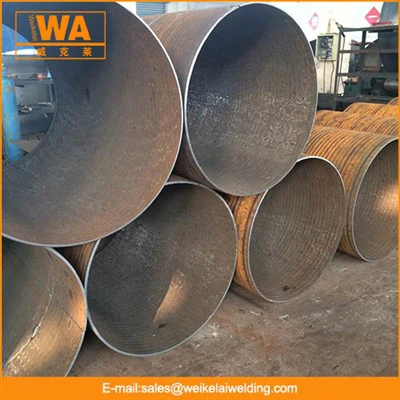
If you've ever worked in mining, dredging, cement manufacturing, or any industry where pipes take a brutal, constant beating from abrasive materials (like gravel, ore slurry, or ash), you know regular steel pipes don't cut it. They wear out fast, leak, cause downtime, and cost a fortune in replacements. That's where hardfacing pipes come in-and as someone who's been supplying these things for years, I can tell you it's not just slapping a layer of extra metal onto a pipe and calling it a day. Hardfacing a pipe requires a specific mix of technical skill, hands-on experience, and attention to tiny details that make the difference between a pipe that lasts 6 months and one that lasts 5 years. Let's break down the real skills you need to get this right, and why that matters if you're shopping for reliable hardfacing pipe. First off, let's get one thing straight: hardfacing is different from regular welding. Welding is about joining two pieces of metal together. Hardfacing is about depositing a thick, wear-resistant alloy layer onto the inner (and sometimes outer) surface of a pipe to shield it from abrasion, impact, and corrosion. Mess up the process, and that "wear-resistant layer" will crack, peel, or wear thin in no time.
The first and most obvious skill is mastering welding technology specific to hardfacing. I'm talking about knowing the difference between welding wire types, flux cores, and even the right welding machines for the job. A lot of new guys in the game grab whatever wire is cheap, but that's a mistake. For example, if you're hardfacing a pipe that's moving large, sharp rock, you need an alloy that's tough enough to handle impact without cracking-like a chromium carbide overlay, which is way harder than standard steel. But if you use the wrong welding parameters (too hot, too fast), that alloy can become brittle, and it'll shatter the first time a big boulder hits it. I've seen guys use MIG welding for hardfacing big straight pipes, but for high-wear areas like elbows, you might need submerged arc welding (SAW) to get a smooth, consistent layer that doesn't have gaps. Speaking of gaps: you also need to know how to avoid porosity in the hardfacing layer. Porosity is tiny little holes that form when gas gets trapped in the weld. Those holes weaken the layer, so abrasive material can sneak in and wear the pipe out from the inside faster. It sounds simple, but it takes practice to adjust gas flow, wire feed speed, and travel speed just right to keep porosity to zero. That's not something you learn from a YouTube video-it's something you pick up after 100+ pipe hardfacing jobs.


Next up, metallurgy knowledge. This isn't rocket science, but you can't skip it if you want to do hardfacing right. You need to understand how different metals interact when you deposit them. For example, if you take a regular carbon steel pipe and slap a hard alloy onto it, the two metals have to be compatible enough that the hard layer doesn't peel off. If the thermal expansion rates are way different, when the pipe heats up (like in a cement plant, where temperatures can get up to 500°F) and cools down, the two metals expand and contract at different speeds. That causes stress, which leads to cracking or delamination of the hardfacing layer. I've seen this happen on so many jobs: a client buys a cheap hardfacing pipe, it works for a month, then the whole alloy layer peels off like a bad sunburn. To avoid that, you need to pick an alloy that matches the base pipe's thermal properties, and maybe even pre-heat the pipe before hardfacing. Pre-heating prevents the pipe from cooling too fast, which reduces that stress. A lot of budget suppliers skip pre-heating to save time, but that's why their pipes fail. Another metallurgy tip: know when to use abrasive-resistant alloys vs. impact-resistant ones. If your pipe is moving fine, abrasive sand, you want a hard alloy (like HRC 60+). If it's moving gravel with sharp edges, you want a tougher alloy that's still hard enough, not the hardest one possible. That's the kind of call only someone who knows metallurgy can make-you can't just Google "best hardfacing alloy" and be done.
Then there's pipe preparation and fit-up skills. Before you even touch a welding machine, the pipe has to be perfect. If there's rust, grease, or scale on the inner surface, the hardfacing layer won't stick. I've had a few clients send pipes to me that are so corroded on the inside, I have to sand blast them for hours before I can even start hardfacing. If you skip that step, you'll get a weak bond, and the layer will come off. Fit-up is also key, especially for parts like elbows. Wait, elbows are a whole other story-straight pipes are simpler, but elbows have a curve, so the hardfacing layer has to be consistent all around the curve. If you hardface an elbow and the layer is thinner on the outer radius (the part that takes the most impact), that elbow will wear out in weeks. To fix that, you have to position the elbow correctly during hardfacing-like, for a 90-degree elbow, you need to rotate it at the right speed so the weld deposit is even all the way around. A lot of new suppliers rush this, so their elbows have thin spots and fail fast. That's why when you're looking for hardfacing parts, you want to check that they're evenly coated, not just go for the cheapest option. By the way, if you're in the market for straight pipes, we've got solid ones, but here's the link for the Wear Resistant Straight Pipe to give you an idea of the quality we deliver.
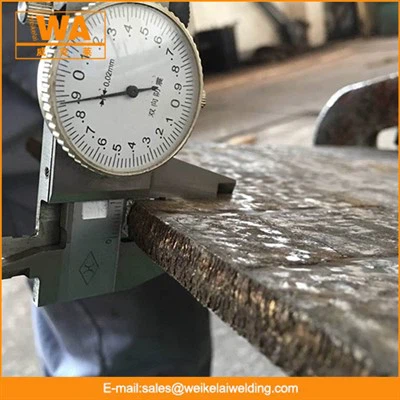
Surface quality control is another non-negotiable skill. Hardfacing isn't just about getting the alloy on there-it's about getting it on right. Once you're done welding, you have to check for defects: cracks, porosity, uneven thickness, or gaps. How do you do that? We use ultrasonic testing to check the bond between the hard layer and the base pipe, and we measure the thickness of the hardfacing at multiple points. For example, a good hardfacing pipe should have a layer that's at least 3mm thick, and consistent from end to end. If it's thinner than that, it will wear through quickly. Cracks are a big red flag-even tiny micro-cracks can grow over time and turn into big breaks that ruin the whole pipe. We also do visual inspections, but we don't stop there. Some suppliers just do a quick look and call it a day, but that's how you end up with pipes that fail early. As someone who's been doing this for years, I can spot a bad hardfacing job just by looking at it, but I still rely on tests to make sure.
Wait, let's talk about Cco Abrasion Pipe specifically-Cco stands for chromium carbide overlay, which is one of the most popular hardfacing alloys for high-abrasion environments. But hardfacing Cco pipes is trickier than other alloys because it forms those hard carbide particles. You have to control the cooling process so the carbides don't get too big or too small. If the carbides are too big, the layer is brittle and cracks easily. If they're too small, the layer isn't hard enough to resist abrasion. That's a balance you only get with experience. If you're looking for Cco pipes, here's our page: Cco Abrasion Pipe. We do all the right things to get that carbide size just right, so our pipes last longer than the competition.
Another skill is handling different pipe types and sizes. Not all pipes are the same-you've got small 2-inch pipes for slurry lines, big 48-inch pipes for dredging, and everything in between. Each size needs a different hardfacing process. Smaller pipes are easier to handle, but they're more prone to warping because the heat from welding can make them bend. Larger pipes are heavier, so you need bigger equipment to move them, and the hardfacing process has to be adjusted to make sure the layer is consistent across the whole length. Warping is a big problem with large pipes-if they bend even a little, they won't fit properly into your system. To fix that, we use a rotating welding table that keeps the pipe straight while we hardface it, and we alternate weld passes to balance the heat. That's another skill you don't learn overnight-you have to adapt your process to every pipe you work on.
Oh, and don't forget about post-weld processing. After hardfacing, you might need to grind the surface smooth, depending on the application. If the pipe is moving fine powder, a rough surface can cause the powder to stick, leading to buildup that clogs the pipe. If it's moving large rocks, a slightly rough surface is fine, because the hardfacing layer's texture helps grip the abrasive material a little. But getting that surface finish right is part of the job. We also do machining if needed, to make sure the ends of the pipe are straight so they fit together properly. Skipping post-weld processing is another way suppliers cut corners and sell inferior products.
Let's be real-most people don't think about hardfacing skills until their pipe breaks down and costs them thousands in downtime. That's why it's so important to work with a supplier that knows what they're doing. We've been hardfacing pipes for mining, cement, and dredging companies for years, and we've seen every mistake in the book. We don't cut corners on welding parameters, metallurgy checks, surface prep, or quality control. Our Hardfacing Abrasion Pipe is made with all the skills I talked about, so you don't have to worry about it failing early. We also have Wear Resistant Pipe for general high-wear applications, and even Hardfacing Abrasion Elbows for those tricky curved parts that take the most beating.
I get it-when you're shopping for hardfacing pipes, price is a big factor, but it shouldn't be the only one. A cheap pipe that lasts 6 months will end up costing you more in replacements and downtime than a slightly more expensive pipe that lasts 3 years. The skills I mentioned all add up to a pipe that works when you need it, doesn't leak, and doesn't make you run around replacing it every few months. At the end of the day, hardfacing is a mix of science and hands-on experience. You have to know how the metals work, how to weld them right, how to prep the pipe, and how to check your work. If you're looking for a reliable supplier that has those skills and delivers quality hardfacing pipes, reach out to us. We're here to help you find the right solution for your specific application, no generic one-size-fits-all garbage. Don't settle for cheap, low-quality hardfacing parts-your downtime (and your wallet) will thank you.