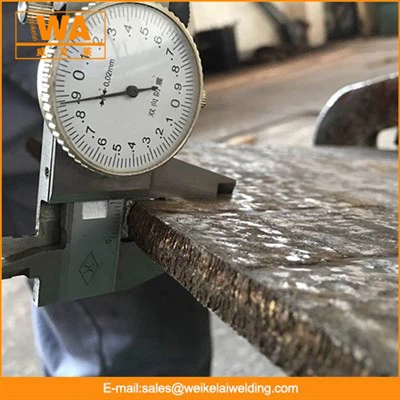
Hey there! I'm a supplier of hardfacing pipes, and today I wanna chat about how hardfacing affects the flexibility of pipes. It's a topic that's super important for anyone in the industry, whether you're in construction, manufacturing, or any other field that uses pipes.
First off, let's talk about what hardfacing is. Hardfacing is a process where a layer of hard, wear - resistant material is applied to the surface of a pipe. This is usually done to increase the pipe's resistance to abrasion, corrosion, and other forms of wear and tear. There are different methods of hardfacing, like welding, thermal spraying, and laser cladding. Each method has its own pros and cons, but they all aim to achieve the same goal: making the pipe more durable.


Now, let's get into how hardfacing impacts the flexibility of pipes. Flexibility in pipes is crucial as it allows them to bend and adapt to different installation requirements and environmental conditions. When a pipe is flexible, it can handle stress and strain without cracking or breaking. But when we apply a hardfacing layer, things can get a bit tricky.
The hardfacing material is typically much stiffer than the base pipe material. This stiffness comes from the high - hardness alloys used in hardfacing, which are designed to resist abrasion. When this stiff layer is added to the pipe, it can reduce the overall flexibility of the pipe. For example, if you have a regular carbon steel pipe that has some natural flexibility, once you hardface it with a tungsten carbide - based alloy, the pipe becomes less likely to bend easily.
One of the main factors that determine how much hardfacing affects flexibility is the thickness of the hardfacing layer. The thicker the layer, the more it restricts the pipe's ability to flex. A thin hardfacing layer might only have a minor impact on flexibility, while a thick layer can make the pipe almost rigid in some cases.
The type of hardfacing material also plays a big role. Some materials are more brittle than others. For instance, ceramic - based hardfacing materials are extremely hard but also very brittle. When a pipe with a ceramic hardfacing is bent, the hardfacing layer is more likely to crack. This not only reduces the pipe's flexibility but also compromises its integrity, as cracks can lead to further damage and potential failure.
On the other hand, some hardfacing materials are more ductile. These materials can deform to some extent without cracking, which means they have less of a negative impact on the pipe's flexibility. For example, certain nickel - based hardfacing alloys are relatively ductile compared to ceramic materials. They can still provide good wear resistance while allowing the pipe to maintain a reasonable level of flexibility.
Another aspect to consider is the application method of hardfacing. Welding, for example, can introduce heat into the pipe. This heat can cause changes in the microstructure of the base pipe material, which may affect its flexibility. If the heat is not properly controlled during the welding process, it can lead to a loss of ductility in the base pipe, further reducing the overall flexibility of the hardfaced pipe.
Thermal spraying and laser cladding are other methods. Thermal spraying generally has less of an impact on the base pipe's microstructure compared to welding, as it doesn't involve as much heat. Laser cladding, on the other hand, can be very precise, but it also generates a significant amount of heat in a localized area. This can potentially cause problems with the pipe's flexibility if not managed correctly.
Now, you might be wondering if there are any ways to mitigate the negative effects of hardfacing on pipe flexibility. One approach is to carefully select the hardfacing material and thickness. By choosing a more ductile material and keeping the layer thickness as thin as possible while still achieving the desired wear resistance, you can minimize the reduction in flexibility.
Another method is to use a gradient hardfacing approach. In this method, the hardfacing layer gradually changes in composition from the surface to the base pipe. This can help to reduce the stress concentration at the interface between the hardfacing layer and the base pipe, allowing for better flexibility.
At our company, we offer a variety of hardfacing pipes, including Hardfacing Abrasion Elbows, Bent Cladding Pipe, and Hardfacing Abrasion Pipe. We understand the importance of balancing wear resistance and flexibility, and we work hard to provide pipes that meet our customers' specific needs.
If you're in the market for hardfacing pipes and are concerned about flexibility, we'd love to have a chat with you. We can discuss your project requirements, recommend the best hardfacing solutions, and help you find the right balance between durability and flexibility. Whether you're working on a small - scale project or a large - scale industrial application, we're here to assist you.
In conclusion, hardfacing can have a significant impact on the flexibility of pipes. The thickness and type of hardfacing material, as well as the application method, all play important roles in determining how much the flexibility is affected. However, with careful selection and proper techniques, it's possible to minimize the negative effects and get a hardfaced pipe that offers both good wear resistance and an acceptable level of flexibility. So, if you're looking for high - quality hardfacing pipes, don't hesitate to reach out and start a conversation about your needs.
References
-ASM Handbook Volume 6: Welding, Brazing, and Soldering. ASM International.
-Schwartz, M. M. (2004). Welding Metallurgy and Weldability of Stainless Steels. Wiley - Interscience.
-Boyer, H. E. (Ed.). (1985). Atlas of Stainless Steels. ASM International.