As a supplier of Inetub Welding Wire, I understand the importance of training workers to use our product effectively. Proper training not only ensures high - quality welding results but also enhances workplace safety and increases productivity. In this blog, I will share some key steps and strategies on how to train workers to use Inetub Welding Wire effectively.
Understanding the Basics of Inetub Welding Wire
Before starting the practical training, it is essential to provide workers with a solid theoretical foundation. Inetub Welding Wire comes in different types and specifications, each designed for specific welding applications. For instance, Flux Cored Arc Welding is a popular method that uses a tubular wire filled with flux. This type of welding is known for its high deposition rate and good penetration, making it suitable for a wide range of materials and thicknesses.
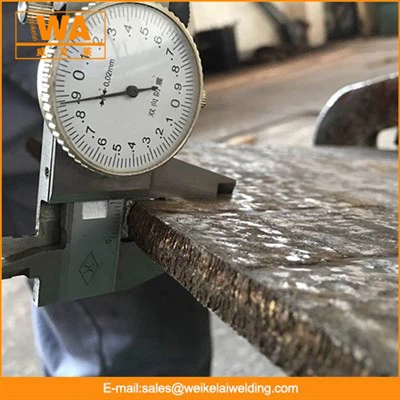
Another type is Hardfacing Flux Cored Wire, which is used to build up or repair surfaces that are subject to wear, abrasion, or impact. Workers need to understand the unique properties of this wire, such as its alloy composition and hardness, to achieve the desired hardfacing results.
Dual Shield Welding Wire combines the advantages of both gas - shielded and self - shielded welding. It provides better control over the welding process and produces high - quality welds with excellent mechanical properties.
During the theoretical training, workers should learn about the chemical composition of Inetub Welding Wire, its melting point, and how it interacts with different base metals. They should also be familiar with the welding parameters, such as voltage, current, wire feed speed, and travel speed, which have a significant impact on the welding quality.
Safety Training
Safety should always be the top priority in any welding operation. Workers must be trained on the proper use of personal protective equipment (PPE), including welding helmets, gloves, aprons, and safety glasses. They should understand the potential hazards associated with welding, such as electric shock, arc flash, fumes, and radiation.
The training should cover the correct setup and maintenance of welding equipment to prevent accidents. For example, workers should know how to check the insulation of welding cables, the integrity of the grounding system, and the proper storage of welding wire. They should also be trained on fire prevention and first - aid procedures in case of an emergency.
Practical Training
Practical training is the most crucial part of teaching workers to use Inetub Welding Wire effectively. It should start with basic welding techniques, such as bead laying and joint preparation. Workers should practice welding on different types of joints, including butt joints, lap joints, and T - joints, using Inetub Welding Wire.


During the practical training, instructors should closely monitor the workers' performance and provide immediate feedback. They should correct any improper techniques, such as incorrect torch angles, inconsistent travel speeds, or improper wire feeding. Workers should also be taught how to troubleshoot common welding problems, such as porosity, lack of fusion, and excessive spatter.
It is important to provide workers with sufficient practice time to gain confidence and proficiency. They can start with simple welding tasks and gradually move on to more complex projects. The training can also include hands - on experience with different welding positions, such as flat, horizontal, vertical, and overhead welding.
Quality Control Training
Quality control is an integral part of the welding process. Workers should be trained on how to inspect welds for defects and ensure that they meet the required standards. They should learn about non - destructive testing methods, such as visual inspection, magnetic particle testing, and ultrasonic testing.
In addition, workers should understand the importance of documenting welding procedures and results. They should be able to record welding parameters, test results, and any corrective actions taken. This documentation is essential for quality assurance and traceability.
Continuous Training and Improvement
Welding technology is constantly evolving, and new types of Inetub Welding Wire are being developed to meet the changing needs of the industry. Therefore, continuous training is necessary to keep workers updated with the latest techniques and products.
Regular refresher courses can be organized to reinforce the workers' knowledge and skills. These courses can cover new welding applications, improved welding techniques, and changes in industry standards. Workers can also be encouraged to participate in industry seminars and workshops to learn from experts and share their experiences.
Conclusion
Training workers to use Inetub Welding Wire effectively is a comprehensive process that requires a combination of theoretical knowledge, safety training, practical experience, quality control, and continuous improvement. By investing in proper training, companies can ensure high - quality welding results, enhance workplace safety, and increase productivity.
If you are interested in learning more about Inetub Welding Wire or are looking to purchase our products, we welcome you to contact us for further discussions. Our team of experts is ready to provide you with detailed information and support to meet your welding needs.
References
- Welding Handbook, American Welding Society
- Welding Technology: Principles and Applications, Larry Jeffus