Hey there! As a supplier of Flux Cored Arc products, I've gotten a ton of questions about when to use gas - shielded Flux Cored Arc welding. So, I thought I'd break it down for you in this blog.
First off, let's understand what gas - shielded Flux Cored Arc welding is. It's a welding process that uses a tubular wire filled with flux. The gas shielding, usually a mix of carbon dioxide and argon, protects the weld pool from atmospheric contamination. This results in a cleaner, stronger weld.
When the Job Demands High - Quality Welds
If you're working on a project where the quality of the weld is of utmost importance, gas - shielded Flux Cored Arc welding is a great choice. For instance, in the construction of bridges or high - rise buildings, the welds need to be strong and reliable. The gas shielding in this process helps to reduce porosity and other defects in the weld. Porosity can weaken the weld and make it more susceptible to cracking under stress. With gas - shielded Flux Cored Arc welding, you can achieve a dense, high - quality weld that meets the strictest industry standards.
Welding Thick Materials
When dealing with thick materials, gas - shielded Flux Cored Arc welding shines. The process can penetrate deep into the base metal, creating a strong bond. Let's say you're working on a heavy - duty machinery frame made of thick steel. The high heat input and deep penetration of this welding method ensure that the welds are strong enough to withstand the heavy loads and vibrations that the machinery will experience. Compared to some other welding processes, gas - shielded Flux Cored Arc welding can deposit more filler metal in a shorter time, making it efficient for thick - section welding.
Outdoor Welding
Outdoor welding can be a challenge because of the wind and other environmental factors. The gas shielding in this process helps to protect the weld pool from the wind. Even in moderately windy conditions, the gas shield can maintain its integrity and prevent contaminants from entering the weld. For example, if you're welding a pipeline in an open field, the wind can easily blow away the shielding gas in some other welding processes, leading to poor - quality welds. But with gas - shielded Flux Cored Arc welding, the combination of the flux in the wire and the external gas shielding provides better protection against the elements.


Welding on Mild Steel
Mild steel is one of the most commonly welded materials, and gas - shielded Flux Cored Arc welding is well - suited for it. You can find a wide range of Mild Steel Mig Welding Wire that is specifically designed for this process. The wire contains flux that helps to deoxidize the weld pool and remove impurities. When used with the appropriate gas shielding, it can produce smooth, strong welds on mild steel. Whether you're fabricating a simple steel structure or doing automotive repairs on mild steel parts, this welding method can give you great results.
High - Production Welding
In a production environment where time is money, gas - shielded Flux Cored Arc welding can be a game - changer. The process has a high deposition rate, which means you can deposit a large amount of filler metal quickly. This leads to faster welding speeds and increased productivity. For example, in a manufacturing plant that produces steel furniture, the ability to weld multiple parts quickly and efficiently is crucial. Gas - shielded Flux Cored Arc welding allows the workers to complete the welding tasks in less time, increasing the overall output of the plant.
Welding Alloy Steels
Alloy steels are used in many applications where specific properties like high strength, corrosion resistance, or heat resistance are required. Gas - shielded Flux Cored Arc welding can be used to weld these alloy steels effectively. The flux in the wire and the gas shielding work together to control the chemical composition of the weld metal. This ensures that the weld has the same or similar properties as the base alloy steel. For example, when welding stainless steel alloy, the gas shielding helps to prevent oxidation and maintain the corrosion - resistant properties of the weld.
Hardfacing Applications
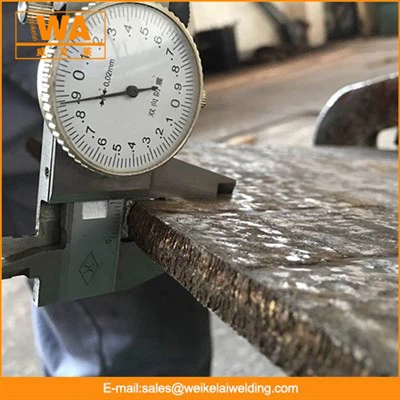
Hardfacing is the process of applying a hard, wear - resistant layer to a base metal. Hardfacing Flux Cored Wire is often used in gas - shielded Flux Cored Arc welding for hardfacing applications. This is useful in industries such as mining, construction, and agriculture, where equipment components are subject to severe wear. For instance, the teeth on a mining excavator bucket can be hardfaced using this process. The hardfacing layer extends the lifespan of the component, reducing the need for frequent replacements and saving costs in the long run.
When Appearance Matters
In some applications, the appearance of the weld is important. Gas - shielded Flux Cored Arc welding can produce welds with a smooth, aesthetically pleasing finish. For example, if you're working on a decorative steel structure, such as a wrought - iron gate, the quality of the weld appearance can enhance the overall look of the product. The process allows for good control over the bead shape and size, resulting in a clean and professional - looking weld.
In Tight Spaces
The flexibility of gas - shielded Flux Cored Arc welding makes it suitable for welding in tight spaces. The wire can be easily fed through a small torch, allowing you to access areas that are difficult to reach with other welding methods. Suppose you're working on a complex machinery assembly where there are many components close together. You can use this welding process to make precise welds in those tight spaces without causing damage to the surrounding parts.
As a Flux Cored Arc supplier, I've seen firsthand the benefits of gas - shielded Flux Cored Arc welding in various applications. We offer a wide range of Flux Cored Arc products that are designed to meet the diverse needs of our customers. If you're interested in learning more about our products or have specific welding requirements, don't hesitate to get in touch. We're here to help you find the right solution for your welding projects. Whether you're a professional welder or a DIY enthusiast, our team can provide you with the support and expertise you need.
References
- Welding Handbook, American Welding Society
- Practical Welding Engineering, John R. Davis