Hey there! As a supplier of alloy steel plates, I've been getting a lot of questions lately about the role of manganese in these plates. So, I thought I'd take a deep - dive into this topic and share what I've learned over the years in the industry.
First off, let's talk about what alloy steel plates are. They're basically steel plates that have had other elements added to them to enhance their properties. These plates are used in a wide range of industries, from construction to automotive manufacturing. And manganese is one of those key elements that can make a big difference.
The Basics of Manganese in Alloy Steel Plates
Manganese is a hard, brittle, gray - white metal. When it's added to steel, it acts as a deoxidizer and desulfurizer. In simple terms, it helps get rid of oxygen and sulfur impurities in the steel during the manufacturing process. Why is this important? Well, oxygen and sulfur can cause all sorts of problems in steel. Oxygen can lead to porosity, which weakens the steel, and sulfur can make the steel brittle and prone to cracking.
By removing these impurities, manganese helps improve the overall quality and integrity of the alloy steel plate. It also enhances the steel's strength and hardness. When manganese is added to steel, it forms manganese sulfide (MnS) inclusions. These inclusions help pin down grain boundaries in the steel, which restricts the movement of dislocations. Dislocations are basically defects in the crystal structure of the steel, and when their movement is restricted, the steel becomes stronger and harder.
Impact on Mechanical Properties
Strength
One of the most significant effects of manganese on alloy steel plates is an increase in strength. Manganese combines with carbon in the steel to form various carbides. These carbides are hard and help strengthen the steel matrix. As the manganese content increases, so does the strength of the alloy steel plate. This makes the plates suitable for applications where high strength is required, such as in heavy - duty machinery and structural components.
Toughness
Toughness is another important property, especially in applications where the steel may be subjected to impact loads. Manganese can improve the toughness of alloy steel plates. It does this by refining the grain structure of the steel. A finer grain structure means that there are more grain boundaries, which can absorb and deflect cracks. So, when an impact load is applied, the cracks are less likely to propagate through the steel, making it more resistant to fracture.

Weldability
Weldability is crucial when it comes to using alloy steel plates. Manganese can have a positive impact on the weldability of these plates. It helps reduce the formation of harmful phases during the welding process. For example, it can prevent the formation of martensite, which is a hard and brittle phase that can cause cracking in the weld zone. However, it's important to note that too much manganese can also have a negative effect on weldability. So, the manganese content needs to be carefully controlled.
Applications of Manganese - Containing Alloy Steel Plates
Construction
In the construction industry, alloy steel plates with manganese are used for building bridges, high - rise buildings, and other large - scale structures. The increased strength and toughness provided by manganese make these plates ideal for withstanding the heavy loads and environmental stresses that these structures are exposed to.
Automotive
Automotive manufacturers also rely on manganese - containing alloy steel plates. They're used in the production of parts such as engine blocks, transmission components, and suspension systems. The strength and hardness of these plates help improve the performance and durability of the vehicles.
Mining and Quarrying
In the mining and quarrying industry, wear resistance is a key requirement. Alloy steel plates with manganese are often used to make equipment like crushers, conveyors, and buckets. The hardness and toughness provided by manganese help these plates withstand the abrasive forces and impact loads encountered in mining operations.
Our Product Range
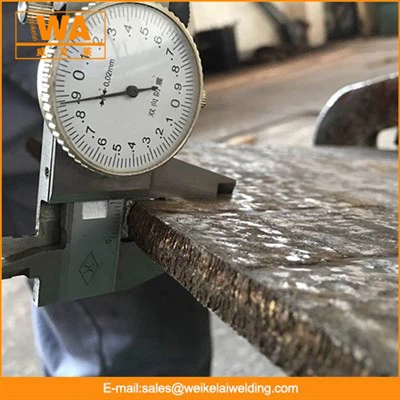
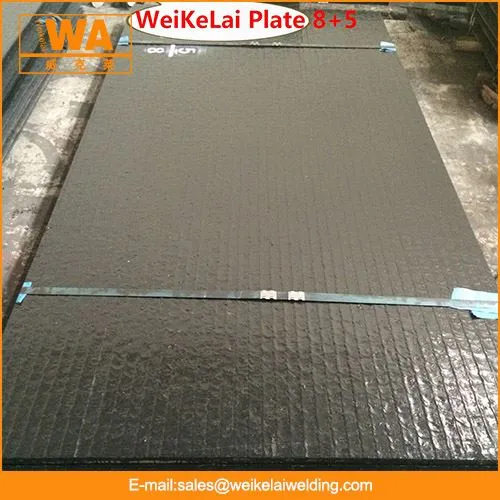
At our company, we offer a wide range of alloy steel plates with different manganese contents to meet the diverse needs of our customers. We have Smooth And Crack Free Wear Plate, which is perfect for applications where wear resistance and a smooth surface finish are required. These plates are made with an optimized manganese content to ensure high strength and excellent wear performance.
We also have Tungsten Carbide Plate. Tungsten carbide is a very hard material, and when combined with the right amount of manganese in the alloy steel plate, it provides exceptional wear resistance. These plates are commonly used in high - wear applications such as in the mining and oil and gas industries.
Another product in our range is the Hardfacing Wear Plate. Hardfacing is a process of applying a hard, wear - resistant layer to the surface of the steel plate. Manganese in the base alloy steel plate helps improve the bonding between the hardfacing layer and the base metal, ensuring long - lasting performance.
Contact Us for Procurement
If you're in the market for high - quality alloy steel plates, we'd love to hear from you. Whether you're a small - scale manufacturer or a large - scale industrial company, we can provide you with the right alloy steel plates to meet your specific requirements. We have a team of experts who can help you select the best plate for your application based on factors like manganese content, strength, and wear resistance.
Just reach out to us, and we'll be happy to discuss your needs and provide you with a competitive quote. Don't miss out on the opportunity to work with top - notch alloy steel plates that are enhanced with the right amount of manganese.
References
- ASM Handbook Volume 1: Properties and Selection: Irons, Steels, and High - Performance Alloys. ASM International.
- Steel Metallurgy for the Non - Metallurgist. J. D. Verhoeven. ASM International.
- "The Effect of Manganese on the Properties of Steel" - Journal of Materials Science and Engineering.