

As a supplier of Flux Cored MIG Wire, I often get asked about the difference between gas - shielded and self - shielded flux cored MIG wire. It's a topic that might seem a bit technical at first, but it's actually quite important if you're involved in welding. In this blog, I'm gonna break down the key differences between these two types of wires to help you make a more informed decision for your welding projects.
What is Flux Cored MIG Wire?
Before we dive into the differences, let's quickly go over what flux cored MIG wire is. Flux cored MIG wire is a type of welding wire with a hollow core filled with flux. This flux plays a crucial role during the welding process as it helps protect the weld pool from atmospheric contamination and also influences the properties of the weld.
Gas - Shielded Flux Cored MIG Wire
Gas - shielded flux cored MIG wire, as the name implies, requires an external shielding gas to protect the weld. This gas is typically a mixture of carbon dioxide and argon. The shielding gas creates a protective atmosphere around the weld pool, preventing oxygen, nitrogen, and other contaminants from entering the weld.
One of the main advantages of gas - shielded flux cored MIG wire is the high - quality welds it can produce. The shielding gas provides excellent protection, resulting in welds that are clean, strong, and have good appearance. It's often used in applications where weld quality is of the utmost importance, such as in the automotive and aerospace industries.
Another benefit is its versatility. Gas - shielded flux cored MIG wire can be used on a variety of materials, including mild steel, stainless steel, and aluminum. It also allows for a wide range of welding positions, from flat and horizontal to vertical and overhead.
However, there are some drawbacks. The need for an external shielding gas means that you have to carry around a gas cylinder, which can be cumbersome, especially for on - site or outdoor welding jobs. Additionally, the cost of the shielding gas adds to the overall welding cost.
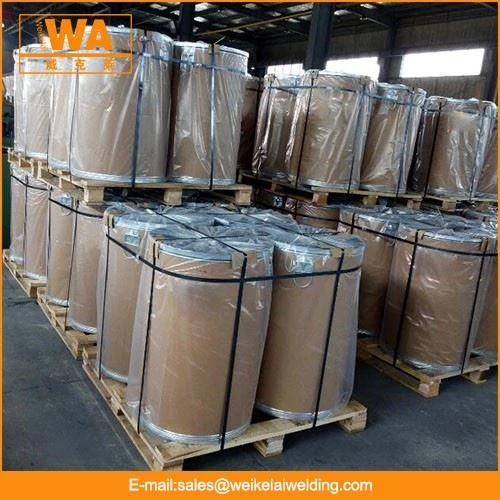

If you're interested in high - quality gas - shielded flux cored wire, you might want to check out our Resistant Flux Core Wire. It's designed to provide excellent performance and durability.
Self - Shielded Flux Cored MIG Wire
Self - shielded flux cored MIG wire doesn't need an external shielding gas. Instead, the flux inside the wire generates a protective gas when it's heated during the welding process. This makes it a much more convenient option, especially for outdoor and on - site welding.
One of the biggest advantages of self - shielded flux cored MIG wire is its portability. Since you don't need to carry a gas cylinder, it's much easier to move around and set up your welding equipment. This makes it a popular choice for construction and pipeline welding, where workers often need to weld in different locations.
Self - shielded flux cored MIG wire also performs well in windy conditions. The gas generated by the flux provides reliable protection even when there's air movement around the weld. This is a significant advantage over gas - shielded wire, which can be easily disrupted by wind.
On the other hand, the welds produced by self - shielded flux cored MIG wire might not be as smooth and clean as those made with gas - shielded wire. The flux can leave a slag on the weld surface that needs to be removed after welding. Also, it's generally more limited in terms of the welding positions it can be used in compared to gas - shielded wire.
For those looking for reliable self - shielded options, our Dual Shield Welding Wire and Open Arc Welding Wire offer great performance and convenience.
Key Differences in a Nutshell
- Shielding Mechanism: The most obvious difference is the way they're shielded. Gas - shielded wire relies on an external gas, while self - shielded wire uses the flux inside the wire to create a protective atmosphere.
- Weld Quality: Gas - shielded wires usually produce higher - quality, cleaner welds, while self - shielded wires might have a bit more slag and a less - smooth finish.
- Portability: Self - shielded wires are more portable because there's no need for a gas cylinder, which is a big plus for on - site work.
- Cost: Gas - shielded wires have the additional cost of the shielding gas, which can add up over time.
- Welding Positions: Gas - shielded wires are more versatile in terms of welding positions, while self - shielded wires are more limited.
Which One Should You Choose?
The choice between gas - shielded and self - shielded flux cored MIG wire depends on your specific welding needs. If you're working in a controlled environment, such as a factory, and need high - quality welds, gas - shielded wire might be the better option. On the other hand, if you're doing outdoor or on - site work where portability and wind resistance are important, self - shielded wire could be the way to go.
Let's Get in Touch
If you still have questions about which type of flux cored MIG wire is right for you, or if you're interested in placing an order, don't hesitate to reach out. We're here to help you make the best decision for your welding projects. Whether it's gas - shielded or self - shielded, we've got a wide range of high - quality products to meet your needs.
References
- AWS Welding Handbook, American Welding Society
- Welding: Principles and Applications, John R. Walker



