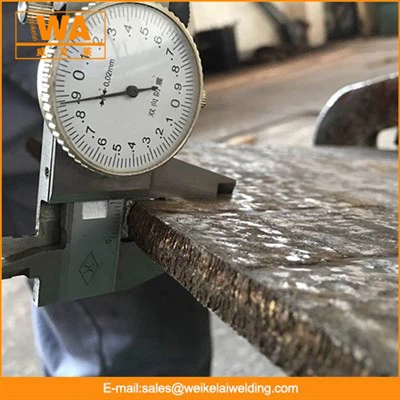
As a supplier of Inetub Welding Wire, I've witnessed firsthand the crucial role that high - quality welding plays in various industries. Whether it's construction, manufacturing, or automotive repair, the welding quality can significantly impact the durability and performance of the final product. In this blog, I'll share some practical tips on how to improve the welding quality of Inetub Welding Wire.
1. Understanding Inetub Welding Wire
Before delving into the ways to improve welding quality, it's essential to understand the characteristics of Inetub Welding Wire. Inetub Welding Wire is a type of Flux Cored Arc welding wire that offers several advantages. It has a flux core that contains various compounds, which can provide shielding gas during the welding process, eliminating the need for an external shielding gas in some cases. This makes it more convenient and cost - effective, especially for outdoor or on - site welding jobs.


The Resistant Flux Core Wire variant of Inetub Welding Wire is designed to be highly resistant to corrosion and wear, making it suitable for applications in harsh environments. Understanding these properties is the first step in optimizing the welding process.
2. Proper Storage of Inetub Welding Wire
The storage conditions of welding wire can have a significant impact on its quality. Inetub Welding Wire should be stored in a dry and clean environment. Moisture can cause the flux core to absorb water, which may lead to porosity in the weld. Porosity is a common welding defect that weakens the weld joint and reduces its corrosion resistance.
It's recommended to store the wire in a sealed container or a humidity - controlled room. If the wire has been exposed to moisture, it can be dried in an oven at a low temperature before use. However, excessive heating can also damage the wire, so it's crucial to follow the manufacturer's guidelines.
3. Equipment Setup
- Welding Machine Settings: The correct settings on the welding machine are vital for achieving high - quality welds. The voltage, amperage, and wire feed speed need to be adjusted according to the thickness of the base metal, the type of joint, and the welding position. For Inetub Welding Wire, the manufacturer usually provides a recommended range of settings. It's advisable to start with the middle of the recommended range and make small adjustments based on the actual welding results.
- Torch and Nozzle Selection: The torch and nozzle should be selected based on the welding application. A torch with the appropriate size and angle can ensure proper wire feeding and shielding gas coverage. The nozzle should be clean and free of spatter, as spatter can block the gas flow and cause uneven shielding.
4. Welding Technique
- Joint Preparation: Proper joint preparation is essential for a strong weld. The edges of the base metal should be clean, free of rust, oil, and other contaminants. The joint design, such as the bevel angle and root gap, should also be carefully considered. For thicker materials, a wider bevel angle may be required to ensure complete penetration.
- Travel Speed: The travel speed during welding is crucial. If the travel speed is too fast, the weld may be incomplete, with insufficient fusion and penetration. On the other hand, if the travel speed is too slow, the weld may be too wide and may cause excessive heat input, leading to distortion of the base metal. A consistent travel speed should be maintained throughout the welding process.
- Angle of the Torch: The angle of the torch relative to the base metal affects the shape and quality of the weld. For most applications, a torch angle of 10 - 15 degrees from the vertical is recommended. This angle helps to direct the heat and the molten metal into the joint and provides good shielding.
5. Weld Inspection
- Visual Inspection: After welding, a visual inspection should be carried out immediately. Look for any obvious defects such as cracks, porosity, lack of fusion, or excessive spatter. Cracks can be a sign of high residual stress or improper welding technique. Porosity appears as small holes in the weld and can be caused by moisture in the wire or improper shielding.
- Non - Destructive Testing: For critical applications, non - destructive testing methods such as ultrasonic testing, radiographic testing, or magnetic particle testing can be used to detect internal defects in the weld. These tests can provide more detailed information about the quality of the weld and ensure that it meets the required standards.
6. Operator Training
Even with the best equipment and materials, the skill of the operator is a key factor in welding quality. Operators should receive proper training on the use of Inetub Welding Wire, including equipment setup, welding technique, and weld inspection. Training programs can be provided by the wire manufacturer or professional welding培训机构. Regular refresher courses can also help operators stay updated on the latest welding techniques and best practices.
7. Quality Control in the Supply Chain
As a supplier of Inetub Welding Wire, we implement strict quality control measures in the production process. We source high - quality raw materials and use advanced manufacturing technology to ensure the consistency and reliability of our products. We also conduct regular quality checks on the finished wire to ensure that it meets the international standards.
In addition, we work closely with our customers to provide technical support and advice on welding quality improvement. We understand that every welding application is unique, and we are committed to helping our customers find the best solutions for their specific needs.
Conclusion
Improving the welding quality of Inetub Welding Wire requires a comprehensive approach that includes proper storage, equipment setup, welding technique, weld inspection, operator training, and quality control in the supply chain. By following these tips, you can achieve stronger, more durable, and higher - quality welds.
If you are interested in purchasing Inetub Welding Wire or have any questions about improving welding quality, please feel free to contact us for more information and to discuss your specific requirements. We look forward to working with you to meet your welding needs.
References
- AWS Welding Handbook, American Welding Society
- Welding Metallurgy and Weldability of Stainless Steels, John C. Lippold and David J. Kotecki
- Flux - Cored Arc Welding: Principles and Practices, various industry publications