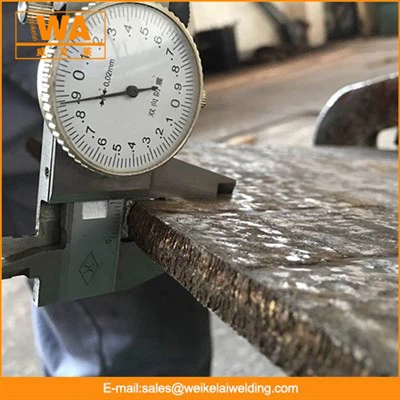
Hey there! As a supplier of Bimetal Wear Plate, I've seen firsthand the challenges these plates face in the chemical industry. Corrosion is a major headache, and if not dealt with properly, it can significantly reduce the lifespan of the wear plates and lead to costly replacements. So, in this blog, I'm gonna share some effective corrosion - prevention measures for bimetal wear plates in the chemical industry.
Understanding the Corrosion Mechanism in Chemical Environments
Before we jump into the prevention measures, it's crucial to understand how corrosion occurs in chemical settings. Chemical environments are often filled with aggressive substances like acids, alkalis, and salts. These substances can react with the metal components of the bimetal wear plate, causing oxidation and degradation.
For instance, in a chemical plant where acids are commonly used, the acid can react with the iron in the wear plate to form iron salts. This reaction not only weakens the structure of the plate but also makes it more prone to further corrosion. The presence of moisture also plays a big role. Water can act as a medium for the chemical reactions, accelerating the corrosion process.
Coating Solutions
One of the most popular and effective ways to prevent corrosion is through coatings. There are several types of coatings that can be applied to bimetal wear plates.
Chromium Carbide Coating
Chromium Carbide Coating is a great option. Chromium carbide has excellent hardness and wear resistance, and it also forms a protective layer on the surface of the wear plate. This layer acts as a barrier between the metal and the corrosive chemicals in the environment.
The coating process involves depositing a layer of chromium carbide onto the surface of the wear plate using techniques like thermal spraying. This creates a dense and uniform coating that can withstand high - temperature and corrosive chemical attacks. It's especially useful in industries where the wear plates are exposed to abrasive and corrosive substances simultaneously.
Anti - Corrosion Paint
Anti - corrosion paints are another common choice. These paints contain pigments and additives that can inhibit the corrosion process. They work by forming a physical barrier on the surface of the wear plate, preventing the corrosive substances from coming into direct contact with the metal.
There are different types of anti - corrosion paints available, such as epoxy - based and polyurethane - based paints. Epoxy paints are known for their excellent adhesion and chemical resistance, while polyurethane paints offer good flexibility and weather resistance. The choice of paint depends on the specific chemical environment and the requirements of the application.
Material Selection
The choice of materials for the bimetal wear plate itself can also have a significant impact on its corrosion resistance.
Wear Resistant Metals
Wear Resistant Metals with good corrosion resistance should be considered. For example, stainless steel is a popular choice. Stainless steel contains chromium, which forms a passive oxide layer on the surface. This layer protects the metal from further oxidation and corrosion.
When selecting the bimetal combination, it's important to choose metals that have similar electrochemical properties. If two metals with very different electrochemical potentials are in contact in a corrosive environment, a galvanic cell can be formed, which can accelerate the corrosion of the more active metal.
Environmental Control
Controlling the environment around the bimetal wear plate can also help prevent corrosion.
Temperature and Humidity Control
In chemical plants, maintaining the right temperature and humidity levels can be crucial. High temperatures and humidity can speed up the corrosion process. By keeping the temperature and humidity within a certain range, the rate of corrosion can be significantly reduced.
For example, in storage areas, using dehumidifiers can help reduce the moisture content in the air, preventing the formation of condensation on the wear plates. In operating areas, proper ventilation can help remove heat and moisture, creating a more favorable environment for the wear plates.
Chemical Concentration Control
Monitoring and controlling the concentration of corrosive chemicals in the environment is also important. If the concentration of a particular chemical is too high, it can increase the rate of corrosion. By adjusting the chemical processes to keep the concentrations within safe limits, the wear plates can be better protected.
Regular Inspection and Maintenance
Regular inspection and maintenance are essential for ensuring the long - term corrosion resistance of bimetal wear plates.
Visual Inspection
Visual inspection should be carried out regularly to check for signs of corrosion, such as rust spots, pitting, or discoloration. If any signs of corrosion are detected early, appropriate measures can be taken to prevent further damage.


Non - Destructive Testing
Non - destructive testing methods, such as ultrasonic testing and magnetic particle testing, can be used to detect internal defects and corrosion that may not be visible to the naked eye. These tests can help identify potential problems before they become serious.
Maintenance and Repair
If corrosion is detected, timely maintenance and repair are necessary. This may involve cleaning the corroded area, applying a new coating, or replacing damaged parts. Regular maintenance can extend the lifespan of the bimetal wear plates and ensure their optimal performance.
Conclusion
In the chemical industry, corrosion is a constant threat to bimetal wear plates. However, by implementing the right corrosion - prevention measures, such as using coatings, selecting the appropriate materials, controlling the environment, and conducting regular inspections and maintenance, we can significantly reduce the risk of corrosion and extend the lifespan of these important components.
If you're in the market for high - quality Bimetal Wear Plate and need more information on corrosion - prevention solutions, feel free to reach out. We're here to help you find the best products and solutions for your specific needs. Contact us for procurement discussions and let's work together to keep your operations running smoothly.
References
- Jones, D. A. (1992). Principles and Prevention of Corrosion. Prentice Hall.
- Uhlig, H. H., & Revie, R. W. (1985). Corrosion and Corrosion Control: An Introduction to Corrosion Science and Engineering. Wiley.