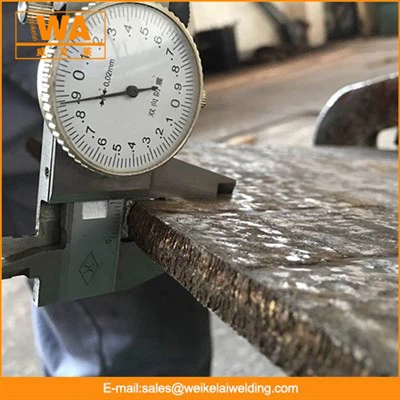
Roller welding repair in the marine industry is a specialized and crucial service. As a leading Roller Welding Repair supplier, I understand the unique challenges and requirements that come with this type of work. In this blog, I will delve into the key requirements for roller welding repair in the marine sector.
1. Material Compatibility
One of the fundamental requirements for roller welding repair in the marine industry is ensuring material compatibility. Marine environments are harsh, subjecting rollers to constant exposure to saltwater, high humidity, and varying temperatures. The materials used for welding repair must be able to withstand these conditions without corroding or deteriorating rapidly.
For instance, when repairing rollers made of stainless steel, the welding filler material should also be stainless steel with similar chemical compositions. This ensures that the repaired area has the same corrosion - resistance properties as the original roller. Using incompatible materials can lead to galvanic corrosion, where two dissimilar metals in contact with an electrolyte (such as saltwater) create an electrical current that accelerates corrosion.
Moreover, the hardness and strength of the filler material should match that of the base metal. If the filler material is too soft, the repaired area may wear out quickly under the mechanical stresses experienced by marine rollers. On the other hand, if it is too hard, it may cause brittleness and cracking, especially during thermal cycles.
2. Welding Process Selection
Choosing the appropriate welding process is essential for successful roller welding repair in the marine industry. There are several welding processes available, each with its own advantages and limitations.
- Gas Tungsten Arc Welding (GTAW): Also known as TIG welding, GTAW is a precise welding process that produces high - quality welds with minimal spatter. It is suitable for thin - walled rollers or when a high level of control is required. In the marine industry, GTAW can be used for repairing rollers with complex geometries or for applications where weld appearance is important.
- Gas Metal Arc Welding (GMAW): Commonly referred to as MIG welding, GMAW is a fast and efficient welding process. It can deposit a large amount of filler material quickly, making it suitable for repairing rollers with significant wear or damage. However, it may require more skill to control the weld bead compared to GTAW.
- Shielded Metal Arc Welding (SMAW): SMAW is a versatile welding process that can be used in various environments, including on - site repairs. It is relatively simple to operate and can be used with different types of electrodes. In the marine industry, SMAW can be used for field repairs of rollers where access to more sophisticated equipment may be limited.
The selection of the welding process depends on factors such as the type of roller material, the extent of damage, and the location of the repair. For more information on roller welding repair processes, you can visit Roller Welding Repair.
3. Quality Control and Inspection
Quality control and inspection are integral parts of roller welding repair in the marine industry. Before starting the repair process, a thorough inspection of the roller is necessary to determine the extent of damage, the presence of cracks, and any other defects. Non - destructive testing methods such as ultrasonic testing, magnetic particle testing, and dye penetrant testing can be used to detect internal and surface defects.
During the welding process, strict quality control measures should be implemented. This includes monitoring the welding parameters such as current, voltage, and welding speed to ensure consistent weld quality. The welder should also follow proper welding techniques, such as pre - heating and post - heating, to prevent the formation of cracks and ensure proper fusion of the filler material with the base metal.
After the repair is completed, a final inspection is required to verify the quality of the weld. This may involve visual inspection, dimensional checks, and hardness testing. Any defects found during the inspection should be repaired immediately to ensure the safety and reliability of the roller. Quality control is crucial in the marine industry, as any failure of a roller can have serious consequences for the operation of marine equipment. For more details on quality control in welding repairs, you can refer to relevant industry standards and guidelines.
4. Surface Preparation
Proper surface preparation is a critical requirement for successful roller welding repair. The surface of the roller to be welded must be clean and free from contaminants such as rust, oil, grease, and paint. These contaminants can prevent proper fusion of the filler material with the base metal and lead to poor weld quality.
The surface preparation process typically involves grinding, sandblasting, or chemical cleaning. Grinding is used to remove any rough or damaged areas on the roller surface, while sandblasting can be used to clean and roughen the surface to improve adhesion. Chemical cleaning can be used to remove oil and grease from the surface.
In addition to cleaning, the surface of the roller may need to be pre - machined to create a suitable joint for welding. This ensures that the weld has the proper shape and size and can withstand the mechanical stresses experienced by the roller. For more information on surface preparation for welding repairs, you can visit Welding Rebuild On Table Liner.
5. Environmental Considerations
The marine environment presents unique environmental challenges for roller welding repair. Welding operations should be carried out in a controlled environment to minimize the effects of wind, rain, and humidity. These environmental factors can affect the quality of the weld by causing rapid cooling, which can lead to cracking and other defects.
If the repair is carried out on - site, proper shielding should be provided to protect the welding area from the elements. In addition, measures should be taken to prevent the release of welding fumes and pollutants into the marine environment. Welding fumes can contain harmful substances such as heavy metals and particulate matter, which can have a negative impact on the environment and the health of workers.
6. Regulatory Compliance
The marine industry is highly regulated, and roller welding repair must comply with various national and international standards and regulations. These regulations cover aspects such as welding procedures, welder qualifications, and quality control. For example, the American Bureau of Shipping (ABS) and the International Maritime Organization (IMO) have specific requirements for welding repairs on marine equipment.
Welders performing roller welding repair in the marine industry must be qualified and certified according to relevant standards. They should have the necessary knowledge and skills to carry out the repair work safely and effectively. The welding repair process should also be documented and recorded to demonstrate compliance with regulatory requirements.


7. Training and Skill Development
Welders involved in roller welding repair in the marine industry need to have specialized training and skills. They should be familiar with the unique challenges of the marine environment, the different types of roller materials, and the welding processes used in marine applications.
Training programs should cover topics such as welding theory, welding techniques, quality control, and safety procedures. Welders should also receive hands - on training on different types of rollers and welding equipment. Continuous skill development is important to keep up with the latest advancements in welding technology and to ensure high - quality repairs.
8. Cost - Effectiveness
While quality is of utmost importance in roller welding repair, cost - effectiveness is also a significant consideration in the marine industry. The repair process should be optimized to minimize costs without compromising on quality. This can be achieved by using efficient welding processes, reducing waste, and minimizing the need for rework.
The choice of filler material also plays a role in cost - effectiveness. Using high - quality but cost - effective filler materials can help to reduce the overall cost of the repair. In addition, proper planning and scheduling of the repair work can help to minimize downtime and associated costs.
Conclusion
Roller welding repair in the marine industry is a complex and challenging task that requires careful consideration of various factors. From material compatibility and welding process selection to quality control and regulatory compliance, every step of the repair process is crucial for ensuring the safety and reliability of marine rollers.
As a Roller Welding Repair supplier, we are committed to providing high - quality repair services that meet the specific requirements of the marine industry. If you have a need for roller welding repair or want to discuss your specific requirements, please feel free to contact us for procurement and further discussions.
References
- American Welding Society (AWS) Standards
- American Bureau of Shipping (ABS) Rules and Guides
- International Maritime Organization (IMO) Regulations