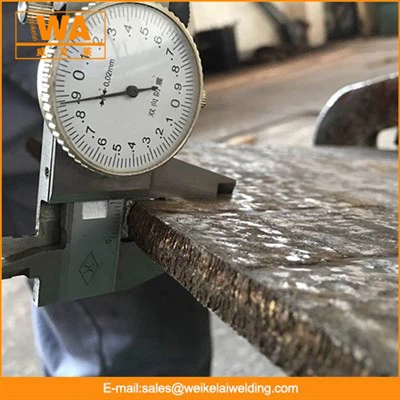
Hey there! As a supplier of Roller Welding Repair, I've seen firsthand how this process can have a significant impact on roller hardness. In this blog, I'm gonna break down the effects of roller welding repair on roller hardness, and why it matters for your operations.
Understanding Roller Hardness
Before we dive into the effects of welding repair, let's quickly go over what roller hardness is. Roller hardness is a measure of a roller's resistance to deformation, wear, and indentation. It's a crucial property, especially in industries where rollers are used for heavy-duty applications like material handling, manufacturing, and mining.
The hardness of a roller is typically measured using the Rockwell or Brinell hardness scales. These scales give us a numerical value that indicates how hard the roller is. A higher hardness value means the roller is more resistant to wear and deformation.
How Roller Welding Repair Works
Roller welding repair is a process where damaged or worn-out rollers are restored to their original condition or even improved. The process involves using welding techniques to add new material to the roller's surface, filling in any cracks, pits, or other defects.
There are different types of welding processes that can be used for roller repair, such as shielded metal arc welding (SMAW), gas metal arc welding (GMAW), and submerged arc welding (SAW). The choice of welding process depends on several factors, including the type of roller, the extent of the damage, and the desired properties of the repaired roller.
Effects of Roller Welding Repair on Roller Hardness
1. Increased Hardness
One of the main effects of roller welding repair is an increase in roller hardness. When new material is added to the roller's surface through welding, it can change the roller's microstructure, resulting in a harder and more wear-resistant surface.
The type of filler material used in the welding process plays a crucial role in determining the final hardness of the repaired roller. For example, using a high-alloy filler material can significantly increase the roller's hardness compared to using a low-alloy filler.
Let's say you have a roller that has been worn down due to continuous use. By using a suitable filler material and welding process, you can restore the roller's surface and increase its hardness, making it more resistant to future wear and tear.
2. Uniformity of Hardness
Another important effect of roller welding repair is the improvement in the uniformity of hardness across the roller's surface. Over time, rollers can develop uneven wear patterns, leading to variations in hardness.
During the welding repair process, the new material is applied evenly across the roller's surface, helping to eliminate these variations and create a more uniform hardness profile. This is especially important in applications where consistent performance is required, such as in precision manufacturing processes.
For instance, in a steel rolling mill, rollers with uniform hardness are essential for producing high-quality steel products. By using roller welding repair, you can ensure that your rollers have the same hardness throughout, resulting in better product quality and reduced downtime.
3. Heat-Affected Zone (HAZ)
While roller welding repair can have positive effects on roller hardness, it's also important to consider the heat-affected zone (HAZ). The HAZ is the area of the roller that has been affected by the heat of the welding process but has not been melted.
The heat from the welding can cause changes in the microstructure of the HAZ, which can lead to a decrease in hardness in this area. The size and extent of the HAZ depend on several factors, including the welding process, the welding parameters, and the type of roller material.
To minimize the negative effects of the HAZ on roller hardness, it's important to use proper welding techniques and control the welding parameters. For example, using a lower welding heat input can reduce the size of the HAZ and minimize the impact on the roller's hardness.


Applications and Benefits
The effects of roller welding repair on roller hardness have several practical applications and benefits in various industries.
1. Material Handling
In the material handling industry, rollers are used to transport heavy loads over long distances. Roller welding repair can help to increase the hardness of these rollers, making them more resistant to wear and deformation. This can result in longer roller life, reduced maintenance costs, and improved operational efficiency.
2. Manufacturing
In manufacturing processes, rollers are used for a variety of applications, such as rolling, forming, and conveying. By improving the hardness and uniformity of rollers through welding repair, manufacturers can produce higher-quality products with fewer defects. This can lead to increased customer satisfaction and a competitive edge in the market.
3. Mining
In the mining industry, rollers are subjected to extreme conditions, including high loads, abrasion, and corrosion. Roller welding repair can help to restore the hardness of these rollers, making them more durable and reliable. This can reduce downtime and increase productivity in mining operations.
Related Services
If you're interested in learning more about roller welding repair and related services, check out our Welding Recondition On Roller page. We also offer Welding Rebuild On Table Liner and Coal Pulverizer Tables services, which can help to improve the performance and longevity of your equipment.
Conclusion
In conclusion, roller welding repair can have a significant impact on roller hardness, offering several benefits such as increased hardness, improved uniformity, and enhanced durability. By understanding the effects of roller welding repair on roller hardness, you can make informed decisions about whether this process is right for your rollers.
If you have any questions or need more information about roller welding repair, feel free to reach out. We're here to help you get the most out of your rollers and improve the efficiency of your operations. Let's talk about how we can work together to meet your roller repair needs!
References
- "Welding Handbook", American Welding Society
- "Materials Science and Engineering: An Introduction", William D. Callister Jr.
- Industry reports and case studies on roller welding repair