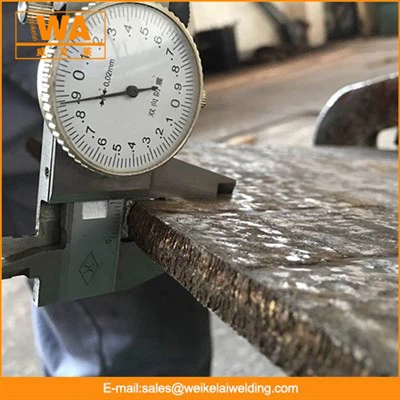
Hey there! As an alloy steel plate supplier, I often get asked about how to measure the thickness of an alloy steel plate. It might seem like a simple task, but there's actually quite a bit to it. In this blog, I'll share some practical methods and considerations for measuring the thickness of alloy steel plates.
Why Measuring Thickness Matters
First off, let's talk about why measuring the thickness of an alloy steel plate is so important. The thickness of a steel plate directly affects its performance and suitability for different applications. For instance, in construction, the right thickness ensures the structural integrity of buildings and bridges. In manufacturing, it can impact the functionality of machinery and equipment. As a supplier, I always want to make sure my customers get the plates with the correct thickness to meet their specific needs.
Direct Measurement Methods
Vernier Caliper
One of the most common and straightforward ways to measure the thickness of an alloy steel plate is by using a vernier caliper. It's a handy tool that can provide relatively accurate measurements. To use it, simply open the jaws of the caliper and place them on either side of the plate. Make sure the caliper is perpendicular to the surface of the plate for an accurate reading. Then, read the measurement on the scale.
The advantage of using a vernier caliper is its simplicity and portability. It's great for quick measurements in the field or in a workshop. However, it has its limitations. It's only suitable for measuring relatively thin plates, usually up to a few centimeters thick. Also, it requires some skill to use properly to get an accurate reading.
Micrometer
A micrometer is another precision measuring tool that can be used to measure the thickness of alloy steel plates. It offers even higher accuracy than a vernier caliper. Similar to a vernier caliper, you place the plate between the anvil and the spindle of the micrometer. Then, turn the thimble until it gently touches the plate. Read the measurement on the sleeve and thimble scale.
Micrometers are ideal for measuring very thin plates or when high precision is required. But they are more expensive and less portable than vernier calipers. Also, they need to be handled with care to avoid damage and ensure accurate measurements.
Non - Direct Measurement Methods
Ultrasonic Thickness Gauge
For thicker alloy steel plates or when you can't access both sides of the plate, an ultrasonic thickness gauge is a great option. This device works by sending ultrasonic waves through the plate. The waves bounce off the opposite surface of the plate and return to the gauge. By measuring the time it takes for the waves to travel through the plate and knowing the speed of sound in the alloy steel, the gauge can calculate the thickness of the plate.
The ultrasonic thickness gauge is very versatile. It can measure plates of various thicknesses, from a few millimeters to several centimeters. It's also non - destructive, which means you don't have to damage the plate to measure its thickness. However, it requires some training to use correctly, and factors like the surface condition of the plate and the presence of internal defects can affect the accuracy of the measurement.
Eddy Current Testing
Eddy current testing is another non - destructive method for measuring the thickness of alloy steel plates. It works based on the principle of electromagnetic induction. When an alternating current is passed through a coil placed near the plate, it creates an eddy current in the plate. The strength of the eddy current is affected by the thickness of the plate. By measuring the changes in the eddy current, the thickness of the plate can be determined.
Eddy current testing is fast and can be used to measure plates with complex shapes. It's also suitable for measuring the thickness of coated plates. But it's mainly used for relatively thin plates, and the accuracy can be affected by factors such as the conductivity of the alloy steel and the presence of magnetic fields.
Considerations When Measuring
Surface Condition
The surface condition of the alloy steel plate can have a significant impact on the accuracy of the measurement. If the surface is rough, dirty, or has a coating, it can affect the contact between the measuring tool and the plate, leading to inaccurate readings. Before measuring, make sure to clean the surface of the plate and remove any debris or coatings if necessary.
Temperature
Temperature can also affect the measurement of the thickness of an alloy steel plate. Steel expands when heated and contracts when cooled. So, if the plate is at a different temperature than the measuring tool, it can lead to measurement errors. It's best to measure the plate at room temperature or take temperature variations into account when calculating the thickness.
Sampling
When dealing with a large batch of alloy steel plates, it's important to take representative samples for measurement. Don't just measure one or two plates and assume they are all the same thickness. Randomly select a sufficient number of plates from different parts of the batch to ensure the accuracy of the overall thickness measurement.
Our Alloy Steel Plate Offerings
At our company, we offer a wide range of alloy steel plates, including Wear Resistant Stainless Steel, Overlay Wear Plate, and Smooth Wear Plate. These plates are made from high - quality alloy steel and are available in various thicknesses to meet different customer requirements.
Whether you need a thin plate for a precision application or a thick plate for heavy - duty construction, we've got you covered. Our plates are carefully inspected to ensure they meet the specified thickness requirements. We use advanced measuring techniques and equipment to guarantee the accuracy of the thickness measurement.


Contact Us for Your Purchase
If you're in the market for alloy steel plates, we'd love to hear from you. Whether you have questions about the thickness measurement, need advice on choosing the right plate for your application, or want to place an order, don't hesitate to reach out. We're committed to providing you with the best quality alloy steel plates and excellent customer service.
References
- "Metrology for Engineers" by Arthur R. Slocum
- "Non - Destructive Testing Handbook" by American Society for Nondestructive Testing