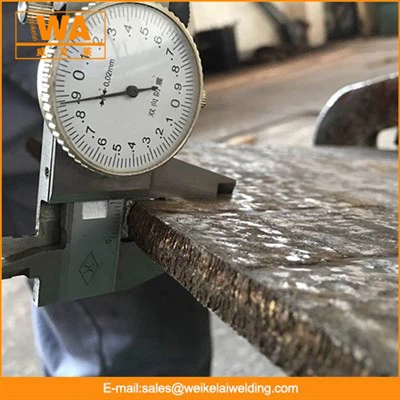
In the realm of industrial applications where wear and abrasion are constant challenges, choosing the right wear plates is crucial for ensuring the longevity and efficiency of equipment. As a supplier of Overlay Wear Plates, I often encounter inquiries about the differences between Overlay Wear Plates and regular wear plates. In this blog post, I will delve into the characteristics, advantages, and applications of both types of wear plates to help you make an informed decision.


Understanding Regular Wear Plates
Regular wear plates, also known as Wear Resistant Steel Plate, are typically made from a single type of steel alloy with inherent wear-resistant properties. These plates are commonly used in various industries, including mining, construction, agriculture, and manufacturing, to protect equipment from abrasion, impact, and corrosion.
One of the key features of regular wear plates is their uniform composition throughout the plate. This uniformity ensures consistent wear resistance across the entire surface, making them suitable for applications where the wear is evenly distributed. Regular wear plates are available in different grades and hardness levels, allowing users to select the most appropriate plate based on the specific requirements of their application.
The manufacturing process of regular wear plates involves quenching and tempering the steel to achieve the desired hardness and toughness. This process enhances the plate's resistance to wear and impact, but it also limits the plate's ability to withstand extreme conditions. In some cases, regular wear plates may experience premature wear or failure when exposed to high temperatures, abrasive materials, or heavy loads.
Introducing Overlay Wear Plates
Overlay Wear Plates, on the other hand, are a specialized type of wear plate that combines the strength of a base metal with the superior wear resistance of a hardfacing alloy. The hardfacing alloy is applied to the surface of the base metal through a welding process, creating a composite material with excellent wear and corrosion resistance.
The unique structure of Overlay Wear Plates provides several advantages over regular wear plates. Firstly, the hardfacing alloy can be customized to meet the specific requirements of different applications. This allows for the selection of an alloy with the optimal combination of hardness, toughness, and wear resistance, ensuring maximum performance in harsh environments.
Secondly, the overlay layer provides a sacrificial surface that absorbs the majority of the wear and abrasion, protecting the base metal from damage. This results in a longer service life for the wear plate and reduces the need for frequent replacements, ultimately saving time and money for the end-user.
Another significant advantage of Overlay Wear Plates is their ability to withstand extreme conditions. The hardfacing alloy can be designed to resist high temperatures, abrasive materials, and corrosive substances, making Overlay Wear Plates suitable for use in a wide range of industries, including mining, cement, power generation, and steel production.
Key Differences between Overlay Wear Plates and Regular Wear Plates
1. Composition and Structure
Regular wear plates are made from a single type of steel alloy, while Overlay Wear Plates consist of a base metal with a hardfacing alloy welded onto the surface. This difference in composition and structure gives Overlay Wear Plates superior wear resistance and the ability to withstand extreme conditions.
2. Wear Resistance
Overlay Wear Plates offer significantly higher wear resistance than regular wear plates. The hardfacing alloy provides a tough and durable surface that can withstand the most demanding wear conditions, including abrasion, impact, and corrosion. In contrast, regular wear plates may experience premature wear and failure when exposed to similar conditions.
3. Customization
Overlay Wear Plates can be customized to meet the specific requirements of different applications. The hardfacing alloy can be selected based on the type of wear, the operating environment, and the desired service life of the wear plate. This level of customization allows for the optimization of performance and the reduction of costs. Regular wear plates, on the other hand, have a more limited range of options in terms of composition and properties.
4. Cost
While Overlay Wear Plates may have a higher initial cost than regular wear plates, they offer a better return on investment in the long run. The longer service life and reduced need for replacements result in lower maintenance costs and increased productivity. Additionally, the ability to customize Overlay Wear Plates to meet specific requirements can further optimize performance and reduce costs.
5. Applications
Regular wear plates are suitable for applications where the wear is relatively mild and evenly distributed. They are commonly used in equipment such as dump trucks, conveyor belts, and agricultural machinery. Overlay Wear Plates, on the other hand, are ideal for applications where the wear is severe and concentrated, such as in mining crushers, cement kilns, and steel mills.
Applications of Overlay Wear Plates
Overlay Wear Plates are widely used in various industries due to their superior wear resistance and durability. Some of the common applications of Overlay Wear Plates include:
Mining
In the mining industry, Overlay Wear Plates are used to protect equipment such as crushers, screens, chutes, and hoppers from the abrasive action of rocks and minerals. The high wear resistance of Overlay Wear Plates ensures that these components can operate efficiently for extended periods, reducing downtime and maintenance costs.
Cement
Cement production involves the handling of large quantities of abrasive materials, such as limestone, clay, and gypsum. Overlay Wear Plates are used in cement kilns, mills, and conveyors to protect the equipment from wear and corrosion, ensuring reliable operation and high productivity.
Power Generation
Power plants, especially those using coal or biomass as fuel, face significant wear and corrosion challenges. Overlay Wear Plates are used in boilers, ash handling systems, and coal mills to protect the equipment from the abrasive and corrosive effects of the fuel and combustion products.
Steel Production
In the steel industry, Overlay Wear Plates are used in rolling mills, continuous casters, and conveyor systems to protect the equipment from the high temperatures, abrasive materials, and heavy loads associated with steel production. The superior wear resistance and heat resistance of Overlay Wear Plates ensure that these components can operate efficiently and safely.
Conclusion
In summary, Overlay Wear Plates offer several advantages over regular wear plates, including superior wear resistance, customization options, and the ability to withstand extreme conditions. While regular wear plates may be suitable for some applications, Overlay Wear Plates are the preferred choice for industries that require high-performance wear protection.
As a supplier of Overlay Wear Plates, I am committed to providing our customers with the highest quality products and services. Our team of experts can help you select the most appropriate Overlay Wear Plate for your specific application, ensuring optimal performance and cost-effectiveness.
If you are interested in learning more about our Overlay Wear Plates or would like to discuss your specific requirements, please feel free to contact us. We look forward to working with you to find the best wear protection solution for your business.
References
- ASM Handbook, Volume 13A: Corrosion: Fundamentals, Testing, and Protection
- Steel Structures Manual, American Institute of Steel Construction
- Wear Control Handbook, ASM International