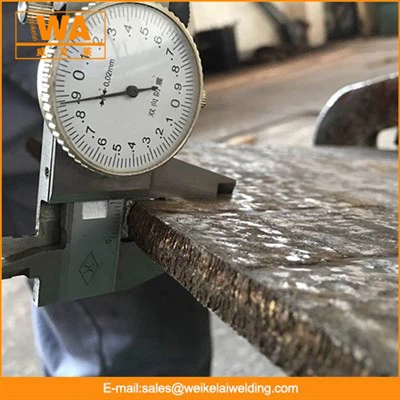
Improving the adhesion of the weld in welding recondition is crucial for us as a welding recondition supplier. It not only affects the quality of our work but also our reputation in the market. So, let's dive into some practical ways to boost that weld adhesion.
Understanding the Basics of Weld Adhesion
First off, we need to know what weld adhesion really means. In simple terms, it's how well the weld material sticks to the base metal. A strong adhesion ensures a durable and reliable repair. There are several factors that can influence this adhesion, like the type of metals involved, the welding process used, and the surface preparation.


When we're dealing with different metals, their properties can vary a lot. For example, some metals have high melting points, while others are more reactive. This means we have to choose the right filler material that can bond well with the base metal. If we use the wrong filler, the adhesion might be weak, and the weld could fail over time.
Surface Preparation: The Key to Good Adhesion
One of the most important steps in improving weld adhesion is proper surface preparation. You see, if the surface of the metal is dirty, greasy, or oxidized, the weld won't stick properly. So, we always make sure to clean the base metal thoroughly before starting the welding process.
We use different methods for cleaning depending on the type of metal and the level of contamination. For light dirt and oil, a simple solvent cleaning can do the trick. But for more stubborn oxidation, we might use abrasive blasting or chemical pickling. This helps to remove any impurities and create a clean surface for the weld to adhere to.
Another thing we do is to rough up the surface slightly. This gives the weld material more area to grip onto. We can do this by using a wire brush or sandpaper. Just a little bit of roughness can make a big difference in the adhesion.
Choosing the Right Welding Process
There are several welding processes out there, such as MIG, TIG, and Stick welding. Each process has its own advantages and disadvantages when it comes to weld adhesion.
MIG welding is fast and easy to use, but it might not be the best choice for all metals. It works well with thinner materials and some common metals like steel. But for some high-strength or reactive metals, TIG welding might be a better option. TIG welding gives us more control over the heat and the filler material, which can result in a stronger weld adhesion.
Stick welding is a versatile process that can be used for many different metals and thicknesses. It's great for outdoor or on-site repairs. However, it requires more skill and experience to get a good adhesion. We always choose the welding process based on the specific requirements of the job.
Controlling the Welding Parameters
The welding parameters, such as the current, voltage, and travel speed, also play a big role in weld adhesion. If the current is too low, the weld might not penetrate enough, and the adhesion will be weak. On the other hand, if the current is too high, it can cause overheating and damage to the base metal.
We have to find the right balance for each job. This usually involves some testing and adjustment. We also need to control the voltage and travel speed to ensure a stable and consistent weld. If the travel speed is too fast, the weld might not have enough time to bond properly. If it's too slow, it can lead to excessive heat and distortion.
Post-Weld Treatment
Once the welding is done, we can also take some steps to improve the adhesion further. One of the most common post-weld treatments is heat treatment. This can help to relieve the stress in the weld and improve its mechanical properties.
We can also apply a protective coating to the weld. This helps to prevent corrosion and further damage. For example, we might use a paint or a galvanizing process. This not only improves the adhesion but also extends the lifespan of the weld.
Real-World Examples
Let's take a look at some real-world examples of how we've improved weld adhesion in our work. We often do Welding Rebuild On Roller. These rollers are used in various industrial applications, and they need to have a strong weld adhesion to withstand the high loads and stresses.
By following the steps we've discussed above, such as proper surface preparation, choosing the right welding process, and controlling the welding parameters, we've been able to achieve excellent adhesion on these rollers. This has led to longer-lasting repairs and satisfied customers.
Another example is Welding Rebuild On Table Liner. These table liners are used in heavy machinery, and they need to be able to resist wear and tear. By improving the weld adhesion, we've been able to make these table liners more durable and reliable.
We also work on Coal Pulverizer Tables. These tables are exposed to harsh conditions, including high temperatures and abrasive materials. By using the right welding techniques and post-weld treatments, we've been able to improve the adhesion of the welds and increase the lifespan of these tables.
Conclusion
Improving the adhesion of the weld in welding recondition is not an easy task, but it's definitely worth it. By understanding the basics of weld adhesion, preparing the surface properly, choosing the right welding process and parameters, and applying post-weld treatments, we can achieve strong and reliable welds.
If you're in need of welding recondition services, don't hesitate to contact us. We have the experience and expertise to handle all your welding needs. Whether it's a small repair or a large-scale project, we can provide you with high-quality welds with excellent adhesion. Let's work together to make your equipment last longer and perform better.
References
- Welding Handbook, American Welding Society
- Metallurgy for Welders, The Lincoln Electric Company