Flux Cored Arc Welding (FCAW) is a widely used welding process known for its high deposition rates, excellent penetration, and versatility in various welding applications. One of the critical factors that significantly influence the quality of FCAW is the arc length. Proper control of the arc length ensures consistent weld quality, reduces defects, and enhances overall productivity. As a leading supplier of Flux Cored Arc welding products, we understand the importance of arc length control and are here to share some valuable insights on how to achieve it effectively.
Understanding Arc Length in Flux Cored Arc Welding
The arc length in FCAW refers to the distance between the end of the welding wire and the workpiece. It plays a crucial role in determining the heat input, weld bead shape, penetration, and the stability of the welding arc. A too-long arc can lead to excessive spatter, poor fusion, and a wide, shallow weld bead. On the other hand, a too-short arc can cause the wire to stub into the workpiece, resulting in erratic arcing, porosity, and potential damage to the welding equipment.
Factors Affecting Arc Length
Several factors can influence the arc length in FCAW, and understanding these factors is essential for effective control. Here are some of the key factors:
- Welding Current and Voltage: The welding current and voltage settings have a direct impact on the arc length. Higher current and voltage settings generally result in a longer arc, while lower settings produce a shorter arc. It is crucial to select the appropriate current and voltage values based on the thickness of the workpiece, the type of welding wire, and the desired weld quality.
- Welding Speed: The speed at which the welding torch is moved along the joint also affects the arc length. A faster welding speed can cause the arc to become longer, while a slower speed can result in a shorter arc. Maintaining a consistent welding speed is essential for achieving a uniform arc length and weld quality.
- Wire Feed Speed: The wire feed speed determines the rate at which the welding wire is fed into the arc. A higher wire feed speed can increase the arc length, while a lower speed can decrease it. It is important to adjust the wire feed speed in conjunction with the welding current and voltage to maintain a stable arc.
- Shielding Gas: In FCAW, shielding gas is used to protect the weld pool from atmospheric contamination. The type and flow rate of the shielding gas can affect the arc length and stability. Different types of shielding gases have different properties, and the appropriate gas should be selected based on the specific welding application.
- Workpiece Thickness and Material: The thickness and material of the workpiece can also influence the arc length. Thicker workpieces generally require higher welding currents and voltages, which can result in a longer arc. Additionally, different materials have different thermal conductivity and melting points, which can affect the heat transfer and arc characteristics.
Techniques for Controlling Arc Length
Controlling the arc length in FCAW requires a combination of proper equipment setup, technique, and operator skill. Here are some techniques that can help you achieve better arc length control:
- Proper Equipment Setup: Ensure that your welding equipment is properly calibrated and in good working condition. Check the welding machine settings, including the current, voltage, and wire feed speed, to ensure they are appropriate for the welding task. Make sure the welding torch is in good condition and that the contact tip is clean and properly sized.
- Maintain a Consistent Torch Angle: The angle of the welding torch relative to the workpiece can affect the arc length and weld quality. A torch angle of around 10-15 degrees from vertical is generally recommended for FCAW. Maintaining a consistent torch angle throughout the welding process helps to ensure a uniform arc length and weld bead shape.
- Use a Steady Hand: A steady hand is essential for maintaining a consistent arc length. Practice your welding technique to develop a smooth and steady motion when moving the welding torch along the joint. Avoid sudden movements or jerks that can cause the arc length to fluctuate.
- Monitor the Arc: Keep a close eye on the arc during the welding process. Look for signs of a stable arc, such as a bright, consistent light and a smooth, even bead. If the arc appears unstable or the bead looks irregular, adjust the welding parameters as needed to correct the arc length.
- Adjust the Welding Parameters: If you notice that the arc length is too long or too short, you can adjust the welding parameters to correct it. For example, if the arc is too long, you can decrease the voltage or increase the wire feed speed. If the arc is too short, you can increase the voltage or decrease the wire feed speed. Make small adjustments at a time and monitor the arc to see the effect of the changes.
Importance of Arc Length Control
Proper arc length control is crucial for achieving high-quality welds in FCAW. Here are some of the key benefits of maintaining a consistent arc length:
- Improved Weld Quality: A consistent arc length helps to ensure uniform heat input, penetration, and weld bead shape. This results in stronger, more reliable welds with fewer defects, such as porosity, lack of fusion, and spatter.
- Enhanced Productivity: By controlling the arc length, you can reduce the need for rework and repairs, which can save time and money. Additionally, a stable arc allows for higher welding speeds, increasing productivity and efficiency.
- Extended Equipment Life: Maintaining a proper arc length can also help to extend the life of your welding equipment. A stable arc reduces the wear and tear on the welding torch, contact tip, and other components, reducing the frequency of replacement and maintenance.
Choosing the Right Welding Wire
As a Flux Cored Arc welding supplier, we offer a wide range of high-quality welding wires to meet the diverse needs of our customers. Here are some of the different types of welding wires available and their applications:
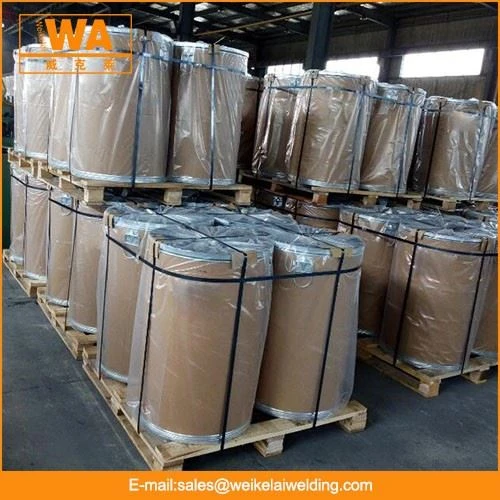

- Mild Steel Mig Welding Wire: Mild steel MIG welding wire is a popular choice for welding mild steel and low-alloy steel materials. It offers good weldability, high deposition rates, and excellent mechanical properties.
- Self Shielded Flux Cored Wire: Self-shielded flux cored wire is designed for use without the need for external shielding gas. It is ideal for outdoor welding applications where shielding gas may not be practical or available.
- Dual Shield Welding Wire: Dual shield welding wire combines the benefits of both flux cored wire and shielding gas. It provides excellent weld quality, high deposition rates, and good penetration, making it suitable for a wide range of welding applications.
Conclusion
Controlling the arc length in Flux Cored Arc welding is essential for achieving high-quality welds and maximizing productivity. By understanding the factors that affect arc length, using the appropriate techniques for control, and choosing the right welding wire, you can ensure consistent and reliable welds. As a leading supplier of Flux Cored Arc welding products, we are committed to providing our customers with the highest quality products and technical support. If you have any questions or need assistance with your welding applications, please do not hesitate to contact us. We look forward to working with you to meet your welding needs.
References
- American Welding Society. (2020). Welding Handbook, Volume 2: Welding Processes. Miami, FL: American Welding Society.
- Oberg, E., Jones, F. D., Horton, H. L., & Ryffel, H. H. (2016). Machinery's Handbook: A Reference Book for the Mechanical Engineer, Designer, Manufacturing Engineer, Draftsman, Toolmaker, and Machinist. New York, NY: Industrial Press.
- Welding Journal. (2021). The Welding Journal. Miami, FL: American Welding Society.