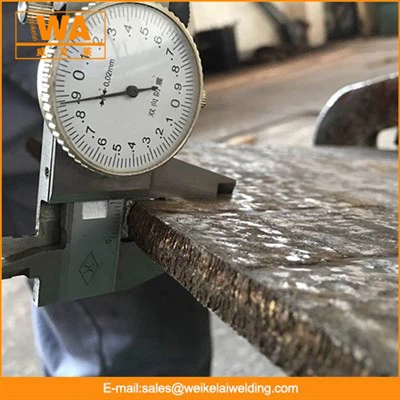
Roller welding repair is a critical process in many industries, especially those involving heavy machinery and equipment. As a dedicated roller welding repair supplier, I've witnessed firsthand the importance of avoiding common defects in this repair work. In this blog post, I'll share some valuable insights on how to steer clear of these issues and ensure high - quality roller welding repairs.
Understanding the Common Defects in Roller Welding Repair
Before we discuss how to avoid defects, it's essential to know what they are. Some of the most prevalent defects in roller welding repair include porosity, cracking, lack of fusion, and excessive distortion.
Porosity is the presence of small holes or voids in the weld metal. It can occur due to several factors such as improper shielding gas, contaminated base metal, or incorrect welding parameters. Cracking, on the other hand, can be either hot cracking or cold cracking. Hot cracking happens during the solidification process, often due to high sulfur or phosphorus content in the base metal or improper filler metal selection. Cold cracking, also known as hydrogen - induced cracking, occurs after the weld has cooled and is mainly caused by the presence of hydrogen in the weld area, high residual stresses, and hard microstructures.
Lack of fusion is a situation where the weld metal fails to bond properly with the base metal or with previous weld beads. This can be due to insufficient heat input, improper joint preparation, or incorrect welding technique. Excessive distortion is the unwanted change in the shape of the roller after welding. It is usually caused by uneven heating and cooling during the welding process, improper clamping, or incorrect welding sequence.
Proper Material Selection
One of the fundamental steps in avoiding common defects in roller welding repair is proper material selection. The base metal of the roller has specific properties, and the filler metal should be chosen to match these properties as closely as possible. For example, if the roller is made of a high - strength alloy steel, the filler metal should also have similar strength and ductility characteristics.
When selecting the filler metal, consider factors such as its chemical composition, mechanical properties, and weldability. It's also important to ensure that the filler metal is compatible with the shielding gas used in the welding process. Using the wrong filler metal can lead to issues like cracking, porosity, and poor mechanical properties of the weld.
In addition to the filler metal, the quality of the base metal is also crucial. Inspect the roller for any signs of damage, corrosion, or contamination before starting the welding repair. If the base metal is contaminated with oil, grease, or rust, it can cause porosity and other defects in the weld. Clean the base metal thoroughly using appropriate cleaning methods such as grinding, sandblasting, or chemical cleaning.
Precise Welding Parameter Setting
Welding parameters play a vital role in the quality of the weld. Incorrect parameters can lead to various defects. The main welding parameters include welding current, voltage, welding speed, and gas flow rate.
The welding current determines the heat input into the weld. If the current is too low, there may be insufficient heat to melt the base metal and filler metal properly, resulting in lack of fusion. On the other hand, if the current is too high, it can cause excessive heat, leading to distortion, cracking, and porosity. The voltage also affects the arc characteristics and the shape of the weld bead. A stable arc is essential for a good - quality weld, and the voltage should be adjusted accordingly.
Welding speed is another critical parameter. If the welding speed is too fast, the weld may not have enough time to fuse properly, leading to lack of fusion. If the speed is too slow, it can cause excessive heat input and distortion. The gas flow rate is important for shielding the weld from atmospheric contamination. An improper gas flow rate can result in porosity.
It's important to note that the optimal welding parameters may vary depending on the type of welding process used (e.g., MIG, TIG, or SMAW), the thickness of the base metal, and the type of filler metal. Therefore, it's necessary to conduct test welds and adjust the parameters based on the results.
Adequate Joint Preparation
Proper joint preparation is essential for a successful roller welding repair. The joint design should be appropriate for the thickness of the base metal and the type of loading the roller will be subjected to. Common joint designs for roller welding repair include butt joints, fillet joints, and groove joints.


Before welding, the edges of the joint should be properly cleaned and beveled if necessary. Beveling helps to ensure better penetration and fusion of the weld metal. The root face and root gap should be carefully controlled to avoid issues like lack of fusion and excessive penetration.
Clamping the parts correctly during welding is also crucial. Clamping helps to hold the parts in place and reduces the risk of distortion. However, it's important not to over - clamp, as this can introduce additional stresses in the weld area.
Skilled Welding Operators
The skill and experience of the welding operator are key factors in avoiding common defects in roller welding repair. A skilled operator has a good understanding of welding processes, parameters, and techniques. They can identify potential problems early and take appropriate measures to prevent them.
Welding operators should be trained and certified according to relevant standards. Regular training and refresher courses can help them stay updated with the latest welding technologies and best practices. In addition, experienced operators are more likely to have good hand - eye coordination and be able to maintain a stable welding arc, which is essential for a high - quality weld.
Post - Welding Treatment
After the welding repair is completed, post - welding treatment is necessary to ensure the integrity of the weld. One of the important post - welding treatments is stress relieving. Welding introduces residual stresses in the roller, which can lead to cracking over time. Stress relieving can be achieved through heat treatment, such as annealing or tempering.
Non - destructive testing (NDT) is also an important part of post - welding treatment. NDT methods such as ultrasonic testing, magnetic particle testing, and liquid penetrant testing can be used to detect any internal or surface defects in the weld. If any defects are found, appropriate corrective measures should be taken, such as re - welding or grinding.
Case Studies and Additional Resources
To further illustrate the importance of avoiding common defects in roller welding repair, let's look at some real - world examples. For instance, in a coal - fired power plant, the Repair Coal Mill Table Liners is a critical maintenance task. If the welding repair of these liners is not done correctly, it can lead to premature wear and failure, resulting in costly downtime.
Another example is the Welding Rebuild On Roller. In heavy - duty industrial applications, rollers are subjected to high loads and abrasive wear. A high - quality welding rebuild can extend the service life of the roller, but only if common defects are avoided. Similarly, Welding Rebuild On Table Liner requires careful attention to detail to ensure a long - lasting repair.
Conclusion and Call to Action
Avoiding common defects in roller welding repair is a multi - faceted process that involves proper material selection, precise welding parameter setting, adequate joint preparation, skilled welding operators, and post - welding treatment. By following these best practices, you can ensure high - quality roller welding repairs that will extend the service life of your rollers and reduce downtime.
If you're in need of roller welding repair services or have any questions about avoiding common defects in this process, I encourage you to reach out. Our team of experts is ready to assist you in achieving the best results for your roller welding repair needs.
References
- AWS Welding Handbook, American Welding Society
- Welding Metallurgy, L. E. Davis
- Welding Technology, John R. Walker