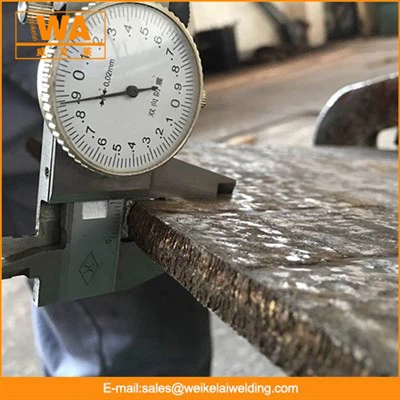
Hey there! As a supplier of hardfacing pipes, I've seen firsthand how hardfacing can have a major impact on the corrosion resistance of pipes. In this blog, I'm gonna break down what hardfacing is, how it affects corrosion resistance, and why it's super important for various industries.
First off, let's talk about what hardfacing is. Hardfacing is a process where a layer of hard, wear - resistant material is applied to the surface of a pipe. This is usually done through welding techniques, like arc welding or plasma welding. The materials used for hardfacing can vary, but common ones include alloys of chromium, nickel, and tungsten. These alloys are chosen because they have excellent hardness and resistance to wear and corrosion.
Now, let's get into how hardfacing affects the corrosion resistance of pipes. One of the main ways is by creating a physical barrier between the pipe substrate and the corrosive environment. When a pipe is exposed to corrosive substances, like acids, salts, or moisture, the hardfacing layer acts as a shield. It prevents the corrosive agents from directly attacking the base metal of the pipe.
For example, in the oil and gas industry, pipes are often exposed to highly corrosive substances such as hydrogen sulfide and brine. Without proper protection, these substances can quickly eat away at the pipes, leading to leaks and failures. By applying a hardfacing layer, we can significantly increase the lifespan of the pipes. The hardfacing materials are formulated to be resistant to the specific corrosive agents present in the environment.
Another way hardfacing improves corrosion resistance is by altering the surface properties of the pipe. The hardfacing layer can change the surface energy and chemical composition of the pipe. This makes it less likely for corrosive substances to adhere to the surface. When corrosive agents can't stick to the pipe, they can't initiate the corrosion process as easily.


Moreover, hardfacing can also enhance the passivation of the pipe surface. Passivation is a natural process where a thin, protective oxide layer forms on the surface of a metal. This oxide layer acts as a barrier against further corrosion. Hardfacing materials can promote the formation of a more stable and protective passivation layer, which further improves the corrosion resistance of the pipe.
Let's take a look at some of the different types of hardfacing pipes we offer and how they relate to corrosion resistance.
We have the Bent Cladding Pipe. This type of pipe is often used in applications where the pipe needs to be bent to fit a specific layout. The hardfacing layer on the bent cladding pipe provides excellent corrosion resistance, even after the bending process. The materials used in the hardfacing are carefully selected to maintain their integrity and protective properties during bending.
Then there's the Cco Abrasion Pipe. This pipe is designed to withstand both abrasion and corrosion. In many industrial settings, pipes are not only exposed to corrosive substances but also to abrasive materials, like sand or gravel. The hardfacing on the Cco Abrasion Pipe is engineered to resist both abrasion and corrosion simultaneously. It forms a tough, protective layer that can handle the harsh conditions of these environments.
Our Hardfacing Abrasion Pipe is another great option. It's specifically designed for applications where there is a high risk of abrasion and corrosion. The hardfacing layer on this pipe is thick and durable, providing long - term protection against both types of damage.
Now, you might be wondering how to choose the right hardfacing pipe for your specific needs. Well, it all depends on the environment in which the pipe will be used. You need to consider factors such as the type of corrosive agents present, the temperature, the pressure, and the presence of abrasive materials.
If you're dealing with a highly acidic environment, you'll want a hardfacing material that is resistant to acids. Materials with high chromium content are often a good choice in these situations. On the other hand, if the pipe will be exposed to high - pressure and high - temperature conditions, you'll need a hardfacing material that can maintain its properties under these extreme conditions.
In addition to choosing the right hardfacing material, proper installation and maintenance are also crucial for ensuring the long - term corrosion resistance of the pipes. During installation, it's important to make sure that the hardfacing layer is not damaged. Any scratches or cracks in the hardfacing can expose the base metal to the corrosive environment, reducing the effectiveness of the protection.
Regular inspections and maintenance are also necessary. This includes checking for signs of corrosion, wear, and damage to the hardfacing layer. If any issues are detected, they should be addressed promptly to prevent further damage to the pipe.
In conclusion, hardfacing has a significant impact on the corrosion resistance of pipes. It provides a physical barrier, alters surface properties, and promotes passivation, all of which help to protect the pipes from corrosive substances. As a hardfacing pipe supplier, we offer a variety of pipes, such as the Bent Cladding Pipe, Cco Abrasion Pipe, and Hardfacing Abrasion Pipe, to meet different industry needs.
If you're in the market for hardfacing pipes and want to learn more about how they can improve the corrosion resistance of your pipes, don't hesitate to reach out. We're here to help you choose the right solution for your specific application. Contact us to start a conversation about your requirements and let's work together to find the best hardfacing pipe for you.
References
- Smith, J. (2018). "Advances in Hardfacing Technology for Corrosion Resistance". Journal of Materials Engineering.
- Johnson, M. (2019). "The Role of Hardfacing in Protecting Pipes from Corrosion". Industrial Piping Magazine.
- Brown, K. (2020). "Hardfacing Materials and Their Applications in Corrosive Environments". Materials Science Review.