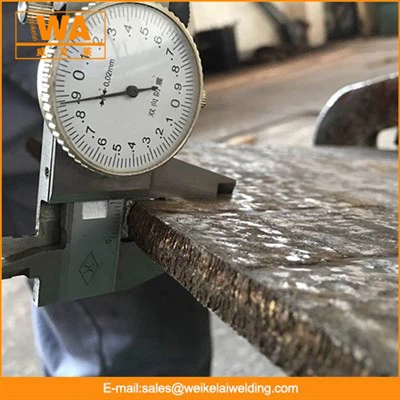
Hey there! As a supplier of Flux Cored MIG Wire, I'm super stoked to break down how this awesome welding material works. It's a game - changer in the welding world, and I'm gonna share all the ins and outs with you.
What is Flux Cored MIG Wire?
First things first, let's get a clear idea of what flux cored MIG wire is. It's a tubular wire filled with flux in the center. Unlike solid MIG wire, which is just a single piece of metal, flux cored wire has this special flux core that plays a crucial role in the welding process.
The outer part of the wire is usually made of a metal like mild steel, stainless steel, or aluminum, depending on the application. And that flux inside? It's a mixture of various chemicals and minerals that do some pretty amazing things during welding.
The Welding Process
So, how does it all work? Well, when you start the welding process, you use a MIG welding machine. The wire is fed through a welding gun at a controlled speed. As the wire comes out of the gun and makes contact with the workpiece, an electric arc is created between the wire and the metal.
This arc generates a whole lot of heat - we're talking temperatures of around 6000°F (3315°C)! That heat melts both the wire and the surface of the workpiece. The molten metal from the wire and the base metal mix together, forming a strong bond as they cool down.
The Role of the Flux
Now, let's talk about the star of the show - the flux. The flux in the core of the wire has several important functions.
Shielding Gas Replacement
One of the main jobs of the flux is to act as a shielding agent. In traditional MIG welding, you need an external shielding gas, like argon or carbon dioxide, to protect the molten metal from the surrounding air. But with flux cored MIG wire, the flux does this job for you.
When the flux is heated by the arc, it decomposes and releases gases. These gases form a protective shield around the weld pool, preventing oxygen, nitrogen, and other atmospheric gases from getting in. If these gases were to contaminate the weld pool, it could lead to defects like porosity, cracking, or reduced strength.
Slag Formation
Another important function of the flux is to form slag. As the flux melts, it floats to the top of the weld pool and solidifies into a layer of slag. This slag acts as an insulator, slowing down the cooling rate of the weld. A slower cooling rate is often beneficial because it allows the metal to form a more stable and stronger microstructure.


After the weld is complete, you can easily remove the slag with a chipping hammer or a wire brush. This reveals the clean, solid weld underneath.
Types of Flux Cored MIG Wire
There are different types of flux cored MIG wire, each designed for specific applications.
Self - Shielded Flux Cored Wire
Self - shielded flux cored wire is great for outdoor welding or situations where it's difficult to use an external shielding gas. As the name suggests, it doesn't require any additional shielding gas. The flux inside the wire provides all the protection needed. You can check out our Self Shielded Flux Cored Wire for more details on this type.
Gas - Shielded Flux Cored Wire
Gas - shielded flux cored wire, on the other hand, is used in conjunction with an external shielding gas. This type of wire typically produces a cleaner and more precise weld compared to self - shielded wire. The combination of the flux and the external gas provides enhanced protection and better control over the welding process.
Resistant Flux Core Wire
Resistant flux core wire is designed for applications where the weld needs to have high resistance to corrosion, wear, or heat. It's commonly used in industries like automotive, construction, and manufacturing. If you're interested in this type of wire, you can visit our Resistant Flux Core Wire page.
Seamless Flux Cored Wire
Seamless flux cored wire is a newer innovation. It has a smooth outer surface, which allows for a more consistent wire feed and better arc stability. This results in higher - quality welds. You can learn more about our Seamless Flux Cored Wire.
Advantages of Using Flux Cored MIG Wire
There are several reasons why flux cored MIG wire is a popular choice among welders.
High Deposition Rate
Flux cored wire has a high deposition rate, which means you can deposit more metal in a shorter amount of time compared to other welding methods. This makes it great for large - scale welding projects where speed is important.
Versatility
It can be used to weld a variety of metals, including mild steel, stainless steel, and aluminum. And it can be used in different positions, such as flat, horizontal, vertical, and overhead.
Good Penetration
Flux cored MIG wire provides good penetration into the base metal, which results in strong and reliable welds.
Disadvantages
Of course, no welding method is perfect. Flux cored MIG wire also has a few drawbacks.
Slag Removal
As I mentioned earlier, you need to remove the slag after welding. This can be a time - consuming process, especially if you're working on a large project.
Smoke and Fumes
The welding process can produce a significant amount of smoke and fumes. You need to have proper ventilation in your workspace to protect yourself from these potentially harmful substances.
Conclusion
So, there you have it - a detailed look at how flux cored MIG wire works. It's a versatile and powerful welding material that offers many advantages. Whether you're a professional welder or a DIY enthusiast, it's definitely worth considering for your next welding project.
If you're interested in purchasing flux cored MIG wire, we're here to help. We offer a wide range of high - quality wires to meet your specific needs. Just reach out to us for a quote and let's start the conversation about your welding requirements. We're always happy to assist you in finding the right product for your job.
References
- AWS Welding Handbook, Volume 2: Welding Processes
- Welding Metallurgy by John C. Lippold and David K. Miller