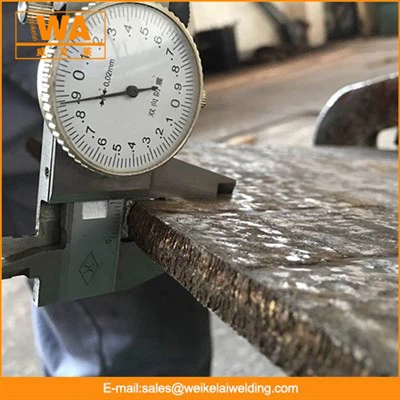
As a supplier of Overlay Wear Plates, I often receive inquiries from customers about the installation process. One of the most common questions is, "Do Overlay Wear Plates require special handling during installation?" In this blog post, I'll explore this question in depth, sharing insights based on our experience and industry knowledge.
Understanding Overlay Wear Plates
Overlay Wear Plates are engineered to provide superior wear resistance in harsh environments. They typically consist of a base metal layer overlaid with a hardfacing material, which is custom - formulated to withstand high levels of abrasion, impact, and corrosion. The combination of these materials gives Overlay Wear Plates their unique properties, making them ideal for applications in mining, construction, cement, and other heavy - duty industries.
Overlay Wear Plates are available in various types, each designed to meet specific performance requirements. For example, Manganese Wear Plate is known for its excellent work - hardening properties, which increase its hardness and wear resistance under impact. High Wear Resistant Steel offers a high level of abrasion resistance, while Wear Steel Plate provides a balance of wear resistance and toughness.
Special Handling Requirements during Installation
Surface Preparation
One of the most critical aspects of installing Overlay Wear Plates is proper surface preparation. The base surface where the plate will be installed must be clean, dry, and free of any contaminants such as oil, grease, rust, or scale. Any impurities on the surface can prevent proper bonding between the plate and the base material, leading to premature failure.
To prepare the surface, it is recommended to use abrasive blasting or mechanical cleaning methods. Abrasive blasting can effectively remove rust and scale, creating a rough surface profile that promotes better adhesion. After blasting, the surface should be thoroughly cleaned to remove any residual dust or debris.
Handling and Storage
Overlay Wear Plates are relatively heavy and brittle compared to some other types of steel plates. Therefore, special care must be taken during handling and storage to prevent damage. When lifting the plates, it is essential to use appropriate lifting equipment, such as slings or magnets, to ensure a secure grip. Avoid dropping or impacting the plates, as this can cause cracks or chipping in the hardfacing layer.
During storage, the plates should be stored in a dry, protected area. Stacking the plates properly is also crucial to prevent warping or deformation. It is advisable to place spacers between the plates to allow for air circulation and prevent moisture buildup.
Welding and Fastening
Welding and fastening are common methods used to install Overlay Wear Plates. However, these processes require special techniques to avoid damaging the hardfacing layer.
When welding, it is important to use a welding process and filler material that are compatible with the base metal and the hardfacing layer of the plate. Pre - heating the base material before welding can help reduce the risk of cracking. The welding parameters, such as current, voltage, and travel speed, should be carefully controlled to ensure a strong, stable weld.
If using fasteners, such as bolts or screws, it is necessary to drill holes in the plate and the base material accurately. The holes should be slightly larger than the fastener diameter to prevent over - tightening and stress on the plate. Additionally, using washers can help distribute the load evenly and prevent damage to the plate.
Temperature Considerations
Overlay Wear Plates can be sensitive to temperature changes during installation. Extreme cold can make the plates more brittle and prone to cracking, while high temperatures can cause the hardfacing layer to degrade. Therefore, it is important to install the plates within the recommended temperature range provided by the manufacturer.
In cold weather conditions, it may be necessary to heat the plates and the base material to the appropriate temperature before installation. This can be done using heating blankets or torches, but care must be taken to ensure uniform heating. Conversely, in hot conditions, proper ventilation should be provided to prevent overheating of the plates during welding or other installation processes.
Benefits of Special Handling
Proper handling during the installation of Overlay Wear Plates offers several benefits. First and foremost, it ensures the long - term performance of the plates. By following the correct installation procedures, the plates can form a strong bond with the base material, providing maximum wear resistance and durability.
Secondly, special handling reduces the risk of premature failure. Cracks, delamination, or other forms of damage that can occur due to improper handling can significantly shorten the lifespan of the plates, leading to increased maintenance costs and downtime.
Finally, proper installation enhances safety. Well - installed Overlay Wear Plates are less likely to come loose or break during operation, reducing the risk of accidents in the workplace.


Conclusion
In conclusion, Overlay Wear Plates do require special handling during installation. From surface preparation to welding and temperature control, every step of the installation process must be carried out with care to ensure the best performance and longevity of the plates.
If you are considering purchasing Overlay Wear Plates for your project, our team of experts is here to assist you. We can provide detailed installation guidelines and technical support to ensure a successful installation. Whether you need Manganese Wear Plate, High Wear Resistant Steel, or Wear Steel Plate, we have the right solution for your needs. Contact us today to discuss your requirements and get started on the path to improved wear resistance and operational efficiency.
References
- "Wear Plate Handbook", published by a leading industry association.
- Technical papers on overlay wear plate manufacturing and installation from reputed research institutions.