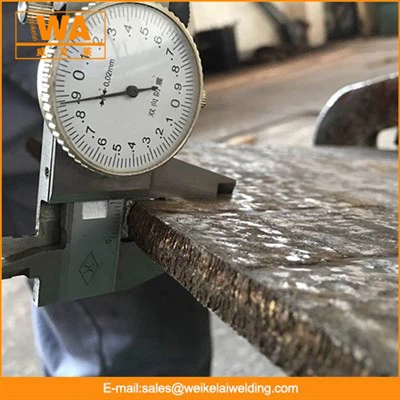
As a supplier of overlay wear plates, I often encounter questions from customers regarding the structure of these plates. One of the most common queries is whether overlay wear plates have a uniform structure. In this blog post, I will delve into this topic, exploring the various factors that influence the structure of overlay wear plates and determining whether uniformity is achievable.
Understanding Overlay Wear Plates
Overlay wear plates are engineered materials designed to protect surfaces from wear, abrasion, and impact. They are typically composed of a base metal layer and a wear-resistant overlay layer. The base metal provides structural support, while the overlay layer offers protection against the harsh conditions that cause wear.
The overlay layer can be made from a variety of materials, including Chrome Carbide Plate, smooth wear plate, and Manganese Wear Plate. Each material has its unique properties and is chosen based on the specific application requirements. For example, chrome carbide plates are known for their excellent abrasion resistance, making them suitable for applications in mining, cement, and power generation industries. On the other hand, manganese wear plates are highly impact-resistant, making them ideal for use in heavy machinery and equipment.
Factors Influencing the Structure of Overlay Wear Plates
The structure of overlay wear plates is influenced by several factors, including the manufacturing process, the type of overlay material used, and the application requirements.
Manufacturing Process
The manufacturing process plays a crucial role in determining the structure of overlay wear plates. There are several methods for applying the overlay layer to the base metal, including welding, thermal spraying, and cladding. Each method has its advantages and disadvantages, which can affect the structure and properties of the final product.


Welding is one of the most common methods for applying the overlay layer. It involves melting the overlay material and fusing it to the base metal using a welding process. This method allows for a strong bond between the overlay and the base metal, but it can also result in a non-uniform structure due to the heat input and the formation of weld beads.
Thermal spraying is another method for applying the overlay layer. It involves spraying molten or semi-molten particles of the overlay material onto the base metal surface. This method can produce a more uniform structure compared to welding, but it may result in a weaker bond between the overlay and the base metal.
Cladding is a process in which a thin layer of the overlay material is bonded to the base metal using a high-pressure or high-temperature process. This method can produce a very uniform and strong bond between the overlay and the base metal, but it is more expensive and time-consuming compared to the other methods.
Type of Overlay Material
The type of overlay material used also has a significant impact on the structure of overlay wear plates. Different overlay materials have different properties, such as hardness, toughness, and wear resistance, which can affect the structure and performance of the final product.
For example, Chrome Carbide Plate is a popular overlay material due to its high hardness and excellent abrasion resistance. However, chrome carbide plates can be brittle and prone to cracking under high impact loads. On the other hand, Manganese Wear Plate is a more ductile and impact-resistant material, but it may have lower abrasion resistance compared to chrome carbide plates.
Application Requirements
The application requirements also play a role in determining the structure of overlay wear plates. Different applications have different wear mechanisms and operating conditions, which require different types of overlay materials and structures.
For example, in applications where abrasion is the primary wear mechanism, such as in mining and quarrying, a hard and abrasion-resistant overlay material, such as chrome carbide, may be required. In applications where impact is the primary wear mechanism, such as in heavy machinery and equipment, a more ductile and impact-resistant overlay material, such as manganese, may be preferred.
Is Uniformity Achievable?
Given the various factors that influence the structure of overlay wear plates, achieving a completely uniform structure is challenging. However, with the right manufacturing process, overlay material selection, and quality control measures, it is possible to produce overlay wear plates with a relatively uniform structure.
Manufacturers can use advanced manufacturing techniques, such as precision welding and thermal spraying, to ensure a more uniform application of the overlay layer. They can also carefully select the overlay material based on the specific application requirements to optimize the structure and performance of the final product.
In addition, quality control measures, such as non-destructive testing and hardness testing, can be used to monitor the structure and properties of the overlay wear plates during the manufacturing process. This helps to ensure that the plates meet the required specifications and standards.
Importance of a Uniform Structure
A uniform structure is important for the performance and durability of overlay wear plates. A non-uniform structure can lead to uneven wear, reduced impact resistance, and premature failure of the plates.
In applications where the overlay wear plates are subjected to high impact loads, a non-uniform structure can result in the formation of cracks and delamination of the overlay layer. This can compromise the integrity of the plates and lead to costly repairs and downtime.
In applications where the overlay wear plates are exposed to abrasive materials, a non-uniform structure can result in uneven wear, which can reduce the lifespan of the plates and increase the maintenance costs.
Conclusion
In conclusion, the structure of overlay wear plates is influenced by several factors, including the manufacturing process, the type of overlay material used, and the application requirements. Achieving a completely uniform structure is challenging, but with the right manufacturing techniques, overlay material selection, and quality control measures, it is possible to produce overlay wear plates with a relatively uniform structure.
As a supplier of overlay wear plates, I understand the importance of providing high-quality products that meet the specific needs of our customers. We use advanced manufacturing techniques and strict quality control measures to ensure that our overlay wear plates have a uniform structure and excellent performance.
If you are in the market for overlay wear plates, I encourage you to contact us to discuss your specific requirements. Our team of experts can help you select the right overlay material and manufacturing process to ensure that you get the best possible product for your application. We are committed to providing our customers with the highest level of service and support, and we look forward to working with you.
References
-ASM Handbook, Volume 6: Welding, Brazing, and Soldering.
-"Thermal Spray Coatings: From Research to Industrial Applications" by C. Coddet.
-"Wear of Materials" by M. A. Meyers and K. K. Chawla.