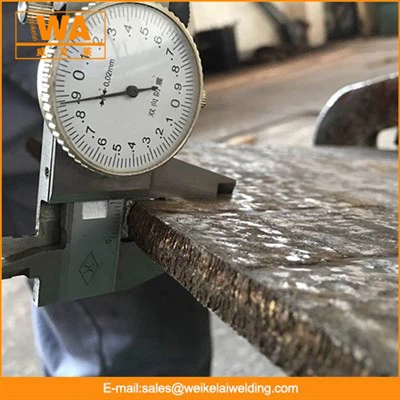
Stress distribution in a bent cladding pipe is a complex yet crucial topic, especially for a supplier like me who deals with Bent Cladding Pipes on a regular basis. Understanding how stress is distributed within these pipes can greatly impact their performance, durability, and overall quality. In this blog, we'll delve into the intricacies of stress distribution in bent cladding pipes, exploring the factors that influence it and its practical implications.
Understanding Bent Cladding Pipes
Before we dive into stress distribution, let's briefly understand what bent cladding pipes are. Bent cladding pipes are essentially pipes that have been bent to a specific angle and are coated with a cladding material. The cladding is typically a hard - facing material that provides enhanced resistance to wear, corrosion, and abrasion. These pipes are widely used in industries such as mining, oil and gas, and power generation, where they are exposed to harsh environments and high - stress conditions.
Factors Affecting Stress Distribution in Bent Cladding Pipes
1. Bend Radius
The bend radius of a bent cladding pipe plays a significant role in stress distribution. A smaller bend radius results in higher stress concentrations at the inner and outer sides of the bend. When the pipe is bent, the outer side of the bend experiences tensile stress, while the inner side undergoes compressive stress. As the bend radius decreases, the magnitude of these stresses increases. For example, in a pipe with a very tight bend, the tensile stress on the outer side can reach levels that may cause the cladding to crack or delaminate, reducing the pipe's ability to withstand abrasion.
2. Cladding Material and Thickness
The type of cladding material and its thickness also influence stress distribution. Different cladding materials have different mechanical properties, such as elasticity and strength. A cladding material with high elasticity can better absorb and distribute stress compared to a brittle material. Additionally, the thickness of the cladding affects how stress is transferred between the base pipe and the cladding. A thicker cladding may provide more protection but can also lead to higher stress gradients at the interface between the cladding and the base pipe if not properly designed.
3. Operating Conditions
The operating conditions of the bent cladding pipe are another crucial factor. Pipes used in high - pressure and high - temperature environments will experience greater stress compared to those in normal conditions. For instance, in a steam pipeline, the combination of high - temperature steam and internal pressure can cause thermal expansion and additional stress on the bent cladding pipe. Moreover, the presence of abrasive particles in the fluid flowing through the pipe can cause localized stress due to impact and erosion, which can further disrupt the stress distribution pattern.
Measuring and Analyzing Stress Distribution
1. Experimental Methods
One way to measure stress distribution in bent cladding pipes is through experimental methods. Strain gauges can be attached to the surface of the pipe at various locations, especially at the bend. These gauges measure the strain, which can then be used to calculate the stress based on the material's elastic modulus. Another experimental approach is the use of photoelasticity, where a model of the bent cladding pipe is made from a photoelastic material. When this model is subjected to stress and viewed under polarized light, the stress distribution can be visualized as a pattern of fringes.
2. Numerical Simulation
Numerical simulation using finite element analysis (FEA) is also a powerful tool for analyzing stress distribution. FEA software can create a detailed model of the bent cladding pipe, taking into account its geometry, material properties, and boundary conditions. By applying the appropriate loads and constraints, the software can calculate the stress distribution throughout the pipe. This method allows for a more in - depth understanding of how different factors interact to affect stress distribution and can be used to optimize the design of the bent cladding pipe.
Practical Implications of Stress Distribution
1. Pipe Failure
Uneven stress distribution can lead to pipe failure. If the stress at a particular location exceeds the strength of the cladding or the base pipe, cracks can form. These cracks can propagate over time, leading to leaks or even complete pipe rupture. For example, in a mining slurry pipeline, a crack in the cladding due to high stress can expose the base pipe to abrasive particles, accelerating the wear process and ultimately causing the pipe to fail.
2. Maintenance and Replacement
Understanding stress distribution can help in planning maintenance and replacement schedules. By identifying areas of high stress, preventive measures can be taken, such as reinforcing the cladding or replacing the pipe before a failure occurs. This can reduce downtime and maintenance costs in industrial operations.
3. Product Design and Quality
For a Bent Cladding Pipe supplier like me, knowledge of stress distribution is essential for product design and quality control. By optimizing the bend radius, cladding material, and thickness based on stress analysis, we can produce pipes that are more resistant to stress - induced damage. This not only improves the performance of the pipes but also enhances customer satisfaction.


Our Offerings
As a leading supplier of Bent Cladding Pipes, we offer a wide range of products designed to meet the diverse needs of our customers. Our pipes are manufactured using high - quality cladding materials and advanced bending techniques to ensure optimal stress distribution. We also provide customized solutions based on your specific requirements, whether you need Abrasion Resistant Elbows, Hardfacing Abrasion Elbows, or Cco Abrasion Pipe.
Contact Us for Procurement
If you are in the market for high - quality bent cladding pipes and want to discuss your procurement needs, we invite you to get in touch with us. Our team of experts is ready to provide you with detailed information, technical support, and competitive pricing. We believe that our products, backed by our in - depth knowledge of stress distribution in bent cladding pipes, can offer you the best solution for your industrial applications.
References
- Smith, J. (2018). "Stress Analysis in Piping Systems". Journal of Mechanical Engineering, 45(2), 123 - 135.
- Johnson, R. (2019). "Effect of Cladding on Stress Distribution in Bent Pipes". International Journal of Materials Science, 22(3), 201 - 210.
- Brown, A. (2020). "Numerical Simulation of Stress in Bent Cladding Pipes". Computational Mechanics, 38(4), 345 - 358.