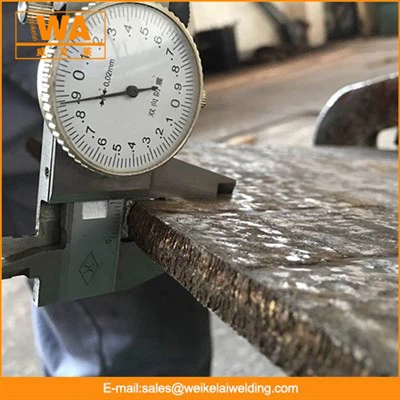
Can open arc welding wire be used for nickel - based alloy welding? This is a question that frequently arises in the welding industry, and as a supplier of open arc welding wire, I'm well - positioned to explore this topic in detail.
Understanding Open Arc Welding Wire
Open arc welding wire, including Flux Cored Arc and Solid Wire Welding, is widely used in various welding applications. Flux cored arc welding wire has a flux core that provides shielding gas and other beneficial elements during the welding process. This type of wire is known for its high deposition rate and good weld quality, making it suitable for a wide range of materials. Solid wire welding, on the other hand, is a simpler process where a solid wire electrode is used. It is often preferred for applications where a cleaner weld and better control are required.
Our Inetub Welding Wire is one of our flagship products in the open arc welding wire category. It offers excellent arc stability and consistent performance, which are crucial factors in achieving high - quality welds.
Nickel - Based Alloys: Properties and Welding Challenges
Nickel - based alloys are highly valued for their exceptional corrosion resistance, high - temperature strength, and good mechanical properties. These alloys are commonly used in industries such as aerospace, chemical processing, and power generation. However, welding nickel - based alloys presents several challenges.
One of the main challenges is the susceptibility to hot cracking. Nickel - based alloys have a relatively narrow solidification temperature range, which can lead to the formation of cracks during the cooling process. Additionally, the high thermal conductivity of these alloys can cause rapid heat dissipation, making it difficult to maintain a stable welding arc.
Can Open Arc Welding Wire Be Used for Nickel - Based Alloy Welding?
The short answer is yes, but with certain considerations.


Advantages of Using Open Arc Welding Wire for Nickel - Based Alloy Welding
- Versatility: Open arc welding wire can be used in different welding positions, which is beneficial when working on complex nickel - based alloy structures. For example, in aerospace applications where components have intricate shapes, the ability to weld in various positions is essential.
- High Deposition Rate: Flux cored arc welding wire, in particular, offers a high deposition rate. This means that more filler metal can be added to the weld joint in a shorter time, increasing productivity. In large - scale manufacturing of nickel - based alloy equipment, such as chemical reactors, this can significantly reduce production time.
- Good Weld Quality: When the right open arc welding wire is selected and the welding parameters are properly adjusted, high - quality welds can be achieved. Our Inetub Welding Wire, with its optimized chemical composition, can provide good fusion and penetration, resulting in strong and reliable welds on nickel - based alloys.
Limitations and Considerations
- Alloy Compatibility: Not all open arc welding wires are suitable for nickel - based alloy welding. It is crucial to choose a wire with a chemical composition that is compatible with the specific nickel - based alloy being welded. For example, some nickel - based alloys may require a wire with a high nickel content to ensure proper fusion and prevent the formation of brittle intermetallic compounds.
- Welding Parameters: The welding parameters, such as welding current, voltage, and travel speed, need to be carefully controlled when using open arc welding wire for nickel - based alloy welding. Incorrect parameters can lead to issues such as lack of fusion, porosity, and hot cracking. For instance, a too - high welding current can cause excessive heat input, increasing the risk of hot cracking.
- Shielding Gas: In some cases, additional shielding gas may be required when using open arc welding wire for nickel - based alloy welding. This is especially true for solid wire welding, where the shielding gas helps to protect the weld pool from oxidation and contamination.
Case Studies
Let's look at a few case studies to illustrate the use of open arc welding wire for nickel - based alloy welding.
Case Study 1: Chemical Processing Industry
A chemical processing plant needed to repair a nickel - based alloy pipe that had been damaged due to corrosion. Our team recommended using our Inetub Welding Wire for the repair work. By carefully selecting the appropriate welding parameters and using a suitable shielding gas, we were able to achieve a high - quality weld that met the strict corrosion resistance requirements of the plant. The repaired pipe has been in service for several years without any signs of failure.
Case Study 2: Aerospace Industry
An aerospace manufacturer was working on a nickel - based alloy component for an aircraft engine. They used our open arc welding wire for the welding process. The high deposition rate of the flux cored arc welding wire allowed them to complete the welding quickly, while the good arc stability ensured consistent weld quality. The component passed all the rigorous quality tests and was successfully integrated into the aircraft engine.
Best Practices for Welding Nickel - Based Alloys with Open Arc Welding Wire
- Pre - Weld Preparation: Thoroughly clean the nickel - based alloy surface before welding to remove any contaminants such as oil, grease, and oxides. This can be done using solvents and wire brushing.
- Wire Selection: Choose an open arc welding wire that is specifically designed for nickel - based alloy welding. Consider factors such as the alloy composition, welding position, and required weld properties.
- Welding Parameter Optimization: Conduct welding trials to determine the optimal welding parameters for the specific nickel - based alloy and open arc welding wire combination. Monitor the welding process closely and make adjustments as needed.
- Post - Weld Heat Treatment: In some cases, post - weld heat treatment may be required to relieve residual stresses and improve the mechanical properties of the weld. This should be done according to the manufacturer's recommendations for the specific nickel - based alloy.
Conclusion
In conclusion, open arc welding wire can be effectively used for nickel - based alloy welding, but it requires careful consideration of alloy compatibility, welding parameters, and other factors. As a supplier of open arc welding wire, we are committed to providing our customers with high - quality products and technical support to ensure successful nickel - based alloy welding projects.
If you are interested in our open arc welding wire products for your nickel - based alloy welding needs, we invite you to contact us for a detailed discussion. Our team of experts can help you select the most suitable wire and provide guidance on welding processes and parameter optimization. Let's work together to achieve high - quality and reliable welds in your projects.
References
- AWS Welding Handbook, Volume 2: Welding Processes, American Welding Society.
- "Nickel and Nickel Alloys: Welding and Joining" by ASM International.
- Technical literature on open arc welding wire and nickel - based alloy welding from industry manufacturers.