Are there any international standards for hardfacing pipes?
As a hardfacing pipe supplier, I often get asked about the existence of international standards for hardfacing pipes. The short answer is yes, there are international standards, but the situation is a bit more complex than a simple yes or no.
Understanding Hardfacing Pipes
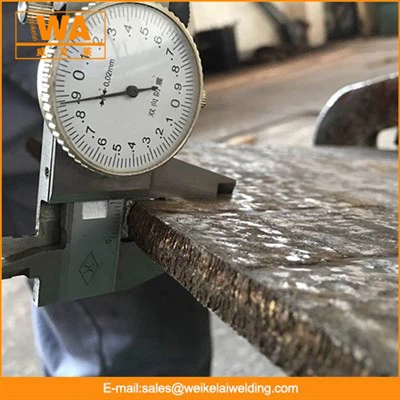
Hardfacing is a process of applying a hard, wear - resistant material to the surface of a pipe. This is done to enhance the pipe's resistance to abrasion, corrosion, and erosion, which are common issues in industries such as mining, oil and gas, power generation, and cement production. Our company offers a range of hardfacing pipe products, including Abrasion Resistant Elbows, Hardfacing Abrasion Elbows, and Wear Resistant Straight Pipe.
International Standards for Hardfacing Pipes
ISO Standards
The International Organization for Standardization (ISO) has developed several standards related to welding and hardfacing. ISO 17634 provides guidelines for the qualification of welding procedures and welders for hardfacing. This standard covers aspects such as the base material, filler material, welding process, and pre - and post - welding treatments. It ensures that the hardfacing process is carried out in a consistent and reliable manner, which is crucial for the performance of hardfacing pipes.
ISO 4063 classifies welding and allied processes, including those used in hardfacing. This classification helps in clearly defining the hardfacing process used, which is important for quality control and communication between suppliers and customers.
AWS Standards
The American Welding Society (AWS) also plays a significant role in setting standards for hardfacing. AWS A5.21 covers the specifications for tubular cored electrodes for hardfacing. This standard defines the chemical composition, mechanical properties, and other characteristics of the electrodes used in the hardfacing process. It helps in ensuring the quality and performance of the hardfacing layer.
AWS D14.3 provides requirements for hardfacing of steel mill rolls, but many of the principles can be applied to hardfacing pipes as well. It includes guidelines for pre - welding, welding, and post - welding heat treatment, as well as inspection and testing methods.
Other Regional Standards
In addition to ISO and AWS standards, there are also regional standards. For example, in Europe, the European Committee for Standardization (CEN) has standards related to welding and hardfacing. These standards are often harmonized with ISO standards to ensure compatibility across different regions.
Importance of Adhering to Standards
Quality Assurance
Adhering to international standards is essential for quality assurance. Standards provide a set of rules and guidelines that ensure the hardfacing process is carried out correctly. This helps in producing hardfacing pipes with consistent quality, which is crucial for the safety and reliability of industrial operations. For example, if a hardfacing pipe is used in a high - pressure oil and gas pipeline, any defect in the hardfacing layer could lead to leaks or failures, which can have serious consequences.
Compatibility and Interoperability
Standards also ensure compatibility and interoperability. When a customer purchases hardfacing pipes from different suppliers, they expect the pipes to meet certain quality and performance criteria. International standards provide a common language and framework that allows suppliers and customers to communicate effectively and ensure that the pipes can be used together in a system without any issues.


Global Trade
In the global market, adhering to international standards is a key factor in facilitating trade. Many countries require imported hardfacing pipes to meet certain standards. By following international standards, suppliers can ensure that their products can be sold in different markets around the world, which expands their customer base and business opportunities.
Challenges in Implementing Standards
Cost
Implementing standards can be costly. Suppliers need to invest in equipment, training, and quality control systems to ensure compliance. For example, to meet the requirements of ISO 17634, a supplier may need to purchase expensive testing equipment and train their welders and quality control personnel. These costs are often passed on to the customers, which can make hardfacing pipes more expensive.
Technological Advancements
The hardfacing industry is constantly evolving, with new materials and processes being developed. International standards may not always keep up with these technological advancements. For example, new types of filler materials or welding processes may offer better performance but may not be covered by existing standards. This can create a challenge for suppliers who want to use these new technologies while still adhering to the standards.
Interpretation and Application
Interpretation and application of standards can also be a challenge. Different countries and regions may have different interpretations of the same standard. This can lead to confusion and disputes between suppliers and customers. For example, the requirements for pre - welding heat treatment in AWS and ISO standards may be slightly different, and it can be difficult to determine which one should be followed in a particular situation.
Our Approach as a Hardfacing Pipe Supplier
As a hardfacing pipe supplier, we are committed to adhering to international standards. We have a team of experienced engineers and welders who are trained in the latest standards and technologies. We use high - quality filler materials that meet the requirements of relevant standards, such as AWS A5.21.
We also invest in quality control systems to ensure that our hardfacing pipes meet or exceed the standards. Our pipes are tested using non - destructive testing methods, such as ultrasonic testing and magnetic particle testing, to detect any defects in the hardfacing layer. In addition, we conduct mechanical testing, such as hardness testing and wear testing, to ensure the performance of the hardfacing pipes.
We understand the challenges in implementing standards, but we believe that the benefits far outweigh the costs. By adhering to standards, we can provide our customers with high - quality hardfacing pipes that are reliable and safe.
Conclusion
In conclusion, there are international standards for hardfacing pipes, including ISO, AWS, and other regional standards. These standards play a crucial role in ensuring the quality, compatibility, and safety of hardfacing pipes. However, there are also challenges in implementing these standards, such as cost, technological advancements, and interpretation.
As a hardfacing pipe supplier, we are committed to meeting these standards and providing our customers with the best - quality products. If you are in need of hardfacing pipes for your industrial applications, we invite you to contact us for more information and to discuss your specific requirements. We are ready to work with you to provide customized solutions that meet your needs.
References
- ISO 17634: Welding - Qualification of welding procedures and welders for hardfacing
- ISO 4063: Welding and allied processes - Nomenclature of processes and reference numbers
- AWS A5.21: Specification for tubular cored electrodes for hardfacing
- AWS D14.3: Specification for hardfacing of steel mill rolls
- European Committee for Standardization (CEN) standards related to welding and hardfacing