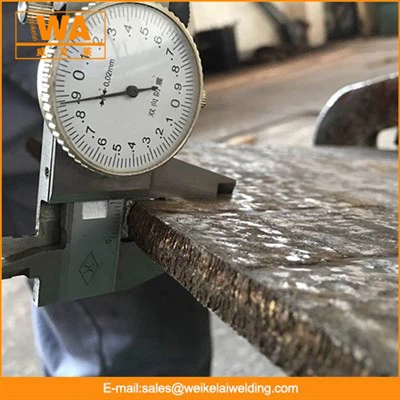
Roller welding repair is a crucial service in various industries, and as a supplier of Roller Welding Repair, I've seen firsthand why it's so necessary. Let's dive into the reasons behind the importance of this service.
1. Cost - Effectiveness
One of the most significant reasons for roller welding repair is cost - effectiveness. Buying a brand - new roller can be extremely expensive, especially if you're dealing with large - scale industrial rollers or those made from specialized materials. For example, in the steel manufacturing industry, rollers used in rolling mills are often custom - made and can cost tens of thousands of dollars.
By opting for Roller Welding Repair, companies can save a substantial amount of money. The repair process typically involves identifying the damaged areas of the roller, preparing the surface, and then using welding techniques to build up the worn - out parts. This is much cheaper than the cost of a new roller, including the cost of manufacturing, shipping, and installation.
Let's say a company has a roller that has developed some surface wear due to continuous use. Instead of spending a fortune on a new one, they can send it to us for repair. We'll assess the damage, and in most cases, we can restore the roller to its original functionality at a fraction of the cost of a replacement.
2. Minimizing Downtime
In industrial settings, downtime can be a nightmare. Every minute that a machine is not running means lost production, which directly impacts the bottom line. When a roller breaks down or shows signs of significant wear, it can bring an entire production line to a halt.
With roller welding repair, we can often get the roller back in operation much faster than waiting for a new one to be manufactured and delivered. Our repair process is streamlined, and we have the expertise and equipment to work quickly. For instance, if a roller in a paper - making machine fails, we can usually repair it within a few days, depending on the extent of the damage.
This quick turnaround time helps companies avoid long periods of inactivity. They can keep their production lines running smoothly and meet their production targets. In contrast, ordering a new roller might take weeks or even months, especially if it needs to be custom - made.
3. Maintaining Precision and Performance
Rollers are designed to operate with a high degree of precision. In industries such as printing, where rollers are used to transfer ink evenly, any deviation from the ideal specifications can lead to poor - quality products. Similarly, in the automotive industry, rollers used in assembly lines need to be extremely accurate to ensure proper alignment of parts.
Over time, wear and tear can cause rollers to lose their precision. The surface of the roller may become uneven, or its dimensions may change slightly. Roller welding repair allows us to restore the roller to its original specifications. We use advanced welding techniques and measurement tools to ensure that the repaired roller meets the required tolerances.
For example, if a roller in a textile mill has developed a small groove on its surface, this can cause uneven fabric tension during the weaving process. By using Welding Recondition On Roller, we can fill in the groove and machine the roller to the correct diameter and surface finish. This ensures that the roller continues to perform at its best, producing high - quality products.
4. Environmental Benefits
In today's world, environmental sustainability is a major concern. Manufacturing new rollers requires a significant amount of raw materials and energy. Mining the metals, processing them, and then shaping them into rollers all contribute to environmental degradation.
Roller welding repair is a more sustainable option. By repairing existing rollers, we reduce the demand for new manufacturing. This means less energy consumption, fewer greenhouse gas emissions, and less waste generation. It's a win - win situation for both the environment and the companies that choose to repair rather than replace.


For example, if a company decides to repair 10 rollers instead of buying new ones, it can save a large amount of steel and other materials from being mined and processed. This small step can have a big impact on the environment in the long run.
5. Customization and Adaptability
In some cases, companies may need to modify their rollers to meet changing production requirements. Maybe they are switching to a different type of product, or they want to improve the efficiency of their production process. Roller welding repair offers the opportunity for customization.
We can use welding techniques to add features to the roller, such as changing its surface texture or adding a coating. For example, in the food processing industry, rollers may need to be coated with a non - stick material to prevent food from sticking to them. Through welding and coating processes, we can modify the roller to meet these specific needs.
Another example is in the packaging industry, where rollers may need to be adjusted to handle different sizes and shapes of packages. We can use welding to reshape the roller or add additional components to make it more adaptable. This level of customization is often not possible when buying a new roller off - the - shelf.
6. Extending the Lifespan of Equipment
Rollers are a significant investment for any company. By regularly performing roller welding repair, companies can extend the lifespan of their rollers. Instead of having to replace rollers every few years, they can keep using the same ones for a much longer time.
Regular maintenance and repair can prevent small problems from turning into major failures. We can identify and address minor wear and tear before it becomes severe. For example, if we notice a small crack on a roller during an inspection, we can use welding to repair it and prevent the crack from spreading. This proactive approach helps to keep the roller in good condition for an extended period.
7. Compatibility with Existing Systems
When a company buys a new roller, there's always a risk that it may not be fully compatible with the existing production system. The new roller may have different dimensions, mounting requirements, or operating characteristics. This can lead to additional costs and complications in integrating the new roller into the system.
Roller welding repair eliminates this problem. Since we're working on the existing roller, we can ensure that it remains fully compatible with the rest of the equipment. We can make sure that the repaired roller fits perfectly into its original position and operates in harmony with the other components of the production line.
For example, in a conveyor system, if a new roller doesn't have the right diameter or speed, it can cause problems with the flow of materials. By repairing the existing roller, we can avoid these compatibility issues and keep the system running smoothly.
Conclusion
As you can see, roller welding repair is not just a convenient service; it's a necessity for many industries. It offers cost - savings, minimizes downtime, maintains precision, benefits the environment, allows for customization, extends equipment lifespan, and ensures compatibility with existing systems.
If you're facing issues with your rollers or are looking for a cost - effective and efficient way to maintain your production equipment, don't hesitate to reach out. We're here to provide top - notch Roller Welding Repair services. Whether it's a small - scale operation or a large industrial plant, we have the expertise and resources to meet your needs. Contact us to discuss your requirements and start the process of getting your rollers back in optimal condition.
References
- Industrial Maintenance Handbook: This handbook provides in - depth knowledge about the maintenance of industrial equipment, including rollers. It covers various repair techniques and the importance of cost - effective solutions.
- Environmental Impact Studies on Manufacturing: These studies analyze the environmental effects of manufacturing processes, highlighting the benefits of repair and reuse over new production.
- Case Studies in Roller Repair: Real - world examples of successful roller welding repair projects in different industries, demonstrating the effectiveness of the repair process.