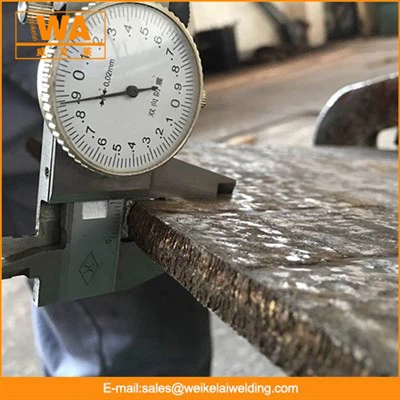
As a trusted supplier of Hardox steel plates, I've witnessed firsthand the remarkable properties of this high - performance material. Hardox steel is renowned for its exceptional wear resistance, high strength, and excellent toughness, making it a top choice in various industries such as mining, construction, and transportation. However, when it comes to welding Hardox steel plates, selecting the appropriate welding method is crucial to maintain its unique characteristics and ensure the integrity of the final product.
Shielded Metal Arc Welding (SMAW)
Shielded Metal Arc Welding, also known as stick welding, is a well - established and versatile welding method. It involves using a consumable electrode coated with flux. When the electrode is struck against the workpiece, an arc is formed, melting both the electrode and the base metal to create a weld pool.
One of the advantages of SMAW for Hardox steel is its portability. It doesn't require complex equipment, making it suitable for on - site repairs and jobs in remote locations. The flux coating on the electrode provides a shielding gas that protects the weld pool from atmospheric contamination.
However, SMAW has some limitations. The welding speed is relatively slow, which can increase the heat input to the Hardox steel. Excessive heat input can lead to a change in the steel's microstructure, reducing its wear resistance and toughness. To mitigate this, it's important to use low - hydrogen electrodes and follow proper pre - heating and post - welding heat treatment procedures.
Gas Metal Arc Welding (GMAW)
Gas Metal Arc Welding, commonly referred to as MIG (Metal Inert Gas) welding, uses a continuous solid wire electrode and a shielding gas to protect the weld pool. For Hardox steel, a shielding gas mixture of argon and carbon dioxide is often used.
GMAW offers several benefits. It has a high welding speed, which means less heat is applied to the steel over time. This helps to maintain the mechanical properties of Hardox steel. The process is also relatively easy to learn and can produce high - quality, clean welds.
On the other hand, GMAW requires more complex equipment compared to SMAW. It also needs a stable power source and a proper shielding gas supply. In outdoor environments, wind can disrupt the shielding gas, leading to weld defects.
Flux - Cored Arc Welding (FCAW)
Flux - Cored Arc Welding is similar to GMAW, but instead of a solid wire electrode, it uses a tubular wire filled with flux. There are two types of FCAW: self - shielded and gas - shielded.
Self - shielded FCAW is suitable for outdoor welding as it doesn't require an external shielding gas. This makes it a convenient option for field repairs. The flux in the wire provides the necessary protection for the weld pool.
Gas - shielded FCAW offers better control over the weld quality and can produce stronger welds. It combines the advantages of the flux in the wire and the additional shielding gas. However, like GMAW, it is more sensitive to environmental conditions and requires proper equipment setup.
Submerged Arc Welding (SAW)
Submerged Arc Welding is a high - productivity welding method. It uses a granular flux that completely covers the arc and the weld pool. This not only protects the weld from atmospheric contamination but also allows for deep penetration and high - quality welds.


SAW is ideal for welding thick Hardox steel plates. It can deposit a large amount of filler metal quickly, making it suitable for heavy - duty applications. The process is also relatively clean, with minimal spatter.
However, SAW requires a large and expensive setup. It is mainly used in industrial settings where large - scale welding operations are carried out. The lack of visibility of the arc during welding also requires skilled operators to ensure proper weld quality.
Laser Beam Welding
Laser Beam Welding is a modern welding method that uses a highly focused laser beam to melt and join the metal. It offers several unique advantages for Hardox steel.
The heat - affected zone in laser beam welding is extremely small. This means that the microstructure of the Hardox steel remains largely unchanged, preserving its wear resistance and toughness. The process also has a high welding speed and can produce precise welds.
However, laser beam welding equipment is very expensive, and it requires a high - level of technical expertise to operate. It is typically used in high - precision applications where the cost can be justified by the quality and performance requirements.
Considerations for Welding Hardox Steel
When choosing a welding method for Hardox steel, several factors need to be considered.
- Thickness of the steel plate: Thicker plates may require welding methods with higher penetration, such as SAW or laser beam welding. Thinner plates can be welded using GMAW or FCAW.
- Welding position: Some welding methods are more suitable for certain positions. For example, SMAW is more versatile in different welding positions compared to SAW, which is mainly used for flat and horizontal positions.
- Environmental conditions: Outdoor welding may require self - shielded welding methods like self - shielded FCAW, while indoor welding can use gas - shielded methods.
- Weld quality requirements: For applications where high - strength and wear - resistant welds are crucial, methods like laser beam welding or SAW may be preferred.
Additional Products for Wear Protection
In addition to welding, there are other products that can enhance the wear protection of Hardox steel plates. Composite Wear Plates combine different materials to provide superior wear resistance. Wear Resistant Alloys can be used as filler materials during welding to improve the performance of the weld. Chromium Carbide Coating can be applied to the surface of the Hardox steel to further enhance its wear resistance.
Conclusion
Selecting the right welding method for Hardox steel plates is essential to ensure the quality and performance of the final product. Each welding method has its own advantages and limitations, and the choice depends on various factors such as the thickness of the plate, welding position, environmental conditions, and weld quality requirements.
As a supplier of Hardox steel plates, I am committed to providing our customers with the best advice on welding and related products. If you are interested in purchasing Hardox steel plates or have any questions about welding them, please feel free to contact us for further discussion and procurement negotiation.
References
- AWS Welding Handbook, American Welding Society
- Hardox Technical Manual, SSAB