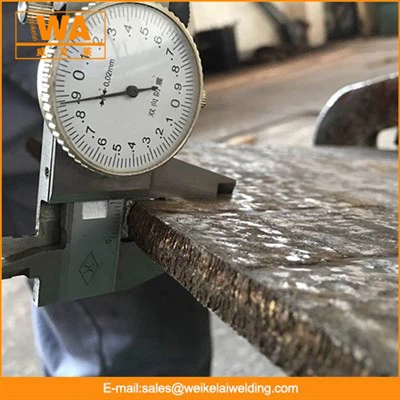
As a supplier of Bimetal Wear Plate, I often get asked about the various machining methods that can be employed for this unique material. Bimetal wear plates are known for their excellent wear resistance, combining a tough backing material with a hard facing layer. This combination makes them suitable for a wide range of applications in industries such as mining, cement, and power generation. In this blog, I'll explore the different machining methods available for bimetal wear plates and how they can be used to meet specific requirements.
Cutting Methods
Plasma Cutting
Plasma cutting is a popular method for cutting bimetal wear plates. It uses a high-velocity jet of ionized gas to melt and remove material from the plate. This method is suitable for cutting thick plates and can achieve relatively high cutting speeds. Plasma cutting is also capable of cutting complex shapes, making it a versatile option for custom applications. However, it can produce a rough cut surface, which may require additional finishing.
One of the advantages of plasma cutting is its ability to cut through different types of metals, including the hard facing layer of bimetal wear plates. The high temperature of the plasma jet can effectively melt the hard carbide particles in the facing layer, allowing for clean cuts. Plasma cutting is also relatively cost-effective, especially for large-scale production.


Laser Cutting
Laser cutting is another precise method for cutting bimetal wear plates. It uses a high-powered laser beam to melt and vaporize the material, resulting in a clean and accurate cut. Laser cutting can achieve very fine tolerances and is suitable for cutting thin to medium-thickness plates. It is also capable of producing intricate shapes with high precision.
The main advantage of laser cutting is its ability to produce a smooth cut surface with minimal heat-affected zone. This is particularly important for bimetal wear plates, as excessive heat can affect the properties of the hard facing layer. Laser cutting is also a fast and efficient method, making it ideal for high-volume production. However, laser cutting equipment can be expensive, and the operating costs can be relatively high.
Waterjet Cutting
Waterjet cutting is a non-thermal cutting method that uses a high-pressure stream of water mixed with abrasive particles to cut through the material. This method is suitable for cutting a wide range of materials, including bimetal wear plates. Waterjet cutting can achieve very precise cuts and is capable of cutting thick plates. It also produces a clean cut surface with minimal distortion.
One of the key advantages of waterjet cutting is its ability to cut without generating heat, which helps to preserve the properties of the bimetal wear plate. This method is also environmentally friendly, as it does not produce any harmful emissions. However, waterjet cutting can be relatively slow, especially for thick plates, and the equipment can be expensive.
Machining Processes
Milling
Milling is a machining process that uses a rotating cutting tool to remove material from the surface of the bimetal wear plate. It can be used to create flat surfaces, grooves, and other features. Milling is suitable for both roughing and finishing operations and can achieve high accuracy.
When milling bimetal wear plates, it is important to use the appropriate cutting tools and cutting parameters. The hard facing layer of the plate can be very abrasive, so carbide or ceramic cutting tools are often recommended. The cutting speed and feed rate should be adjusted to avoid excessive tool wear and to ensure a good surface finish.
Drilling
Drilling is a process used to create holes in the bimetal wear plate. It can be done using a variety of drill bits, depending on the size and depth of the hole. When drilling bimetal wear plates, it is important to use a drill bit that is suitable for the hard facing layer. Carbide drill bits are often used to drill through the hard carbide particles in the facing layer.
To ensure a successful drilling operation, it is important to use the correct drilling speed and feed rate. The drilling speed should be adjusted to prevent overheating of the drill bit, while the feed rate should be sufficient to keep the drill bit cutting effectively. Lubrication can also be used to reduce friction and heat generation during the drilling process.
Grinding
Grinding is a finishing process used to improve the surface finish of the bimetal wear plate. It can be used to remove any rough edges or burrs left after cutting or machining. Grinding can also be used to achieve a specific surface roughness or flatness.
When grinding bimetal wear plates, it is important to use the appropriate grinding wheel. The grinding wheel should be selected based on the hardness of the material and the desired surface finish. Diamond or cubic boron nitride (CBN) grinding wheels are often used for grinding the hard facing layer of bimetal wear plates.
Considerations for Machining Bimetal Wear Plates
Material Properties
The properties of the bimetal wear plate, such as the hardness and composition of the hard facing layer, can have a significant impact on the machining process. The hard facing layer is typically very hard and abrasive, which can cause rapid tool wear. Therefore, it is important to select the appropriate cutting tools and machining parameters to minimize tool wear and ensure a good surface finish.
Heat Generation
Machining bimetal wear plates can generate a significant amount of heat, especially during cutting and grinding operations. Excessive heat can affect the properties of the hard facing layer, such as its hardness and wear resistance. Therefore, it is important to use appropriate cooling and lubrication methods to control the heat generation and prevent damage to the material.
Surface Finish
The surface finish of the bimetal wear plate is an important consideration, especially for applications where the plate will be in contact with other components. A smooth surface finish can reduce friction and wear, while a rough surface finish can increase the risk of damage to the plate and other components. Therefore, it is important to select the appropriate machining methods and parameters to achieve the desired surface finish.
Conclusion
In conclusion, there are several machining methods available for bimetal wear plates, each with its own advantages and limitations. Plasma cutting, laser cutting, and waterjet cutting are all effective methods for cutting bimetal wear plates, while milling, drilling, and grinding are commonly used for machining and finishing operations. When selecting a machining method, it is important to consider the material properties, heat generation, and surface finish requirements of the bimetal wear plate.
As a [your position] at a Bimetal Wear Plate supplier, I understand the importance of providing high-quality products and services to our customers. If you have any questions about the machining methods for bimetal wear plates or if you are interested in purchasing our Bimetal Wear Plate, Anti Wear Steel, or Chromium Carbide Plate, please feel free to contact us. We are always ready to assist you with your wear plate needs and to provide you with the best solutions for your applications.
References
- Kalpakjian, S., & Schmid, S. R. (2009). Manufacturing Engineering and Technology. Pearson Prentice Hall.
- ASM Handbook Committee. (2000). ASM Handbook Volume 16: Machining. ASM International.
- Tooling U-SME. (n.d.). Machining Fundamentals. https://www.toolingu.com/