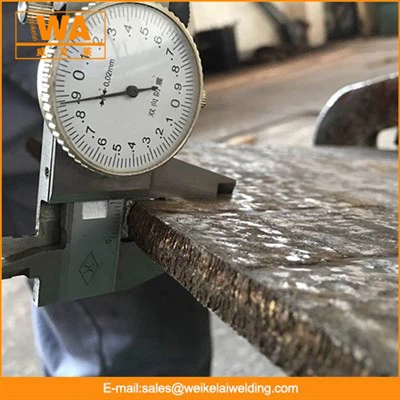
Hey there! As a wear plate supplier, I've seen firsthand how crucial it is to understand the wear performance of these plates under different conditions. In this blog, I'll break down what affects the wear performance and how you can choose the right wear plate for your specific needs.
What is a Wear Plate?
Before we dive into the wear performance, let's quickly go over what a wear plate is. A wear plate is a type of steel plate designed to resist wear and abrasion. These plates are commonly used in industries where equipment is exposed to harsh conditions, such as mining, construction, and manufacturing. There are different types of wear plates available, including Wear Steel Plate, Wear Resistant Stainless Steel, and Hardfacing Processed Plate. Each type has its own unique properties and applications.
Factors Affecting Wear Performance
Abrasive Material
The type of abrasive material that the wear plate comes into contact with plays a huge role in its wear performance. For example, if the abrasive is very hard, like quartz or granite, it will cause more wear on the plate compared to a softer abrasive like sand. Harder abrasives have sharp edges that can cut into the surface of the wear plate, leading to faster material loss.
Load and Pressure
The amount of load and pressure applied to the wear plate also affects its performance. Higher loads and pressures mean more force is exerted on the plate, which can accelerate wear. In applications where heavy machinery is involved, such as in mining trucks or crushers, the wear plates need to be able to withstand high loads without significant wear.
Sliding Speed
The speed at which the abrasive material slides over the wear plate is another important factor. Faster sliding speeds generally result in more wear because there is more friction and heat generated. For instance, in conveyor systems where materials are moving quickly, the wear plates need to be able to handle the high - speed abrasion.
Environmental Conditions
Environmental factors like temperature, humidity, and the presence of corrosive substances can impact wear performance. High temperatures can change the mechanical properties of the wear plate, making it softer and more prone to wear. Corrosive substances can cause corrosion on the surface of the plate, which weakens it and makes it more susceptible to abrasion. In coastal areas or in chemical plants, where there is a lot of moisture or corrosive chemicals in the air, the wear plates need to have good corrosion resistance in addition to wear resistance.
Wear Performance of Different Types of Wear Plates
Wear Steel Plate
Wear steel plates are known for their high hardness and good wear resistance. They are typically made from alloy steels that have been heat - treated to achieve the desired hardness. These plates can handle a wide range of abrasive materials and loads. However, their performance can be affected by the sliding speed. At very high speeds, the heat generated can cause the plate to lose some of its hardness, reducing its wear resistance. In general, wear steel plates are a great choice for medium - to high - load applications where the abrasive material is not extremely hard.
Wear Resistant Stainless Steel
Wear resistant stainless steel plates offer both wear resistance and corrosion resistance. They are ideal for applications where the environment is corrosive, such as in food processing or marine industries. These plates have a lower hardness compared to some wear steel plates, but they can still provide good wear performance against softer abrasives. The corrosion resistance helps to maintain the integrity of the plate over time, even in harsh environments.
Hardfacing Processed Plate
Hardfacing processed plates are created by applying a hardfacing layer to a base plate. This hardfacing layer is usually made of a very hard alloy that provides excellent wear resistance. These plates are often used in applications where extreme wear is expected, such as in mining equipment and earth - moving machinery. The hardfacing layer can withstand high loads, hard abrasives, and high - speed sliding. However, they can be more expensive than other types of wear plates.
Testing Wear Performance
To determine the wear performance of a wear plate under different conditions, various testing methods are used. One common method is the pin - on - disk test, where a small pin made of the abrasive material is rubbed against a disk of the wear plate material under controlled conditions. The amount of material lost from the disk is measured to evaluate the wear resistance.
Another method is the abrasion test using a sand - rubber wheel apparatus. In this test, the wear plate is exposed to a stream of abrasive sand while being in contact with a rotating rubber wheel. The weight loss of the wear plate after a certain number of rotations is used to assess its wear performance.
Choosing the Right Wear Plate
When choosing a wear plate for your application, you need to consider all the factors we've discussed above. First, identify the type of abrasive material, the load and pressure, the sliding speed, and the environmental conditions. If you're dealing with a hard abrasive and high loads, a hardfacing processed plate might be the best choice. For applications in a corrosive environment, wear resistant stainless steel would be more suitable.
It's also important to work with a reliable supplier who can provide you with detailed information about the wear plates and help you make the right decision. As a wear plate supplier, I've helped many customers choose the right plates for their specific needs.


Contact for Purchase
If you're in the market for wear plates and want to discuss your requirements, feel free to reach out. We can have a detailed conversation about your application, and I'll be happy to recommend the best wear plate solution for you. Whether you need a small quantity for a specific project or a large - scale supply for your business, we've got you covered.
References
- ASTM International. Standard test methods for wear testing.
- ASM Handbook, Volume 3: Alloy Phase Diagrams.
- Tribology Handbook, edited by B. Bhushan.