Wear-resistant alloys and ordinary alloys serve different purposes in various industries, and understanding their differences is crucial for making informed decisions when it comes to material selection. As a supplier of wear-resistant alloys, I've witnessed firsthand the unique properties and advantages these materials offer compared to their ordinary counterparts.
Composition and Structure
Ordinary alloys are typically composed of a base metal combined with other elements in relatively small proportions to enhance certain general properties such as strength, ductility, or corrosion resistance. For example, a common ordinary alloy like brass is an alloy of copper and zinc. The composition of ordinary alloys is designed to meet a wide range of general - purpose applications where high - end wear resistance is not the primary concern.
On the other hand, wear - resistant alloys are specifically formulated to withstand wear, abrasion, and erosion. They often contain high levels of hard - wearing elements such as chromium, nickel, molybdenum, and tungsten. These elements form hard carbides, nitrides, or borides within the alloy matrix, which significantly increase the alloy's hardness and wear resistance. For instance, in some high - chromium white cast irons, chromium forms chromium carbides that are extremely hard and provide excellent resistance to abrasive wear.
Wear Resistance Mechanisms
The wear resistance of ordinary alloys mainly relies on their inherent hardness and the ability to form a protective oxide layer on the surface. However, this protection is often limited, especially in harsh wear environments. For example, in a situation where an ordinary steel alloy is exposed to abrasive particles, the surface can quickly wear away, leading to a reduction in the component's performance and lifespan.
Wear - resistant alloys, in contrast, have multiple wear - resistant mechanisms. In addition to their high hardness, they can form self - lubricating layers or have a microstructure that can resist the penetration of abrasive particles. For example, some wear - resistant alloys with austenitic matrices can undergo strain - induced martensitic transformation under wear conditions, which further hardens the surface and improves wear resistance.
Performance in Different Environments
Ordinary alloys are suitable for many general - purpose applications where the wear conditions are relatively mild. For example, in household appliances, automotive body parts, and some structural components, ordinary alloys can provide sufficient strength and durability at a relatively low cost. However, when exposed to severe wear environments such as mining, cement production, and metalworking, ordinary alloys may fail prematurely.
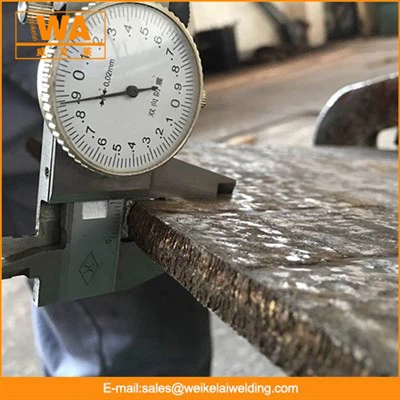
Wear - resistant alloys excel in harsh wear environments. In the mining industry, where equipment is constantly exposed to abrasive ores and rocks, wear - resistant alloys are used in conveyor belts, crushers, and mill liners. They can significantly reduce the frequency of equipment replacement and maintenance, resulting in cost savings and increased productivity. For example, using Hardfacing Protection Steel Plate can provide excellent protection for machinery parts in high - wear areas.
Applications
The applications of ordinary alloys are widespread due to their versatility and cost - effectiveness. They are used in construction, transportation, and consumer goods industries. For example, aluminum alloys are commonly used in the aerospace industry for their lightweight and good corrosion resistance, while carbon steel alloys are used in building structures for their high strength.
Wear - resistant alloys, however, are more specialized. They are used in industries where wear is a major concern. In the power generation industry, wear - resistant alloys are used in coal - fired boilers to protect against erosion from fly ash. In the food processing industry, Anti Wear Steel can be used in equipment that comes into contact with abrasive food products. And in the oil and gas industry, wear - resistant alloys are used in drilling equipment to withstand the harsh downhole conditions.
Cost Considerations
Ordinary alloys are generally more cost - effective than wear - resistant alloys. The raw materials for ordinary alloys are more abundant, and the production processes are often simpler. This makes them a popular choice for applications where high - end wear resistance is not required.
Wear - resistant alloys, due to their specialized composition and production processes, are more expensive. However, when considering the total cost of ownership, including maintenance, replacement, and downtime, wear - resistant alloys can be a more economical choice in the long run. For example, although a wear - resistant alloy liner for a crusher may cost more upfront than an ordinary alloy liner, its longer lifespan and reduced maintenance requirements can result in significant cost savings over time.
Surface Treatments
Ordinary alloys may undergo some basic surface treatments such as painting or galvanizing to improve their corrosion resistance. These treatments are relatively simple and inexpensive but do not significantly enhance the wear resistance.


Wear - resistant alloys often receive advanced surface treatments to further improve their performance. Chromium Carbide Coating is a common surface treatment for wear - resistant alloys. This coating can provide an extra layer of protection against wear, corrosion, and oxidation. The chromium carbide particles in the coating are extremely hard and can effectively resist the impact and abrasion of external particles.
Manufacturing Processes
The manufacturing processes for ordinary alloys are well - established and relatively straightforward. They often involve melting, casting, and simple forming operations. These processes are suitable for large - scale production and can be easily adjusted to meet different product requirements.
Manufacturing wear - resistant alloys is more complex. Special melting techniques may be required to ensure the uniform distribution of alloying elements and the formation of the desired microstructure. For example, some wear - resistant alloys are produced using powder metallurgy techniques, which can precisely control the composition and particle size of the alloy. Heat treatment processes are also crucial for wear - resistant alloys to achieve the optimal balance between hardness, toughness, and wear resistance.
Conclusion
In conclusion, wear - resistant alloys and ordinary alloys have distinct differences in composition, wear resistance mechanisms, performance in different environments, applications, cost, surface treatments, and manufacturing processes. As a supplier of wear - resistant alloys, I understand the importance of choosing the right material for each specific application. Whether you are in the mining, manufacturing, or any other industry where wear is a concern, selecting the appropriate wear - resistant alloy can significantly improve the performance and lifespan of your equipment.
If you are interested in learning more about our wear - resistant alloys or are looking for a reliable supplier for your specific application, please feel free to contact us for procurement and further discussion. We are committed to providing high - quality wear - resistant alloy products and excellent customer service to meet your needs.
References
- ASM Handbook Volume 1: Properties and Selection: Irons, Steels, and High - Performance Alloys
- Wear Control Handbook, edited by M. B. Peterson and W. O. Winer
- Metals Handbook: Properties and Selection - Nonferrous Alloys and Pure Metals, Volume 2