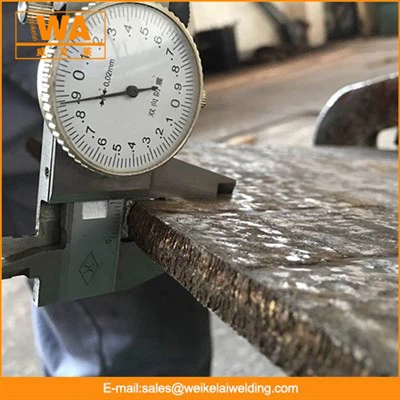
As a wear plate supplier, I've witnessed firsthand the crucial role these plates play in various industries. Wear plates are designed to protect equipment from the harsh effects of wear and tear, but understanding their wear mechanism is essential for optimizing their performance and longevity. In this blog, I'll delve into the intricacies of the wear mechanism of a wear plate, exploring the factors that influence it and the ways to mitigate wear.
Types of Wear
There are several types of wear that can affect a wear plate, each with its own unique characteristics and causes. The most common types of wear include abrasion, adhesion, corrosion, and fatigue.
Abrasion
Abrasion is the most prevalent type of wear in wear plates. It occurs when hard particles, such as sand, gravel, or metal chips, rub against the surface of the plate, causing material removal. Abrasive wear can be further classified into two subtypes: two - body abrasion and three - body abrasion.
In two - body abrasion, the hard particles are fixed to a surface and slide or roll against the wear plate. For example, in a conveyor system where the belt moves over a wear plate, the abrasive particles on the belt can cause two - body abrasion. Three - body abrasion, on the other hand, involves loose particles that are trapped between two surfaces. These particles can roll, slide, or rotate, causing more severe damage to the wear plate.
The resistance of a wear plate to abrasion depends on its hardness and microstructure. Harder materials generally offer better abrasion resistance. For instance, Hardox Steel Plate is known for its high hardness, which makes it an excellent choice for applications where abrasion is a major concern.
Adhesion
Adhesion wear occurs when two surfaces come into contact under pressure and adhere to each other. As the surfaces move relative to each other, small particles of material are transferred from one surface to the other. This can lead to the formation of lumps and bumps on the wear plate surface, which can further exacerbate wear.
Adhesion wear is more likely to occur in applications where there is high contact pressure and low lubrication. For example, in a metal - forming process where a wear plate is in contact with a workpiece, adhesion wear can be a significant problem. To reduce adhesion wear, surface treatments such as coatings can be applied to the wear plate to reduce friction and prevent material transfer.
Corrosion
Corrosion is the chemical or electrochemical reaction between the wear plate and its environment. It can cause the surface of the plate to deteriorate, leading to a loss of material and a reduction in its mechanical properties. Corrosion can be accelerated by factors such as moisture, chemicals, and high temperatures.


In environments where corrosion is a concern, Wear Steel Plate with corrosion - resistant properties is often used. These plates may be made from stainless steel or have special coatings that provide a barrier against corrosion.
Fatigue
Fatigue wear occurs when a wear plate is subjected to repeated cyclic loading. Over time, the stress cycles can cause cracks to initiate and propagate in the material, eventually leading to the failure of the plate. Fatigue wear is common in applications such as mining equipment, where the wear plates are exposed to constant vibrations and impacts.
To prevent fatigue wear, the design of the wear plate should take into account the expected loading conditions. The plate should be properly supported and have a suitable geometry to distribute the stress evenly. Additionally, materials with high fatigue resistance should be selected.
Factors Affecting Wear Mechanism
Several factors can influence the wear mechanism of a wear plate. These include the properties of the wear plate itself, the nature of the counter - surface, and the operating conditions.
Material Properties
The material properties of the wear plate, such as hardness, toughness, and microstructure, play a crucial role in determining its wear resistance. Hardness is generally the most important property for abrasion resistance, as harder materials can better withstand the impact of abrasive particles. However, toughness is also important, especially in applications where the plate is subjected to impact loads. A material that is too brittle may crack under impact, leading to premature failure.
The microstructure of the wear plate can also affect its wear resistance. For example, a fine - grained microstructure can provide better wear resistance than a coarse - grained one, as it offers more resistance to crack propagation.
Counter - Surface Properties
The properties of the counter - surface that the wear plate comes into contact with can also have a significant impact on the wear mechanism. A rough counter - surface can cause more abrasion than a smooth one, as it provides more contact points for the abrasive particles. The hardness of the counter - surface is also important. If the counter - surface is harder than the wear plate, it can cause more severe wear.
Operating Conditions
The operating conditions, such as temperature, pressure, and the presence of lubricants, can greatly affect the wear mechanism. High temperatures can reduce the hardness of the wear plate and accelerate corrosion. High pressures can increase the likelihood of adhesion wear. Lubricants can reduce friction and wear by providing a protective film between the two surfaces. However, in some cases, the lubricant may also carry abrasive particles, which can cause additional wear.
Mitigating Wear
To extend the service life of a wear plate and reduce wear, several strategies can be employed.
Material Selection
Choosing the right material for the wear plate is the first step in mitigating wear. As mentioned earlier, Hardox Steel Plate is a popular choice for applications where abrasion is a major concern. For applications where corrosion is an issue, corrosion - resistant materials such as stainless steel or coated plates should be used.
Surface Treatments
Surface treatments can significantly improve the wear resistance of a wear plate. Coatings such as ceramic coatings, carbide coatings, and polymer coatings can provide a hard, wear - resistant layer on the surface of the plate. These coatings can reduce friction, prevent adhesion, and provide protection against corrosion.
Design Optimization
Proper design of the wear plate can also help to reduce wear. The plate should be designed to have a suitable shape and size to distribute the stress evenly. It should also be properly supported to prevent excessive deformation. Additionally, the design should take into account the expected operating conditions, such as the direction of the wear and the type of loading.
Maintenance
Regular maintenance is essential for ensuring the long - term performance of a wear plate. This includes inspecting the plate for signs of wear, cleaning it to remove abrasive particles, and replacing it when necessary. By detecting wear early, it is possible to prevent more severe damage and extend the service life of the plate.
Conclusion
Understanding the wear mechanism of a wear plate is crucial for ensuring its optimal performance and longevity. By identifying the types of wear that are likely to occur and the factors that influence the wear mechanism, it is possible to select the right material, apply appropriate surface treatments, and optimize the design of the wear plate.
At our company, we offer a wide range of Smooth And Crack Free Wear Plate that are designed to meet the diverse needs of our customers. Our plates are made from high - quality materials and are manufactured using advanced techniques to ensure excellent wear resistance.
If you are in the market for wear plates or have any questions about the wear mechanism, we would be more than happy to assist you. Contact us today to start a discussion about your specific requirements and let us help you find the best solution for your application.
References
- ASTM International. "Standard Test Methods for Abrasion Resistance of Material by Rotary Platform, Double - Headed Abraser." ASTM G65 - 16.
- Callister, W. D., & Rethwisch, D. G. (2016). Materials Science and Engineering: An Introduction. Wiley.
- Schey, J. A. (1987). Tribology in Metalworking: Friction, Lubrication, and Wear. American Society for Metals.