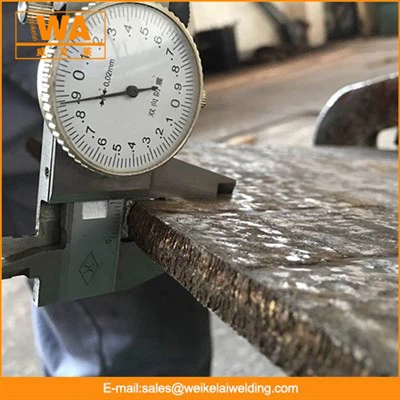
Hey there! As a supplier of Overlay Wear Plates, I often get asked about the thermal conductivity of these plates. So, I thought I'd write this blog to share some insights on what thermal conductivity is and how it relates to Overlay Wear Plates.
First things first, let's talk about what thermal conductivity means. In simple terms, thermal conductivity is a measure of how well a material can conduct heat. It's basically the ability of a substance to transfer heat from one point to another. Materials with high thermal conductivity can transfer heat quickly, while those with low thermal conductivity are better at insulating and slow down the heat transfer.
Now, when it comes to Overlay Wear Plates, thermal conductivity plays a crucial role. These plates are used in a variety of industries where they are exposed to high temperatures and abrasive conditions. For example, in mining, construction, and manufacturing, Overlay Wear Plates are used to protect equipment from wear and tear. Understanding their thermal conductivity helps in determining how well they can withstand heat and maintain their performance under extreme conditions.


The thermal conductivity of Overlay Wear Plates depends on several factors. One of the main factors is the composition of the plate. Different types of overlay materials have different thermal properties. For instance, CCO Wear Plate is known for its unique composition that gives it specific thermal characteristics. The alloying elements in the plate can significantly affect its ability to conduct heat. Some alloys are designed to have high thermal conductivity to dissipate heat quickly, while others are formulated to have lower thermal conductivity to act as insulators.
Another factor is the manufacturing process. The way the overlay is applied to the base plate can impact the thermal conductivity. If the overlay is applied evenly and has good bonding with the base material, it can enhance the overall thermal performance of the plate. On the other hand, if there are defects or unevenness in the overlay, it can disrupt the heat transfer and reduce the thermal conductivity.
Let's take a closer look at how thermal conductivity affects the performance of Overlay Wear Plates in different applications. In high-temperature environments, such as in steel mills or foundries, plates with high thermal conductivity are preferred. These plates can quickly transfer the heat away from the surface, preventing overheating and reducing the risk of damage to the plate and the equipment it protects. For example, Alloy Steel Plate often has relatively high thermal conductivity, making it suitable for such applications.
In contrast, in applications where heat insulation is required, plates with low thermal conductivity are more suitable. For instance, in some chemical processing plants where maintaining a specific temperature inside a vessel is crucial, Overlay Wear Plates with low thermal conductivity can help reduce heat loss and improve energy efficiency.
The thermal conductivity of Overlay Wear Plates also has an impact on their wear resistance. When a plate is exposed to high temperatures, its hardness and wear resistance can change. If the plate has good thermal conductivity, it can dissipate the heat generated during wear, reducing the softening of the material and maintaining its wear resistance. On the other hand, if the thermal conductivity is poor, the heat can build up on the surface, leading to premature wear and failure of the plate.
It's important to note that measuring the thermal conductivity of Overlay Wear Plates is not always straightforward. There are different testing methods available, such as the guarded hot plate method and the transient plane source method. These methods have their own advantages and limitations, and the choice of method depends on the specific requirements of the application and the properties of the plate.
As a supplier, we understand the importance of providing our customers with accurate information about the thermal conductivity of our Overlay Wear Plates. We conduct thorough testing and analysis to ensure that our plates meet the highest standards in terms of thermal performance. We also work closely with our customers to understand their specific needs and recommend the most suitable plates for their applications.
If you're in the market for Overlay Wear Plates and want to learn more about their thermal conductivity and how it can benefit your operations, don't hesitate to reach out. We're here to help you make the right choice and ensure that you get the best value for your investment. Whether you need plates for high-temperature applications or ones that offer good heat insulation, we have a wide range of options to choose from, including Abrasion Resistant Metals.
In conclusion, the thermal conductivity of Overlay Wear Plates is a critical factor that affects their performance in various applications. By understanding the composition, manufacturing process, and testing methods related to thermal conductivity, you can make informed decisions when selecting the right plates for your needs. So, if you're looking for high-quality Overlay Wear Plates with excellent thermal properties, get in touch with us today. We're ready to assist you in finding the perfect solution for your business.
References
- Various industry research papers on the properties of overlay wear plates
- Technical data sheets provided by manufacturers of overlay materials