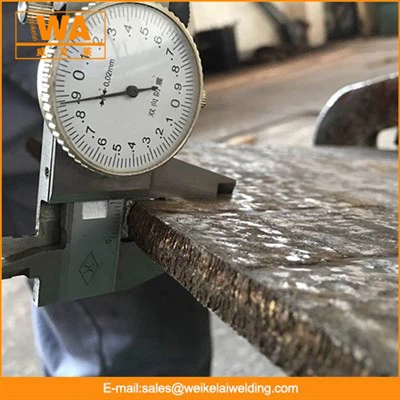
Hey there! As a supplier of wear steel plates, I often get asked about how these plates resist sliding wear. It's a super important topic, especially for industries where equipment is constantly exposed to abrasive and sliding forces. So, let's dive right in and explore the ins and outs of how wear steel plates do their magic.
Understanding Sliding Wear
First off, we need to understand what sliding wear is. Sliding wear occurs when two surfaces slide against each other. This can happen in all sorts of industrial applications, like mining, construction, and manufacturing. When this sliding action takes place, it causes material to be removed from the surfaces over time. This can lead to equipment failure, increased maintenance costs, and reduced efficiency.
Properties of Wear Steel Plates
Wear steel plates are specially designed to handle this kind of wear. They have some key properties that make them stand out.
Hardness
One of the most important properties is hardness. Hardness is a measure of a material's resistance to indentation or scratching. The harder the wear steel plate, the more resistant it is to sliding wear. High - hardness materials can withstand the abrasive forces generated during sliding without getting easily worn away. For instance, our Hardfacing Wear Plate is known for its exceptional hardness. It's made with advanced hardfacing techniques that create a tough surface layer, which can take on the rigors of heavy - duty sliding applications.
Toughness
But hardness isn't the only thing. Toughness is also crucial. A tough material can absorb energy without fracturing. In the context of sliding wear, when a hard particle hits the wear steel plate during sliding, a tough plate can deform slightly to absorb the impact energy instead of cracking. This is where our CCO Wear Plate shines. It combines high hardness with good toughness, making it suitable for applications where there are both abrasive and impact forces at play.
Microstructure
The microstructure of the wear steel plate also plays a big role. A well - engineered microstructure can enhance the plate's wear resistance. For example, a fine - grained microstructure can provide more grain boundaries, which act as barriers to the movement of dislocations. Dislocations are defects in the crystal structure of the material, and their movement is related to plastic deformation and wear. By impeding the movement of dislocations, a fine - grained microstructure can improve the wear resistance of the plate. Our Abrasion Resistant Steel is carefully heat - treated to achieve an optimal microstructure that maximizes its resistance to sliding wear.
Mechanisms of Resistance to Sliding Wear
Now, let's talk about the actual mechanisms by which wear steel plates resist sliding wear.
Abrasive Resistance
Abrasive wear is a major part of sliding wear. When a hard particle slides across the surface of the wear steel plate, it can cut or plow material from the surface. Wear steel plates resist this by having a hard surface that can withstand the cutting action of the abrasive particles. The hard carbides and other hard phases in the plate act as barriers, preventing the abrasive particles from easily removing material. For example, in some of our wear steel plates, the carbides are evenly distributed throughout the matrix, providing a uniform resistance to abrasion.
Adhesive Resistance
Adhesive wear occurs when two surfaces stick together during sliding and material is transferred from one surface to the other. Wear steel plates are designed to minimize this kind of wear. They have a surface finish and chemical composition that reduce the tendency for adhesion. For instance, some of our plates are treated with special coatings or surface treatments that create a low - friction surface. This reduces the contact area between the two sliding surfaces and minimizes the chances of adhesion and material transfer.


Oxidative Resistance
In some sliding wear situations, oxidation can also contribute to wear. When the surface of the wear steel plate is exposed to oxygen during sliding, an oxide layer can form. If this oxide layer is not stable, it can flake off, leading to increased wear. Our wear steel plates are formulated to form a stable oxide layer that acts as a protective barrier. This oxide layer can reduce the direct contact between the sliding surfaces and slow down the wear process.
Applications and Performance
Wear steel plates are used in a wide range of applications. In the mining industry, they are used in conveyor systems, chutes, and crushers. These components are constantly exposed to abrasive ores and rocks, and wear steel plates help to extend their service life. In construction, they are used in earth - moving equipment, such as bulldozers and excavators, where the blades and buckets are subject to sliding wear against the ground.
The performance of our wear steel plates in these applications has been outstanding. Customers have reported significant reductions in maintenance costs and downtime. For example, a mining company that switched to our wear steel plates for their conveyor chutes saw a 30% increase in the chute's service life. This not only saved them money on replacement parts but also increased the overall productivity of their operation.
Conclusion
So, there you have it! Wear steel plates resist sliding wear through a combination of their hardness, toughness, microstructure, and various wear - resistance mechanisms. Whether it's abrasive, adhesive, or oxidative wear, these plates are designed to handle it all.
If you're in an industry where sliding wear is a concern, I highly recommend considering our wear steel plates. We've got a wide range of products, like the Hardfacing Wear Plate, CCO Wear Plate, and Abrasion Resistant Steel, to meet your specific needs. If you're interested in learning more or want to discuss a potential purchase, don't hesitate to reach out. We're always happy to help you find the best solution for your wear - related challenges.
References
- "Wear of Materials" by M. N. G. Chiu and A. K. Sinha
- "Handbook of Tribology: Materials, Coatings, and Surface Treatments" edited by Bharat Bhushan