Hey there! I'm an insider in the flux cored arc welding world, working as a supplier. Today, I'm gonna break down the learning curve for flux cored arc welding (FCAW) so you can get a better grasp of what it takes to master this technique.
Getting the Basics Down
First off, let's start with the very basics. Flux cored arc welding is a semi - automatic or automatic arc welding process. It uses a continuous tubular electrode filled with flux. This flux does a bunch of important jobs. It helps protect the weld pool from atmospheric contamination, provides alloying elements to improve the properties of the weld, and can even stabilize the arc.
If you're new to welding in general, you'll need to learn the fundamental safety procedures. Welding involves high temperatures, bright light, and potentially harmful fumes. So, wearing proper safety gear like a welding helmet, gloves, and protective clothing is a must. You also need to set up your workspace in a well - ventilated area to avoid inhaling those fumes.
When you first start FCAW, understanding your equipment is crucial. You've got your welding machine, which needs to be set up correctly. The settings depend on a few factors like the thickness of the metal you're welding, the type of joint, and the welding position. For instance, welding a thick piece of steel will require different settings than welding a thin sheet.
The Initial Hurdles
The first few weeks of learning FCAW can be pretty challenging. One of the biggest issues beginners face is getting a stable arc. An unstable arc can lead to a bunch of problems like uneven bead appearance, lack of fusion, and porosity in the weld. To get a stable arc, you need to find the right balance between the wire feed speed and the voltage. It's a bit like learning to ride a bike; you'll fall a few times before you get the hang of it.

Another problem is dealing with spatter. Spatter is those little bits of molten metal that fly off during the welding process. It can make your weld look messy and also waste your welding wire. Controlling spatter involves adjusting your machine settings, using the right type of wire, and maintaining the correct welding technique.
Learning the proper welding technique is also a steep part of the learning curve. You need to hold the welding gun at the right angle, maintain a consistent travel speed, and keep a proper distance between the gun and the workpiece. If your angle is off, you might not get good penetration, and if your travel speed is too fast or too slow, the weld quality will suffer.
Progressing Through the Learning Curve
After you've got the basics down and started to overcome those initial hurdles, you'll start to see some progress. You'll notice that your arcs are becoming more stable, and your welds are looking better. At this stage, you can start to experiment with different types of welding wire.
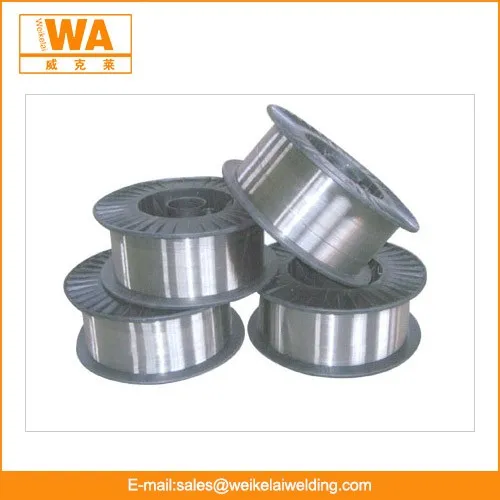
We offer a range of wires here at our company. For example, the Metal Cored Welding Wire is great for high - speed welding and provides excellent weld quality. The Resistant Flux Core Wire is designed to be more resistant to corrosion and other environmental factors, making it ideal for outdoor applications. And the Mild Steel Mig Welding Wire is perfect for general - purpose welding on mild steel.
As you progress, you'll also want to learn about different welding positions. Welding in the flat position is the easiest, but in real - world applications, you'll often need to weld in vertical, horizontal, or overhead positions. Each position requires a different technique and adjustment of your machine settings. For example, when welding overhead, you need to control the molten metal so it doesn't drip down.
Advanced Skills and Mastery
Once you've been welding for a while and have a good handle on the basics and intermediate skills, you can start working on advanced techniques. This might include things like welding dissimilar metals, where you're joining two different types of metals together. It requires a deep understanding of the properties of each metal and how they react during the welding process.
Another advanced skill is pulse welding. Pulse welding allows you to control the heat input more precisely, which can be useful for welding thin materials or when you need to minimize distortion. It's a bit more complex than regular FCAW, but it can open up new possibilities for your welding projects.
Mastery of FCAW takes time and practice. You'll need to keep learning and experimenting with different techniques, materials, and equipment. It's also a good idea to get feedback from more experienced welders. You can join welding forums, attend welding workshops, or even find a mentor who can guide you along the way.
Why Choose Our Products
As a supplier, we're committed to providing high - quality flux cored welding products. Our wires are made with the latest technology and strict quality control measures. We understand that different welding projects have different requirements, and that's why we offer a wide range of products to meet those needs.
Whether you're a beginner just starting out or an experienced welder looking for high - performance wires, we've got you covered. Our Metal Cored Welding Wire offers fast travel speeds and excellent bead appearance. The Resistant Flux Core Wire is perfect for harsh environments, and the Mild Steel Mig Welding Wire is great for everyday mild steel welding.
Let's Connect
If you're interested in learning more about our flux cored arc welding products or have any questions about the learning curve for FCAW, we'd love to hear from you. Whether you're a small - scale welder or a large - scale manufacturing company, we can provide you with the right solutions for your welding needs. Reach out to us for a consultation and let's start a conversation about how we can help you with your welding projects.
References
- AWS Welding Handbook, Volume 1: Welding Science and Technology
- Welding: Principles and Applications by Larry Jeffus