As a seasoned supplier of Flux Cored MIG Wire, I understand that many welders and industry professionals often have questions about various aspects of flux cored welding. One crucial factor that significantly impacts the welding process is the electrode extension. In this blog post, I'll delve deep into what electrode extension for flux cored MIG wire is and why it matters.
Understanding Electrode Extension
The electrode extension, commonly referred to as the stick - out, is the length of the flux cored MIG wire that extends beyond the contact tip of the welding gun. This length is a critical parameter because it affects multiple aspects of the welding process, including heat input, penetration, and the quality of the weld bead.
When we talk about electrode extension, it is measured from the end of the contact tip to the end of the wire. This seemingly simple measurement can have a profound impact on the welding operation's efficiency and the final weld quality.
Effects of Electrode Extension on Welding
- Heat Input: The longer the electrode extension, the more resistance the electrical current encounters as it travels through the wire. Since resistance generates heat, a longer stick - out means more heat is generated in the wire before it reaches the weld pool. This can lead to overheating of the wire, causing it to become softer and more prone to deformation. A shorter electrode extension, on the other hand, results in less resistance and thus less pre - heating of the wire. For most flux cored MIG welding applications, finding the optimal heat input is crucial to achieve a stable arc and a high - quality weld.
- Penetration: Penetration is a key factor in determining the strength of the weld. A shorter electrode extension generally leads to greater penetration. This is because the arc is more concentrated, and more of the arc energy is directed into the base metal. Longer electrode extensions can cause the arc to spread out, reducing the effective energy per unit area on the base metal and thus decreasing penetration. For example, in applications where a deep weld penetration is required, such as in heavy - duty structural welding, a shorter stick - out is typically preferred.
- Weld Bead Quality: The appearance and integrity of the weld bead are also affected by the electrode extension. A correct electrode extension helps to create a smooth, uniform bead with good fusion. If the stick - out is too long, the weld bead may be irregular, with a higher likelihood of porosity and lack of fusion. Conversely, an overly short electrode extension can cause the contact tip to overheat and wear out quickly, which can also lead to poor bead quality and inconsistent welding.
Optimal Electrode Extension for Different Types of Flux Cored MIG Wire
The optimal electrode extension can vary depending on the type of flux cored MIG wire being used. Here's a brief overview of some common types of flux cored wires and their typical recommended electrode extensions:
- Mild Steel Mig Welding Wire: For mild steel flux cored MIG wires, the typical electrode extension ranges from 1/4 inch (6.4 mm) to 3/8 inch (9.5 mm). This range provides a good balance between heat input, penetration, and bead quality when welding mild steel.
- Metal Cored Welding Wire: Metal cored wires often require a slightly shorter electrode extension compared to other types. Generally, an extension of around 3/16 inch (4.8 mm) to 1/4 inch (6.4 mm) is preferred. This helps to achieve the high - deposition rates and good penetration characteristics that metal cored wires are known for.
- Dual Shield Welding Wire: When using dual shield welding wires, which combine the shielding effects of fluxes and external gas, an electrode extension of about 5/16 inch (7.9 mm) to 3/8 inch (9.5 mm) is commonly recommended. This length allows for proper gas shielding and stable arc performance.
- Flux Cored ArcIron Flux Cored Welding Wire: For arc - iron flux cored wires, the optimal electrode extension usually falls between 1/4 inch (6.4 mm) and 1/2 inch (12.7 mm). This variation in the range caters to different welding positions and thicknesses of the base metal.
- Hardfacing Flux Cored Wire: Hardfacing applications often require very precise control of the electrode extension. Typically, an extension between 3/16 inch (4.8 mm) and 5/16 inch (7.9 mm) is used to ensure proper buildup of the hardfacing material and good adhesion to the base metal.
Measuring and Controlling Electrode Extension
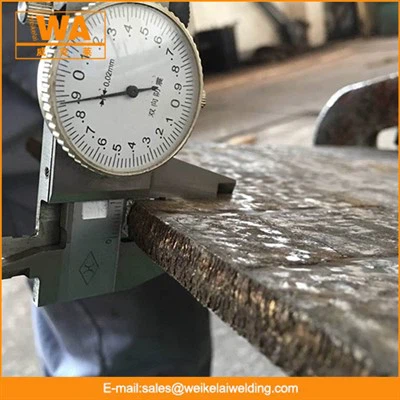
Measuring the electrode extension accurately is essential for consistent welding results. Welders can use a simple ruler or caliper to measure the length of the wire extending from the contact tip. However, in a production environment, it is often more practical to use visual reference points or a measuring gauge specifically designed for this purpose.

Controlling the electrode extension during the welding process can be challenging, especially for long welds. Factors such as operator fatigue, wire feeding issues, and vibrations can cause the stick - out to vary. To maintain a consistent electrode extension, welders should use a welding gun with a stable wire feed mechanism and practice proper welding techniques, such as keeping a steady hand and maintaining a constant travel speed.
Importance of Correct Electrode Extension in Our Business
As a supplier of Flux Cored MIG Wire, I am fully aware that providing customers with high - quality products is not enough. We also need to educate our customers about the proper use of our wires to ensure they achieve the best results. Understanding and controlling the electrode extension is a key part of this process.
By promoting the correct electrode extension for our different types of flux cored wires, we can help our customers improve their welding efficiency, reduce the number of defective welds, and ultimately save on costs. Whether it's a small fabrication shop or a large - scale manufacturing plant, the right electrode extension can make a significant difference in the overall productivity and quality of the welding operations.
Contact Us for More Information
If you're looking for high - quality Flux Cored MIG Wire and need more information about electrode extension or any other welding - related topic, we're here to help. Whether you have questions about our Mild Steel Mig Welding Wire, Metal Cored Welding Wire, Dual Shield Welding Wire, Flux Cored ArcIron Flux Cored Welding Wire, or Hardfacing Flux Cored Wire, feel free to contact us. Our team of experts is always ready to assist you in finding the right products and providing technical support to ensure your welding projects are a success.