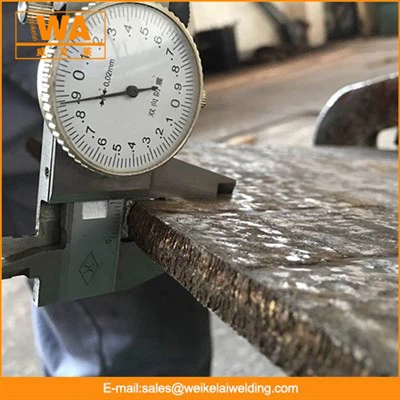
In the industrial sector, plates are essential components used in a wide range of applications. Among them, wear plates and regular plates are two commonly used types, but they have distinct differences in terms of properties, applications, and manufacturing processes. As a wear plate supplier, I'd like to share in - depth insights into these differences to help you make more informed decisions when choosing the right plates for your projects.
1. Material Composition
Regular plates are typically made from common steels or alloys with relatively standard chemical compositions. These materials are designed to meet general structural and mechanical requirements. For example, mild steel plates, which are a type of regular plate, are mainly composed of iron and a small amount of carbon (usually less than 0.3%). The simple composition makes them cost - effective and easy to process, but they lack the specialized properties required for high - wear environments.
On the other hand, wear plates are engineered with specific alloying elements to enhance their wear resistance. For instance, Hardfacing Wear Plate often contains high levels of elements such as chromium, nickel, and molybdenum. Chromium can form hard carbides, which significantly improve the hardness and wear resistance of the plate. Nickel enhances the toughness and corrosion resistance of the material, while molybdenum increases the strength and heat resistance. Another type, Alloy Steel Plate, is also formulated with a precise combination of alloying elements to achieve optimal wear - resistant performance. Chromium Carbide Plate is specifically designed with a high content of chromium carbide particles, which are extremely hard and provide excellent protection against abrasion.
2. Mechanical Properties
Hardness
One of the most significant differences between wear plates and regular plates is their hardness. Regular plates usually have a relatively low hardness, which allows them to be easily cut, welded, and formed. For example, the Brinell hardness of mild steel plates may range from 100 - 150 HB. This lower hardness makes them suitable for applications where high - wear resistance is not a primary concern, such as general structural supports in buildings.
In contrast, wear plates are characterized by their high hardness. The hardness of wear plates can be several times higher than that of regular plates. For example, some high - quality wear plates can have a Brinell hardness of over 500 HB or even higher. This high hardness enables wear plates to withstand severe abrasion, impact, and erosion, making them ideal for use in industries such as mining, construction, and manufacturing, where components are constantly exposed to harsh wear conditions.


Toughness
While wear plates are known for their high hardness, they also need to have a certain degree of toughness to prevent cracking and breaking under impact loads. Regular plates generally have good toughness due to their lower hardness and more ductile material structure. They can deform plastically to absorb energy during impact, which is beneficial in applications where shock absorption is required.
Wear plates are engineered to balance hardness and toughness. Advanced manufacturing processes are used to ensure that the plates can maintain their integrity under high - stress conditions. For example, through proper heat treatment and alloying, wear plates can have a combination of high hardness on the surface for wear resistance and sufficient toughness in the core to resist cracking.
3. Manufacturing Processes
Regular plates are often produced through standard steel - making processes such as hot rolling or cold rolling. These processes are well - established and relatively simple, which allows for large - scale production at a relatively low cost. The raw materials are melted in a furnace, refined, and then rolled into the desired thickness and shape.
Wear plates, however, require more complex manufacturing processes. In addition to the basic steel - making steps, wear plates often undergo special treatments to enhance their wear - resistant properties. For example, hardfacing is a common process used for wear plates. In hardfacing, a layer of wear - resistant material is welded onto the surface of the base plate. This process can be done using various welding techniques, such as submerged arc welding or gas tungsten arc welding. Another method is to use powder metallurgy to produce wear plates with a uniform distribution of hard particles. These advanced manufacturing processes increase the production cost of wear plates but also ensure their high - performance characteristics.
4. Applications
Regular plates are widely used in general construction, automotive manufacturing, and other industries where the primary requirements are structural support and basic mechanical properties. In construction, they are used for building frames, bridges, and general building components. In the automotive industry, regular plates are used for body panels, chassis parts, and other non - wear - critical components.
Wear plates, due to their excellent wear - resistant properties, are mainly used in industries where components are subject to severe wear. In the mining industry, wear plates are used in crushers, conveyors, and hoppers to protect against the abrasion of ores and rocks. In the construction industry, they are used in earth - moving equipment, such as bulldozers and excavators, to withstand the wear caused by soil and gravel. In the manufacturing industry, wear plates are used in machinery parts that come into contact with abrasive materials, such as grinding mills and mixers.
5. Cost
Regular plates are generally more cost - effective than wear plates. The simple manufacturing processes and common raw materials used in regular plates result in lower production costs. This makes them a popular choice for applications where high - wear resistance is not essential and cost is a major consideration.
Wear plates, on the other hand, are more expensive due to the use of specialized alloying elements and complex manufacturing processes. However, the long - term cost - effectiveness of wear plates should be considered. Although the initial investment is higher, their longer service life and reduced maintenance requirements can result in significant cost savings in the long run. For example, in a mining operation, using wear plates can reduce the frequency of component replacements, minimize downtime, and increase overall productivity.
Conclusion
In summary, wear plates and regular plates have distinct differences in material composition, mechanical properties, manufacturing processes, applications, and cost. As a wear plate supplier, I understand the importance of choosing the right plate for different applications. If your project requires components to withstand severe wear, impact, and erosion, wear plates are the better choice. They offer superior performance and durability, which can lead to increased productivity and reduced operating costs in the long term.
If you are interested in our wear plates or have any questions about the selection and application of wear plates, please feel free to contact us for a detailed discussion. We are committed to providing you with the highest - quality wear plates and professional technical support to meet your specific requirements.
References
- ASM Handbook Volume 1: Properties and Selection: Irons, Steels, and High - Performance Alloys.
- Callister, W. D., & Rethwisch, D. G. (2010). Materials Science and Engineering: An Introduction. Wiley.
- Davis, J. R. (Ed.). (1998). Handbook of Hardfacing Alloys. ASM International.