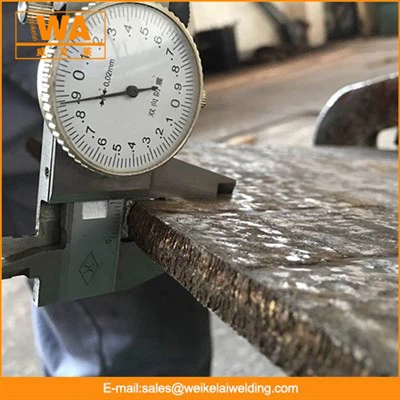
Hey there! As a wear plate supplier, I often get asked about the coefficient of friction of wear plates. It's a pretty important factor, especially when you're trying to figure out how well these plates will perform in different applications. So, let's dive right into it and break down what the coefficient of friction of a wear plate really means.
First off, what's the coefficient of friction? In simple terms, it's a number that tells you how much two surfaces stick together when they're in contact and moving relative to each other. A higher coefficient of friction means there's more resistance to motion between the surfaces, like when you're trying to slide a heavy box across a carpet. On the other hand, a lower coefficient of friction means the surfaces can slide past each other more easily, like ice skating on a frozen pond.
Now, when it comes to wear plates, the coefficient of friction can have a big impact on their performance. For example, in some applications, you might want a high coefficient of friction. Say you're using wear plates in a conveyor system where you need to grip materials firmly to prevent them from slipping. A wear plate with a high coefficient of friction would be ideal in this case. It would help keep the materials in place and ensure smooth and efficient operation of the conveyor.
On the flip side, there are situations where a low coefficient of friction is preferred. Take a look at machinery parts that are constantly moving against each other. If the wear plates have a high coefficient of friction, it could lead to increased wear and tear, as well as higher energy consumption. In these cases, a wear plate with a low coefficient of friction would reduce the resistance between the moving parts, minimizing wear and saving energy.
So, what factors affect the coefficient of friction of a wear plate? Well, the material of the wear plate is a major one. Different materials have different surface properties, which can greatly influence the coefficient of friction. For instance, Chrome Carbide Plate is known for its excellent wear resistance and relatively low coefficient of friction. This makes it a great choice for applications where you need to reduce friction and wear, such as in mining equipment or industrial machinery.
Another factor is the surface finish of the wear plate. A smooth surface finish generally results in a lower coefficient of friction compared to a rough surface. When the surface is smooth, there are fewer irregularities for the two surfaces to catch on, allowing them to slide past each other more easily. However, in some cases, a slightly rough surface might be desirable to increase the coefficient of friction and improve grip.
The operating conditions also play a role. Factors like temperature, humidity, and the presence of lubricants can all affect the coefficient of friction. For example, high temperatures can cause the material of the wear plate to expand and change its surface properties, which in turn can alter the coefficient of friction. Similarly, the use of lubricants can significantly reduce the coefficient of friction by creating a thin film between the two surfaces, allowing them to slide with less resistance.
As a wear plate supplier, I understand the importance of choosing the right wear plate with the appropriate coefficient of friction for your specific application. That's why we offer a wide range of wear plates, including Abrasion Resistant Steel Plate and Cladding Steel Plate, each with its own unique properties and coefficient of friction.
Our team of experts can help you determine the best wear plate for your needs. We'll take into account factors like the type of application, the operating conditions, and your performance requirements to recommend the most suitable wear plate. Whether you need a high-friction wear plate for better grip or a low-friction one to reduce wear and energy consumption, we've got you covered.
If you're in the market for wear plates and want to learn more about the coefficient of friction and how it relates to your application, don't hesitate to reach out. We're here to answer your questions and provide you with the best solutions. Contact us today to start a conversation about your wear plate needs, and let's work together to find the perfect fit for your project.


References
- "Engineering Tribology" by Stachowiak and Batchelor
- "Materials Science and Engineering: An Introduction" by Callister and Rethwisch