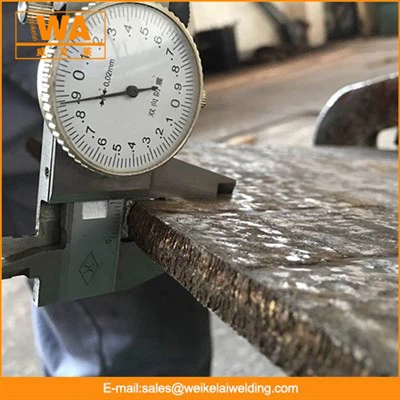
Hey there, fellow welders! I'm an open arc welding wire supplier, and I know that one of the most common headaches in the welding world is excessive penetration. It can mess up your weld quality, waste materials, and even cause safety issues. In this blog, I'm gonna share some tips on how to prevent excessive penetration when using open arc welding wire.
Understanding Excessive Penetration
First things first, let's understand what excessive penetration is. When you're welding, the heat from the arc melts the base metal and the welding wire. The molten metal then fuses together to form a weld. But sometimes, the heat is too intense, and it melts too much of the base metal, causing the weld to penetrate too deeply. This can lead to a variety of problems, such as burn - through, distortion of the workpiece, and weakening of the base metal.
Selecting the Right Welding Wire
One of the key factors in preventing excessive penetration is choosing the right welding wire. Different types of welding wires have different melting characteristics and heat inputs. For example, Metal Cored Welding Wire has a relatively high deposition rate and can be used for thicker materials. However, if you're working on thin materials, using a metal cored wire might lead to excessive penetration.
On the other hand, Flux Core Stainless Steel Welding Wire is great for stainless steel applications. It provides good corrosion resistance and can be adjusted to control the heat input. And Hardfacing Flux Cored Wire is designed for applications where you need to build up a hard surface. But again, you need to make sure the wire is suitable for the thickness of your base metal.
When selecting a welding wire, consider the thickness of the base metal, the type of joint, and the required weld quality. As a supplier, I've seen many cases where the wrong wire selection led to excessive penetration. So, take your time to choose the right one.
Adjusting Welding Parameters
Another crucial aspect is adjusting the welding parameters. The three main parameters that affect penetration are current, voltage, and travel speed.
Current
The welding current determines the amount of heat generated at the arc. Higher current means more heat, which can lead to deeper penetration. If you're getting excessive penetration, try reducing the current. However, be careful not to reduce it too much, or you might end up with a lack of fusion or a weak weld.
Voltage
Voltage affects the length of the arc. A higher voltage creates a longer arc, which can increase the heat input and penetration. If you notice excessive penetration, try lowering the voltage. This will shorten the arc and reduce the heat distribution.
Travel Speed
Travel speed is how fast you move the welding torch along the joint. A slow travel speed allows more heat to be transferred to the base metal, resulting in deeper penetration. To prevent excessive penetration, increase your travel speed. But don't go too fast, or you'll get a narrow, uneven weld.
It's a bit of a balancing act. You need to experiment with different combinations of these parameters to find the sweet spot for your specific welding job.


Proper Joint Preparation
Proper joint preparation can also help prevent excessive penetration. Make sure the edges of the base metal are clean and free of rust, oil, or other contaminants. A dirty joint can cause uneven heating and lead to excessive penetration in some areas.
The joint design also matters. For example, if you're welding thin materials, using a butt joint might be more prone to excessive penetration compared to a lap joint. Lap joints distribute the heat over a larger area, reducing the risk of burn - through.
Using Welding Techniques
There are several welding techniques that can help control penetration. One of them is the back - stepping technique. Instead of welding continuously in one direction, you weld in short segments and step back slightly between each segment. This helps to dissipate the heat and reduces the chance of excessive penetration.
Another technique is the weaving technique. By moving the welding torch in a weaving pattern, you can spread the heat more evenly across the joint. This is especially useful for wider joints.
Training and Experience
Let's not forget the importance of training and experience. Welding is a skill that takes time to master. Even with the right equipment and parameters, an inexperienced welder might still struggle to prevent excessive penetration.
As a supplier, I often recommend that my customers invest in training programs for their welders. There are many vocational schools and training centers that offer welding courses. The more experience a welder has, the better they'll be at recognizing the signs of excessive penetration and taking corrective actions.
Monitoring and Inspection
During the welding process, it's important to monitor the weld continuously. Look for signs of excessive penetration, such as burn - through, large weld beads, or distortion of the base metal. If you notice any of these signs, stop the welding immediately and make the necessary adjustments to the parameters or techniques.
After the welding is done, conduct a thorough inspection. You can use non - destructive testing methods, such as visual inspection, ultrasonic testing, or X - ray testing, to check the quality of the weld. This will help you identify any hidden issues related to excessive penetration.
Conclusion
Preventing excessive penetration when using open arc welding wire is a combination of selecting the right wire, adjusting the welding parameters, proper joint preparation, using the right techniques, and having well - trained welders. By following these tips, you can improve the quality of your welds, reduce waste, and increase the efficiency of your welding operations.
If you're in the market for high - quality open arc welding wire or need more advice on preventing excessive penetration, I'd love to have a chat with you. Feel free to reach out to me for more information and to discuss your specific welding needs. Let's work together to make your welding projects a success!
References
- Welding Handbook, American Welding Society
- Principles of Welding Technology, various industry publications