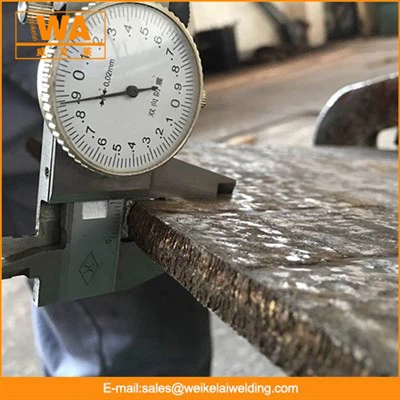
As a seasoned supplier of Wear Steel Plate, I've witnessed firsthand the critical role that appropriate cutting methods play in the processing and application of this remarkable material. Wear steel plates are renowned for their exceptional durability and resistance to abrasion, making them indispensable in a wide range of industries, from mining and construction to manufacturing and transportation. In this blog, I'll delve into the various cutting methods suitable for wear steel plates, exploring their advantages, limitations, and best-use scenarios.
Plasma Cutting
Plasma cutting is a popular choice for cutting wear steel plates due to its speed, precision, and versatility. This method involves creating a high-velocity jet of ionized gas, or plasma, which melts and blows away the metal as it cuts through the plate. Plasma cutting can be used to cut a wide range of thicknesses, from thin sheets to thick plates, and is particularly effective for cutting complex shapes and contours.
One of the key advantages of plasma cutting is its speed. It can cut through wear steel plates much faster than traditional cutting methods, such as oxy-fuel cutting, which makes it ideal for high-volume production environments. Additionally, plasma cutting produces a clean, smooth cut with minimal heat-affected zone (HAZ), which helps to preserve the integrity of the material and reduce the risk of distortion.
However, plasma cutting also has some limitations. It can be more expensive than other cutting methods, especially for thicker plates, and it requires specialized equipment and trained operators. Additionally, plasma cutting can produce a lot of noise and fumes, which can be a concern in some work environments.
Laser Cutting
Laser cutting is another popular method for cutting wear steel plates, particularly for applications that require high precision and accuracy. This method uses a high-powered laser beam to melt and vaporize the metal as it cuts through the plate. Laser cutting can be used to cut a wide range of thicknesses, from thin sheets to thick plates, and is particularly effective for cutting intricate shapes and patterns.
One of the key advantages of laser cutting is its precision. It can produce cuts with a very high degree of accuracy, which makes it ideal for applications that require tight tolerances. Additionally, laser cutting produces a clean, smooth cut with minimal HAZ, which helps to preserve the integrity of the material and reduce the risk of distortion.
However, laser cutting also has some limitations. It can be more expensive than other cutting methods, especially for thicker plates, and it requires specialized equipment and trained operators. Additionally, laser cutting can produce a lot of heat, which can cause the material to warp or distort if not properly controlled.
Oxy-Fuel Cutting
Oxy-fuel cutting is a traditional method for cutting wear steel plates that has been used for many years. This method involves using a mixture of oxygen and fuel gas, such as acetylene or propane, to heat the metal to its ignition temperature and then using a stream of oxygen to burn away the metal as it cuts through the plate. Oxy-fuel cutting can be used to cut a wide range of thicknesses, from thin sheets to thick plates, and is particularly effective for cutting straight lines and simple shapes.
One of the key advantages of oxy-fuel cutting is its simplicity. It is a relatively inexpensive and easy-to-use method that can be performed with basic equipment and minimal training. Additionally, oxy-fuel cutting can produce a clean, smooth cut with minimal HAZ, which helps to preserve the integrity of the material and reduce the risk of distortion.
However, oxy-fuel cutting also has some limitations. It is a relatively slow method, especially for thicker plates, and it can produce a lot of heat, which can cause the material to warp or distort if not properly controlled. Additionally, oxy-fuel cutting can produce a lot of slag and spatter, which can be a concern in some work environments.
Waterjet Cutting
Waterjet cutting is a relatively new method for cutting wear steel plates that has gained popularity in recent years. This method involves using a high-pressure stream of water, sometimes mixed with abrasive particles, to cut through the plate. Waterjet cutting can be used to cut a wide range of thicknesses, from thin sheets to thick plates, and is particularly effective for cutting soft materials and materials that are sensitive to heat.
One of the key advantages of waterjet cutting is its versatility. It can be used to cut a wide range of materials, including metals, plastics, composites, and ceramics, and it can produce cuts with a very high degree of accuracy and precision. Additionally, waterjet cutting produces a clean, smooth cut with minimal HAZ, which helps to preserve the integrity of the material and reduce the risk of distortion.
However, waterjet cutting also has some limitations. It can be more expensive than other cutting methods, especially for thicker plates, and it requires specialized equipment and trained operators. Additionally, waterjet cutting can produce a lot of noise and water mist, which can be a concern in some work environments.
Conclusion
In conclusion, there are several cutting methods suitable for wear steel plates, each with its own advantages and limitations. The choice of cutting method will depend on a variety of factors, including the thickness and type of the plate, the complexity of the shape and pattern, the required precision and accuracy, and the budget and resources available.


As a Wear Steel Plate supplier, I recommend that you consult with a professional cutting service provider to determine the best cutting method for your specific application. They can provide you with detailed information about the different cutting methods, their advantages and limitations, and the costs involved, and they can help you choose the method that is most suitable for your needs.
If you're interested in purchasing Wear Steel Plate or learning more about our products and services, please don't hesitate to [contact us for procurement discussions]. We're always happy to answer your questions and provide you with the information you need to make an informed decision.
References
- ASM Handbook Volume 6: Welding, Brazing, and Soldering
- The Welding Institute (TWI) - Cutting Processes Handbook
- Modern Metals Magazine - Cutting Technologies for High-Strength Steels