Hey there! As a supplier of wear steel plates, I often get asked about what coating materials are suitable for these plates. Well, I'm here to break it down for you in a way that's easy to understand.
First off, let's talk about why coatings are so important for wear steel plates. Wear steel plates are used in a ton of industries where there's a lot of abrasion, impact, and corrosion. Think mining, construction, agriculture, and more. A good coating can significantly extend the lifespan of these plates, save you money in the long run, and keep your equipment running smoothly.
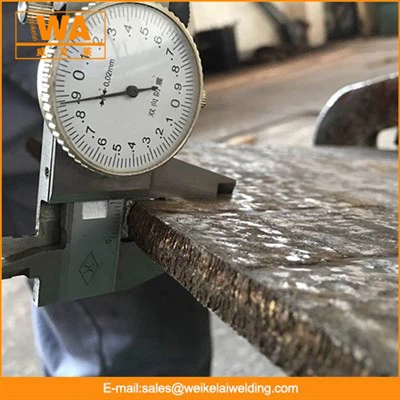
One of the most popular coating materials for wear steel plates is Hardfacing Protection Steel Plate. Hardfacing Protection Steel Plate is a process where a hard, wear - resistant material is welded onto the surface of the steel plate. This creates a tough outer layer that can withstand high levels of abrasion. The great thing about hardfacing is that you can choose different alloys depending on the specific wear conditions. For example, if you're dealing with high - impact wear, you might opt for a high - chromium alloy. It's like giving your steel plate a suit of armor!
Another option is Wear Resistant Stainless Steel. Wear Resistant Stainless Steel combines the corrosion - resistant properties of stainless steel with excellent wear resistance. This makes it ideal for applications where the steel plate is exposed to both wear and corrosive environments, such as in the food processing or chemical industries. The chromium in the stainless steel forms a passive oxide layer on the surface, which protects the underlying metal from rust and corrosion. At the same time, the carefully balanced alloy composition gives it the toughness to resist wear.
Chromium Carbide Coating is also a top choice. Chromium Carbide Coating offers outstanding wear and corrosion resistance. Chromium carbide is a very hard compound, and when it's applied as a coating, it can form a dense, uniform layer on the steel plate. This layer acts as a barrier between the steel and the abrasive or corrosive elements. It's often used in high - temperature applications as well, because chromium carbide can maintain its hardness even at elevated temperatures.
Now, let's dig a bit deeper into the pros and cons of each coating material.
Hardfacing Protection Steel Plate
- Pros:
- High flexibility in terms of alloy selection. You can customize the hardfacing alloy to match the exact wear requirements of your application.
- It can be applied to existing steel plates, which means you can upgrade your old equipment without having to replace the entire plate.
- Good for heavy - duty applications with high levels of impact and abrasion.
- Cons:
- The hardfacing process can be time - consuming and requires skilled welders.
- There might be some distortion of the steel plate during the welding process, which could affect the dimensional accuracy.
- The cost of hardfacing materials and labor can be relatively high.
Wear Resistant Stainless Steel
- Pros:
- Excellent corrosion resistance, which makes it suitable for harsh environments.
- Good overall wear resistance, especially in applications with mild to moderate abrasion.
- It has a smooth surface finish, which can reduce friction and improve the efficiency of equipment.
- Cons:
- More expensive than regular carbon steel.
- The wear resistance might not be as high as some specialized hardfacing alloys in extremely abrasive conditions.
Chromium Carbide Coating
- Pros:
- Exceptional wear and corrosion resistance, even at high temperatures.
- Can be applied in a relatively thin layer, which doesn't add much weight to the steel plate.
- It provides a uniform and consistent protective layer.
- Cons:
- The coating process can be complex and requires specialized equipment.
- Repairing a damaged chromium carbide coating can be difficult.
When choosing the right coating material for your wear steel plate, you need to consider a few factors. First, think about the type of wear your plate will be exposed to. Is it mainly abrasion, impact, or corrosion? Or a combination of these? Second, consider the operating environment. Are there high temperatures, chemicals, or moisture present? Third, your budget is also an important factor. You need to balance the cost of the coating with the expected benefits in terms of extended plate life and reduced downtime.


For example, if you're running a mining operation where the steel plates are constantly subjected to heavy - duty abrasion and impact, hardfacing protection steel plate might be your best bet. On the other hand, if you're in the food industry where corrosion is a major concern, wear - resistant stainless steel would be a more suitable choice. And if you're dealing with high - temperature and abrasive conditions, chromium carbide coating could be the way to go.
In conclusion, there's no one - size - fits - all answer when it comes to choosing the right coating material for wear steel plates. Each material has its own unique properties and advantages, and the best choice depends on your specific application and requirements.
If you're in the market for wear steel plates and are not sure which coating material is right for you, don't hesitate to reach out. I'm here to help you make an informed decision and find the perfect solution for your needs. Whether you need more information, samples, or a quote, just let me know. Let's work together to ensure your equipment gets the best protection and performs at its peak.
References
- ASTM International standards related to wear - resistant materials
- Technical literature from coating material manufacturers
- Industry research papers on wear and corrosion protection of steel plates