Porosity in welding is a common yet frustrating issue that can significantly compromise the integrity and quality of welds. As a trusted supplier of Flux Cored MIG Wire, I've encountered numerous customers grappling with this problem. In this blog, I'll delve into the various factors that cause porosity when welding with flux cored MIG wire and offer insights on how to mitigate them.
Understanding Flux Cored MIG Welding
Before we explore the causes of porosity, it's essential to understand the basics of flux cored MIG welding. Flux cored MIG wire is a tubular wire filled with flux, which provides shielding gas and other beneficial elements during the welding process. This type of wire is popular due to its high deposition rate, good penetration, and suitability for various applications, including Dual Shield Welding Wire and Solid Wire Welding.
Common Causes of Porosity
1. Contamination
Contamination is one of the leading causes of porosity in flux cored MIG welding. Surface contaminants such as rust, oil, grease, paint, and dirt can introduce impurities into the weld pool, leading to the formation of gas pockets. These contaminants can react with the flux or the molten metal, producing gases that get trapped in the solidifying weld.
To prevent contamination-related porosity, it's crucial to thoroughly clean the base metal before welding. Use a wire brush, grinder, or chemical cleaner to remove any surface impurities. Additionally, ensure that the welding equipment, including the wire feeder, contact tip, and gas nozzle, is clean and free from debris.
2. Improper Shielding Gas
Flux cored MIG welding can be performed with or without external shielding gas. When using self-shielded flux cored wire, the flux inside the wire provides the necessary shielding. However, if the wire is not designed for self-shielding or if the shielding gas is inadequate, porosity can occur.
If you're using gas-shielded flux cored wire, ensure that the shielding gas is of the correct type and flow rate. The most commonly used shielding gases for flux cored MIG welding are carbon dioxide (CO2) and argon/CO2 mixtures. Using the wrong gas or an incorrect flow rate can result in insufficient shielding, allowing atmospheric gases such as oxygen and nitrogen to enter the weld pool and cause porosity.
3. Welding Parameters
Incorrect welding parameters can also contribute to porosity. Parameters such as voltage, amperage, travel speed, and wire feed speed play a crucial role in the quality of the weld. If the voltage is too high, the arc can become unstable, leading to excessive spatter and porosity. On the other hand, if the voltage is too low, the weld may not penetrate properly, resulting in a lack of fusion and porosity.
Similarly, improper amperage can affect the heat input and the fluidity of the weld pool. If the amperage is too high, the weld pool may become too large and turbulent, making it difficult for the gases to escape. Conversely, if the amperage is too low, the weld may not be fully fused, leading to porosity.
Travel speed and wire feed speed are also important factors. If the travel speed is too fast, the weld pool may not have enough time to solidify properly, allowing gases to get trapped. If the wire feed speed is too slow, the arc may become unstable, resulting in porosity.
4. Wire Quality and Storage
The quality of the flux cored MIG wire can also impact the occurrence of porosity. Low-quality wire may contain impurities or inconsistent flux composition, which can lead to gas formation during welding. It's important to source high-quality wire from a reputable supplier to minimize the risk of porosity.
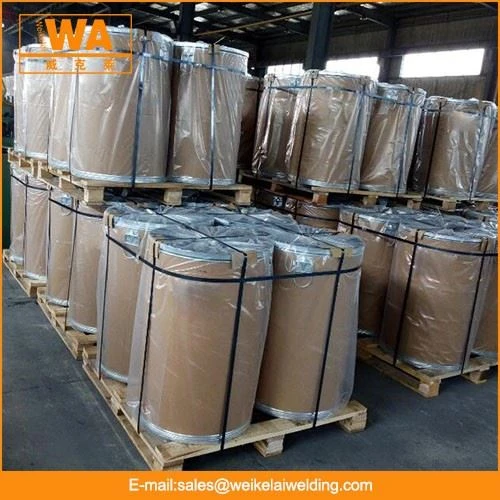
Proper storage of the wire is also crucial. Flux cored wire is hygroscopic, meaning it can absorb moisture from the air. Moisture in the wire can react with the flux or the molten metal, producing hydrogen gas, which is a common cause of porosity. To prevent moisture absorption, store the wire in a dry environment and keep it sealed in its original packaging until ready to use.

5. Welding Technique
The welding technique used can also influence the formation of porosity. For example, if the arc length is too long, the shielding gas may not be able to effectively protect the weld pool, allowing atmospheric gases to enter. A long arc can also cause the flux to burn off prematurely, reducing its shielding and deoxidizing properties.
Additionally, improper electrode angle and travel direction can affect the flow of the weld pool and the escape of gases. It's important to maintain a consistent arc length, electrode angle, and travel speed to ensure proper shielding and gas escape.
Mitigating Porosity in Flux Cored MIG Welding
Now that we've identified the common causes of porosity, let's discuss some strategies for mitigating this issue:
- Clean the Base Metal: Thoroughly clean the base metal before welding to remove any surface contaminants.
- Use the Right Shielding Gas: If using gas-shielded flux cored wire, ensure that the shielding gas is of the correct type and flow rate.
- Optimize Welding Parameters: Adjust the voltage, amperage, travel speed, and wire feed speed to suit the specific welding application and base metal.
- Choose High-Quality Wire: Source flux cored MIG wire from a reputable supplier to ensure consistent quality and performance.
- Properly Store the Wire: Keep the wire in a dry environment and sealed in its original packaging to prevent moisture absorption.
- Improve Welding Technique: Maintain a consistent arc length, electrode angle, and travel speed to ensure proper shielding and gas escape.
Conclusion
Porosity in flux cored MIG welding can be caused by a variety of factors, including contamination, improper shielding gas, incorrect welding parameters, wire quality and storage, and welding technique. By understanding these causes and implementing the appropriate mitigation strategies, you can significantly reduce the occurrence of porosity and improve the quality of your welds.
As a supplier of Flux Core Stainless Steel Welding Wire and other flux cored MIG wires, we're committed to providing high-quality products and technical support to help you achieve optimal welding results. If you're experiencing porosity or other welding issues, don't hesitate to reach out to us. We'll be happy to assist you in finding the right solutions for your specific needs. Whether you're a professional welder or a DIY enthusiast, we're here to support you every step of the way. Contact us today to discuss your welding requirements and explore our range of products.
References
- AWS Welding Handbook, Volume 1: Welding Science and Technology, American Welding Society.
- Welding Metallurgy and Weldability of Stainless Steels, John C. Lippold and David J. Kotecki.
- Practical Welding Engineering, John H. Cary and Scott C. Helzer.