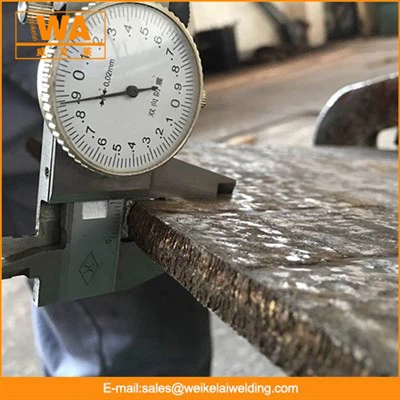
As a hardfacing pipe supplier, I often receive inquiries about the welding parameters for hardfacing pipes. Hardfacing is a process of applying a hard, wear-resistant material to the surface of a pipe to enhance its durability and performance in harsh environments. In this blog post, I will discuss the key welding parameters for hardfacing pipes and their importance in achieving high-quality hardfacing results.
Understanding Hardfacing
Hardfacing is a welding process that involves depositing a layer of hard, wear-resistant material onto the surface of a base metal. This process is commonly used in industries such as mining, construction, and oil and gas, where pipes are exposed to abrasive materials, high temperatures, and corrosive environments. The hardfacing layer provides a protective barrier that helps to extend the service life of the pipes and reduce maintenance costs.
Key Welding Parameters for Hardfacing Pipes
Several welding parameters need to be carefully controlled to ensure a successful hardfacing process. These parameters include:
1. Welding Current
The welding current is one of the most critical parameters in hardfacing. It determines the heat input into the base metal and the hardfacing material. A higher welding current generally results in a deeper penetration and a thicker hardfacing layer. However, excessive current can also lead to overheating, distortion, and cracking of the base metal. On the other hand, a lower welding current may result in insufficient penetration and a weak bond between the hardfacing layer and the base metal.
The optimal welding current depends on several factors, such as the type of hardfacing material, the thickness of the base metal, and the welding process used. For example, when using a shielded metal arc welding (SMAW) process, the welding current typically ranges from 80 to 150 amperes for a 3/32-inch diameter electrode. When using a gas metal arc welding (GMAW) process, the welding current may range from 120 to 250 amperes, depending on the wire diameter and the shielding gas used.
2. Welding Voltage
The welding voltage is closely related to the welding current and affects the arc length and the stability of the welding arc. A higher welding voltage generally results in a longer arc length and a wider bead width. However, excessive voltage can also lead to spatter, porosity, and a poor-quality weld. A lower welding voltage may result in a shorter arc length and a narrower bead width, but it can also cause the electrode to stick to the base metal.
The optimal welding voltage depends on the welding current, the type of electrode or wire used, and the welding process. For example, when using an SMAW process, the welding voltage typically ranges from 20 to 28 volts. When using a GMAW process, the welding voltage may range from 18 to 30 volts, depending on the wire feed speed and the shielding gas.
3. Welding Speed
The welding speed refers to the rate at which the welding torch or electrode moves along the joint. It affects the heat input, the bead shape, and the quality of the hardfacing layer. A higher welding speed generally results in a lower heat input and a thinner hardfacing layer. However, excessive speed can also lead to incomplete fusion, lack of penetration, and a rough surface finish. A lower welding speed may result in a higher heat input and a thicker hardfacing layer, but it can also cause overheating, distortion, and cracking of the base metal.
The optimal welding speed depends on the welding current, the welding voltage, the type of hardfacing material, and the thickness of the base metal. For example, when hardfacing a pipe with a thickness of 1/4 inch, a welding speed of 4 to 8 inches per minute may be appropriate.
4. Electrode or Wire Diameter
The electrode or wire diameter affects the welding current, the deposition rate, and the bead size. A larger electrode or wire diameter generally requires a higher welding current and results in a higher deposition rate and a larger bead size. However, a larger electrode or wire diameter may also be more difficult to control and may require more skill and experience to use. A smaller electrode or wire diameter may require a lower welding current and result in a lower deposition rate and a smaller bead size, but it can also provide more precise control and a better-quality weld.
The optimal electrode or wire diameter depends on the thickness of the base metal, the type of hardfacing material, and the welding process. For example, when hardfacing a thin-walled pipe, a smaller electrode or wire diameter (e.g., 1/16 inch or 3/32 inch) may be more suitable. When hardfacing a thick-walled pipe, a larger electrode or wire diameter (e.g., 1/8 inch or 5/32 inch) may be required.

5. Shielding Gas
Shielding gas is used in some welding processes, such as GMAW and flux-cored arc welding (FCAW), to protect the weld pool from atmospheric contamination. The type of shielding gas used can affect the quality of the weld, the bead appearance, and the mechanical properties of the hardfacing layer.
Common shielding gases used in hardfacing include argon, carbon dioxide, and mixtures of these gases. Argon is an inert gas that provides excellent protection against oxidation and produces a smooth, clean weld bead. Carbon dioxide is a reactive gas that can increase the penetration and the deposition rate, but it can also cause spatter and porosity. Mixtures of argon and carbon dioxide, such as 75% argon and 25% carbon dioxide, are often used to combine the advantages of both gases.
Importance of Controlling Welding Parameters
Controlling the welding parameters is crucial for achieving high-quality hardfacing results. Incorrect welding parameters can lead to a variety of problems, such as:
- Poor Bonding: Insufficient heat input or improper welding technique can result in a weak bond between the hardfacing layer and the base metal. This can cause the hardfacing layer to delaminate or peel off during service, reducing the effectiveness of the hardfacing.
- Cracking: Excessive heat input, rapid cooling, or high residual stresses can cause cracking in the hardfacing layer or the base metal. Cracks can propagate under stress and lead to premature failure of the pipe.
- Porosity: Improper shielding gas, contaminated electrodes or wire, or incorrect welding parameters can cause porosity in the hardfacing layer. Porosity can reduce the strength and the wear resistance of the hardfacing.
- Incomplete Fusion: Insufficient heat input or improper welding technique can result in incomplete fusion between the hardfacing layers or between the hardfacing layer and the base metal. This can create weak spots in the hardfacing and reduce its performance.
Applications of Hardfacing Pipes
Hardfacing pipes are widely used in various industries due to their excellent wear resistance and durability. Some common applications include:
- Mining Industry: In mining operations, pipes are used to transport abrasive materials such as coal, ore, and gravel. Hardfacing pipes can withstand the high levels of abrasion and erosion, extending the service life of the pipes and reducing downtime.
- Construction Industry: Hardfacing pipes are used in construction equipment such as concrete pumps and slurry pipelines. These pipes are exposed to abrasive materials and high pressures, and hardfacing can protect them from wear and damage.
- Oil and Gas Industry: In the oil and gas industry, pipes are used to transport crude oil, natural gas, and other fluids. Hardfacing pipes can resist corrosion and erosion caused by the harsh chemicals and high pressures in the pipelines.
Our Hardfacing Pipe Products
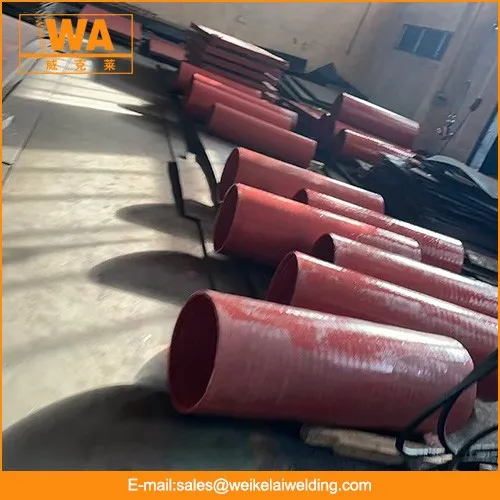
As a hardfacing pipe supplier, we offer a wide range of high-quality hardfacing pipes, including Cco Abrasion Pipe, Wear Resistant Pipe, and Hardfacing Abrasion Elbows. Our pipes are manufactured using advanced hardfacing techniques and high-quality materials to ensure excellent wear resistance and performance.
Contact Us for Procurement
If you are interested in our hardfacing pipe products or have any questions about the welding parameters for hardfacing pipes, please feel free to contact us. Our team of experts is ready to provide you with professional advice and assistance. We look forward to discussing your specific requirements and working with you to find the best hardfacing solutions for your applications.
References
- AWS D17.1/D17.1M:2010, Specification for Welding for Aerospace Applications
- ASME Boiler and Pressure Vessel Code, Section IX, Welding and Brazing Qualifications
- Welding Handbook, Volume 2: Welding Processes, American Welding Society