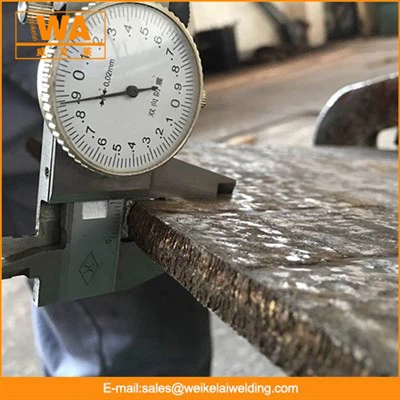
Wear resistant pipes are crucial components in various industries, especially those dealing with abrasive materials, high - velocity flows, and harsh operating conditions. Surface treatments play a vital role in enhancing the wear resistance of these pipes, extending their service life, and reducing maintenance costs. As a wear resistant pipe supplier, I have in - depth knowledge of different surface treatments for these pipes. In this blog, I will explore the common surface treatments used for wear resistant pipes.
1. Hardfacing
Hardfacing is a widely used surface treatment method for wear resistant pipes. It involves depositing a hard, wear - resistant material onto the surface of the pipe through welding or thermal spraying processes.
Welding - based Hardfacing
In welding - based hardfacing, a filler material with high hardness and wear resistance is welded onto the pipe surface. This filler material often contains elements such as chromium, tungsten, and vanadium, which form hard carbides that can withstand abrasive wear. For example, Stellite alloys are commonly used in hardfacing applications. These alloys have excellent resistance to abrasion, corrosion, and high - temperature wear.
The advantage of welding - based hardfacing is its strong bond with the base pipe material. The welded layer becomes an integral part of the pipe, providing long - term wear protection. However, it requires skilled welders and proper welding equipment. If the welding process is not well - controlled, issues such as cracking, porosity, and improper fusion may occur.
Thermal Spraying Hardfacing
Thermal spraying is another approach to hardfacing. In this process, a powder or wire of the hardfacing material is heated to a molten or semi - molten state and then sprayed onto the pipe surface using a high - velocity gas stream. Plasma spraying, flame spraying, and high - velocity oxygen fuel (HVOF) spraying are common thermal spraying techniques.
HVOF spraying, for instance, can produce a dense and well - bonded hardfacing layer. It can deposit materials like tungsten carbide - cobalt (WC - Co) coatings, which offer extremely high wear resistance. Thermal spraying is more flexible than welding - based hardfacing as it can be used on complex - shaped pipes. It also allows for precise control of the coating thickness. But the bond strength of thermal - sprayed coatings may be lower compared to welded hardfacing layers, and they may be more susceptible to delamination under certain conditions.
If you are interested in hardfacing abrasion pipes, you can visit our product page Hardfacing Abrasion Pipe for more details.
2. Ceramic Coating
Ceramic coatings are another effective surface treatment for wear resistant pipes. Ceramics are known for their high hardness, excellent wear resistance, and chemical stability.
Physical Vapor Deposition (PVD)
PVD is a process used to deposit thin ceramic coatings on the pipe surface. In PVD, the ceramic material is vaporized in a vacuum chamber and then condensed onto the pipe. Titanium nitride (TiN), titanium carbide (TiC), and aluminum oxide (Al₂O₃) are common ceramic materials used in PVD coatings.
PVD - coated pipes have a smooth surface finish, which can reduce friction and improve the flow characteristics of the fluid or particles inside the pipe. The thin ceramic coating can also provide good corrosion resistance in addition to wear protection. However, PVD coatings are relatively thin, usually in the range of a few micrometers, and may not be suitable for applications with severe abrasive wear.
Chemical Vapor Deposition (CVD)
CVD is similar to PVD but involves chemical reactions in the gas phase to form the ceramic coating. CVD can produce thicker and more adherent ceramic coatings compared to PVD. For example, silicon carbide (SiC) coatings can be deposited using CVD. These coatings have high hardness and excellent thermal stability, making them suitable for high - temperature and high - wear applications.
However, CVD processes are often carried out at high temperatures, which may cause thermal stress in the base pipe material. This requires careful selection of the pipe material and proper heat treatment after coating to avoid cracking or deformation.
3. Rubber Lining
Rubber lining is a popular surface treatment for wear resistant pipes, especially in applications where the pipes are exposed to slurry or corrosive fluids.
Natural Rubber Lining
Natural rubber has good elasticity and abrasion resistance. It can absorb the impact energy of abrasive particles, reducing the wear on the pipe surface. Natural rubber linings are also resistant to many chemicals, making them suitable for use in chemical processing plants.
The installation of natural rubber lining is relatively simple. The rubber sheets are glued or vulcanized onto the inner surface of the pipe. However, natural rubber has limited heat resistance and may degrade at high temperatures.
Synthetic Rubber Lining
Synthetic rubbers such as neoprene, nitrile rubber, and EPDM (ethylene - propylene - diene monomer) can be used for lining wear resistant pipes. Each type of synthetic rubber has its own unique properties. For example, nitrile rubber has excellent oil and fuel resistance, while EPDM has good weather and ozone resistance.
Synthetic rubber linings can be customized according to the specific requirements of the application. They can provide long - term wear protection in a wide range of operating conditions. But the cost of synthetic rubber lining may be higher than natural rubber lining, and proper surface preparation of the pipe is essential for a good bond between the rubber and the pipe.
4. Epoxy Coating
Epoxy coatings are widely used for wear resistant pipes due to their good adhesion, chemical resistance, and wear - protection properties.
Solvent - based Epoxy Coating
Solvent - based epoxy coatings are easy to apply and can provide a smooth and durable finish. They can be used in both indoor and outdoor applications. The solvents in these coatings evaporate during the curing process, leaving behind a hard epoxy layer. However, solvent - based epoxy coatings may release volatile organic compounds (VOCs) during application, which can be harmful to the environment and human health.
Water - based Epoxy Coating
Water - based epoxy coatings are a more environmentally friendly alternative. They have lower VOC emissions compared to solvent - based coatings. Water - based epoxy coatings can also provide good wear and corrosion resistance. They are suitable for applications where environmental regulations are strict.


Epoxy coatings can be applied by spraying, brushing, or dipping. The thickness of the coating can be adjusted according to the wear requirements of the application.
5. Galvanizing
Galvanizing is a surface treatment that involves coating the pipe with a layer of zinc. It is mainly used for corrosion protection, but it can also provide some degree of wear resistance.
Hot - dip Galvanizing
In hot - dip galvanizing, the pipe is immersed in a bath of molten zinc. The zinc reacts with the iron in the pipe to form a series of zinc - iron alloy layers and a pure zinc top layer. Hot - dip galvanized pipes have a thick and durable zinc coating, which can provide long - term corrosion protection in outdoor and harsh environments.
The zinc coating can also act as a sacrificial anode, protecting the base pipe material from corrosion. However, hot - dip galvanizing may not be sufficient for pipes exposed to severe abrasive wear. The zinc layer can be worn off relatively quickly under high - impact or high - velocity abrasive conditions.
Electro - galvanizing
Electro - galvanizing is a process where a thin layer of zinc is deposited onto the pipe surface using an electric current. Electro - galvanized pipes have a more uniform and thinner zinc coating compared to hot - dip galvanized pipes. This process is often used for pipes that require a more aesthetically pleasing finish or for applications where a thinner coating is sufficient.
If you are looking for bent cladding pipes, which may require specific surface treatments for wear resistance, you can check our Bent Cladding Pipe product page. And for applications where elbows are critical, our Abrasion Resistant Elbows are designed with appropriate surface treatments to ensure long - term performance.
In conclusion, the choice of surface treatment for wear resistant pipes depends on various factors such as the type of abrasive material, operating temperature, fluid characteristics, and budget. As a wear resistant pipe supplier, we can provide professional advice on the most suitable surface treatment for your specific application. If you are interested in purchasing wear resistant pipes or need more information about surface treatments, please contact us for further discussion and negotiation.
References
- "Handbook of Wear - Resistant Materials" by George Totten
- "Surface Engineering for Wear Resistance" by K. C. Ludema
- Technical papers from the American Society for Metals (ASM) International on surface treatments for pipes.