Hey there! I'm a supplier in the welding recondition business, and today I wanna talk about the signs that a part needs welding recondition. It's super important to spot these signs early, as it can save you a ton of money and prevent major breakdowns.
1. Visible Cracks
One of the most obvious signs that a part needs welding recondition is the presence of visible cracks. Cracks can form due to a variety of reasons, such as stress, fatigue, or corrosion. Even small cracks can be a big problem, as they can grow over time and lead to the failure of the part.
For example, in heavy machinery, like coal pulverizers, the Coal Pulverizer Tables are constantly under pressure. Over time, the stress can cause cracks to develop on the surface. If you notice any cracks on these tables, it's a clear indication that welding recondition is needed. Ignoring these cracks can result in the table breaking apart, which can halt production and cost you a fortune in repairs and downtime.
2. Wear and Tear
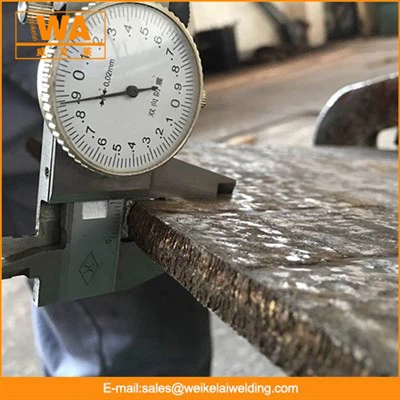
Wear and tear is another common sign that a part needs welding recondition. Parts that are in constant use, especially those that come into contact with other materials, can experience significant wear over time. This can lead to a reduction in the part's thickness, strength, and functionality.
Take rollers in industrial equipment as an example. Rollers are used in a wide range of applications, from conveyor belts to manufacturing machinery. The constant friction and pressure they endure can cause the surface of the rollers to wear down. When you start to notice that the rollers are becoming thinner or have uneven surfaces, it's time to consider Roller Welding Repair. By welding reconditioning the rollers, you can restore their original shape and size, and extend their lifespan.
3. Deformation
Deformation occurs when a part is subjected to excessive force or heat, causing it to change shape. This can happen in various situations, such as during a collision or when a part is exposed to high temperatures for an extended period.
In the case of metal parts, deformation can be a serious issue. It can affect the part's fit and function, and even compromise the safety of the equipment. For instance, if a metal frame in a construction machine becomes deformed, it may not be able to support the weight it's designed for. Welding recondition can be used to reshape the deformed part and restore its structural integrity. Welding Recondition On Roller can also address deformation issues in rollers, ensuring they roll smoothly and perform their intended function.
4. Leaks
Leaks are a telltale sign that a part needs welding recondition, especially in parts that are used to contain fluids or gases. Leaks can occur due to cracks, holes, or poor seals in the part.
In a hydraulic system, for example, a leak can cause a loss of pressure and reduce the system's efficiency. If you notice any signs of fluid leakage around a hydraulic cylinder or pipe, it's likely that there is a problem with the part. Welding recondition can be used to seal the leak and prevent further fluid loss. This not only saves you money on fluid replacement but also ensures the proper functioning of the hydraulic system.


5. Loss of Strength
A part may lose its strength over time due to factors such as corrosion, fatigue, or overloading. When a part loses its strength, it becomes more prone to failure, which can be dangerous and costly.
For example, in a bridge structure, the steel beams are subjected to constant stress from traffic and environmental factors. Over time, corrosion can weaken the beams, reducing their load-bearing capacity. If you suspect that a part has lost its strength, it's important to have it inspected by a professional. Welding recondition can be used to reinforce the part and restore its strength, ensuring the safety and reliability of the structure.
6. Unusual Noises or Vibrations
Unusual noises or vibrations can be a sign that something is wrong with a part. These noises and vibrations can be caused by a variety of factors, such as loose components, misaligned parts, or worn-out bearings.
In a machine, if you start to hear strange rattling or grinding noises, it could indicate that a part is in need of welding recondition. For example, if a gear is damaged or misaligned, it can cause the machine to vibrate excessively. By identifying the source of the noise or vibration and performing the necessary welding recondition, you can prevent further damage to the machine and ensure its smooth operation.
Why Choose Our Welding Recondition Services
As a supplier in the welding recondition business, we have the expertise and experience to handle all types of welding recondition projects. Our team of skilled welders uses the latest techniques and equipment to ensure high-quality results.
We understand that every part is unique, and we tailor our welding recondition services to meet your specific needs. Whether you need to repair a small crack in a metal part or completely recondition a large industrial component, we've got you covered.
Our services are not only cost-effective but also reliable. By choosing our welding recondition services, you can extend the lifespan of your parts, reduce downtime, and save money in the long run.
If you've noticed any of the signs mentioned above in your parts, don't hesitate to reach out to us. We're here to help you keep your equipment running smoothly and efficiently. Contact us today to discuss your welding recondition needs and let's work together to find the best solution for you.
References
- "Welding Handbook", American Welding Society
- "Industrial Maintenance and Troubleshooting", McGraw-Hill Education
- "Materials Science and Engineering: An Introduction", John Wiley & Sons