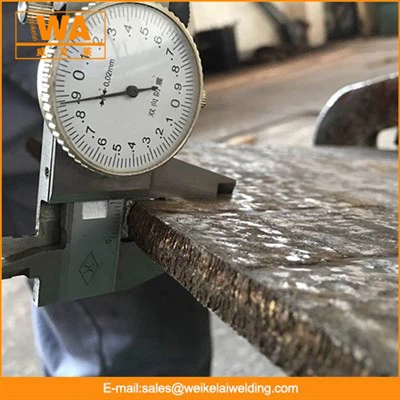
Roller welding repair is a critical service in research laboratories, where precision and reliability are of utmost importance. As a leading Roller Welding Repair supplier, I understand the unique requirements and challenges that come with this specialized field. In this blog post, I will delve into the key requirements for roller welding repair in research laboratories, offering insights based on my extensive experience in the industry.
1. Precision and Accuracy
In research laboratories, rollers are often used in highly sensitive equipment and processes. Therefore, the welding repair must be carried out with the highest level of precision and accuracy. Even the slightest deviation can lead to significant errors in experimental results or damage to expensive equipment.

Material Selection
The choice of welding materials is crucial for achieving precise and accurate repairs. The filler metal must match the base material of the roller in terms of composition, strength, and other mechanical properties. This ensures that the repaired area has the same performance characteristics as the original roller. For example, if the roller is made of a high - strength alloy steel, the filler metal should also be a compatible alloy with similar strength and corrosion resistance.
Welding Techniques
Advanced welding techniques are required to ensure precision. Tungsten Inert Gas (TIG) welding is often preferred in research laboratory settings due to its ability to provide precise control over the welding process. TIG welding allows for a narrow heat - affected zone, which minimizes distortion and ensures that the dimensions of the roller are maintained within tight tolerances. Additionally, computer - controlled welding systems can be used to further enhance accuracy by precisely controlling the welding parameters such as current, voltage, and travel speed.
2. Quality Assurance
Research laboratories demand the highest quality in all aspects of their operations, and roller welding repair is no exception. A comprehensive quality assurance program is essential to ensure that the repaired rollers meet the required standards.
Non - Destructive Testing
Non - destructive testing (NDT) methods should be employed to inspect the welded area for any defects. Ultrasonic testing, radiographic testing, and magnetic particle testing are some of the commonly used NDT techniques. These methods can detect internal and surface defects such as cracks, porosity, and lack of fusion without damaging the roller. By using NDT, we can identify and rectify any potential issues before the roller is returned to service.
Documentation
Proper documentation is an important part of quality assurance. Every step of the welding repair process, from material selection to final inspection, should be documented. This includes details such as welding parameters, test results, and any corrective actions taken. Documentation not only provides a record of the repair but also helps in traceability and compliance with regulatory requirements.

3. Compatibility with Laboratory Environment
Research laboratories often have specific environmental conditions, such as cleanrooms or areas with strict temperature and humidity controls. The roller welding repair must be compatible with these conditions.
Cleanliness
In cleanroom environments, the welding process must be carried out in a way that minimizes the generation of contaminants. Specialized welding equipment and techniques can be used to reduce the amount of spatter and fumes. Additionally, the repaired rollers should be thoroughly cleaned before being returned to the laboratory to prevent any contamination of the research environment.
Temperature and Humidity Resistance
Some research processes require rollers to operate under specific temperature and humidity conditions. The welding repair should ensure that the roller can withstand these environmental factors without degradation. For example, if the roller is used in a high - temperature environment, the welding materials and techniques should be selected to provide high - temperature resistance.
4. Customization
Research laboratory rollers often have unique designs and specifications. As a Roller Welding Repair supplier, we must be able to provide customized solutions to meet the specific needs of each laboratory.
Design Adaptation
We need to understand the original design of the roller and make any necessary adaptations during the repair process. This may involve modifying the shape, size, or surface finish of the roller to ensure compatibility with the existing equipment. For example, if the roller has a special profile for a specific research application, we must be able to replicate this profile accurately during the repair.
Specialized Coatings
In some cases, research laboratory rollers may require specialized coatings for improved performance. These coatings can provide properties such as wear resistance, corrosion resistance, or low friction. As part of the welding repair process, we can apply these coatings to the repaired area to ensure that the roller meets the specific requirements of the research project.
5. Safety
Safety is a top priority in research laboratories. The roller welding repair process must be carried out in a safe manner to protect both the technicians and the laboratory environment.
Welding Safety
Welding involves potential hazards such as electric shock, fire, and exposure to harmful fumes. Technicians must be properly trained in welding safety procedures and use appropriate personal protective equipment (PPE) such as welding helmets, gloves, and protective clothing. Additionally, the welding area should be equipped with proper ventilation systems to remove fumes and prevent the accumulation of harmful gases.
Equipment Safety
The repaired rollers must be tested to ensure that they are safe to use in the laboratory equipment. This includes checking for proper balance, alignment, and mechanical integrity. Any potential safety issues must be addressed before the roller is put back into service.

Our Services as a Roller Welding Repair Supplier
As a Roller Welding Repair supplier, we are committed to meeting all the requirements mentioned above. We have a team of highly skilled and experienced technicians who are trained in the latest welding techniques and quality control methods.

We offer a wide range of services, including Welding Rebuild On Table Liner, Repair Coal Mill Table Liners, and Welding Recondition On Roller. Our state - of - the - art welding facilities are equipped with advanced equipment to ensure precision and quality in every repair job.
We understand that research laboratories have tight schedules and high - stakes projects. That's why we strive to provide fast turnaround times without compromising on quality. Our quality assurance program ensures that every repaired roller meets or exceeds the industry standards.
If you are in need of roller welding repair services for your research laboratory, we invite you to contact us for a detailed discussion. Our team will be happy to understand your specific requirements and provide you with a customized solution. We are dedicated to helping you keep your research equipment in optimal condition and ensuring the success of your projects.
References
- AWS Welding Handbook, American Welding Society.
- ASME Boiler and Pressure Vessel Code, American Society of Mechanical Engineers.
- Nondestructive Testing Handbook, American Society for Nondestructive Testing.