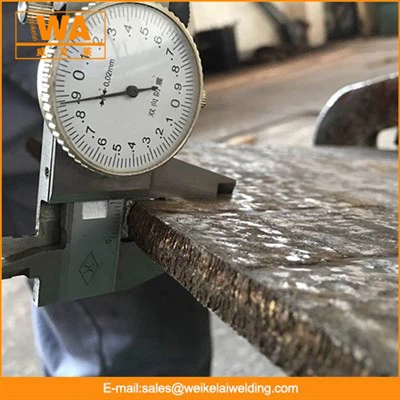
Hey there! As a hardfacing pipe supplier, I've seen firsthand how crucial quality control is in our industry. Hardfacing pipes are used in a wide range of applications, from mining and construction to oil and gas, where they need to withstand extreme wear, corrosion, and high temperatures. In this blog, I'll share some of the quality control measures we take to ensure our hardfacing pipes meet the highest standards.
Material Selection
The first step in quality control is choosing the right materials. We source high - grade base pipes and hardfacing alloys that are specifically designed for the intended application. For example, when making Wear Resistant Pipe, we select base pipes with good mechanical properties and hardfacing alloys that offer excellent wear resistance.
We work closely with our material suppliers to ensure the raw materials meet our strict specifications. We conduct incoming inspections on all materials, including chemical composition analysis, mechanical property testing, and visual inspections. This helps us catch any potential issues early on and ensures that only the best materials are used in our manufacturing process.
Manufacturing Process Control
The manufacturing process of hardfacing pipes is complex and requires strict control at every step. We use advanced welding techniques, such as submerged arc welding (SAW) and gas tungsten arc welding (GTAW), to apply the hardfacing layer onto the base pipe. These techniques allow us to achieve a uniform and high - quality hardfacing layer.
During the welding process, we monitor key parameters such as welding current, voltage, and travel speed. We also use automated welding equipment to ensure consistency and accuracy. Our welders are highly trained and certified, and they follow strict welding procedures to ensure the quality of each weld.
In addition to welding, we also perform other processes such as heat treatment and machining. Heat treatment is used to improve the mechanical properties of the hardfacing layer and the base pipe, while machining is used to achieve the required dimensions and surface finish. We have in - house quality control teams that inspect the pipes at various stages of the manufacturing process to ensure that all processes are carried out correctly.
Non - Destructive Testing (NDT)
Non - destructive testing is an essential part of our quality control process. We use a variety of NDT methods to detect any internal or surface defects in the hardfacing pipes without damaging them. Some of the common NDT methods we use include:
- Ultrasonic Testing (UT): This method uses high - frequency sound waves to detect internal defects such as cracks and porosity in the hardfacing layer and the base pipe.
- Radiographic Testing (RT): RT uses X - rays or gamma rays to create an image of the internal structure of the pipe. This method is very effective in detecting internal defects, especially in thick - walled pipes.
- Magnetic Particle Testing (MT): MT is used to detect surface and near - surface defects in ferromagnetic materials. It is a quick and easy method to detect cracks and other surface discontinuities.
- Liquid Penetrant Testing (PT): PT is used to detect surface - open defects in non - porous materials. It involves applying a liquid penetrant to the surface of the pipe, allowing it to seep into the defects, and then removing the excess penetrant and applying a developer to make the defects visible.
We perform NDT on all our hardfacing pipes to ensure that they are free from defects and meet the required quality standards. Any pipes that fail the NDT tests are either repaired or rejected.
Dimensional Inspection
Dimensional accuracy is crucial for hardfacing pipes, especially in applications where they need to fit precisely into a system. We use advanced measuring equipment, such as coordinate measuring machines (CMMs) and laser scanners, to measure the dimensions of the pipes.
We check the outer diameter, inner diameter, wall thickness, length, and straightness of the pipes to ensure that they meet the customer's specifications. Any deviations from the specified dimensions are carefully evaluated, and if necessary, the pipes are re - machined to bring them within the acceptable tolerance range.
Performance Testing
In addition to the above - mentioned quality control measures, we also conduct performance testing on our hardfacing pipes. We test the pipes for wear resistance, corrosion resistance, and mechanical properties to ensure that they can perform well in real - world applications.
For wear resistance testing, we use methods such as pin - on - disk testing and slurry erosion testing. These tests simulate the wear conditions that the pipes may encounter in service and allow us to evaluate the effectiveness of the hardfacing layer.
Corrosion resistance testing is performed by exposing the pipes to corrosive environments, such as saltwater or acidic solutions, for a certain period of time. We then evaluate the corrosion rate and the integrity of the hardfacing layer.
Mechanical property testing, such as tensile testing and hardness testing, is used to determine the strength and hardness of the pipes. These tests help us ensure that the pipes can withstand the mechanical stresses they will be subjected to in service.
Quality Assurance Documentation
We maintain detailed quality assurance documentation for each batch of hardfacing pipes we produce. This documentation includes material certificates, welding procedure specifications (WPS), inspection reports, and test results.


The quality assurance documentation provides traceability and transparency, allowing our customers to have full confidence in the quality of our products. We also work closely with our customers to understand their specific requirements and provide them with customized quality control plans and documentation.
Customized Solutions for Different Applications
We understand that different applications have different requirements for hardfacing pipes. That's why we offer customized solutions to meet the specific needs of our customers. Whether it's a Bent Cladding Pipe for a complex piping system or a Wear Resistant Straight Pipe for a high - wear application, we can design and manufacture pipes that are tailored to the customer's requirements.
We work closely with our customers from the initial design stage to the final delivery of the product. Our engineering team will analyze the customer's application and recommend the most suitable materials, hardfacing alloys, and manufacturing processes. We also provide technical support and after - sales service to ensure that our customers are satisfied with our products.
Conclusion
Quality control is at the heart of our hardfacing pipe manufacturing business. By implementing strict quality control measures at every stage of the process, from material selection to performance testing, we ensure that our hardfacing pipes meet the highest standards of quality and reliability.
If you're in the market for high - quality hardfacing pipes, we'd love to hear from you. Whether you have a small - scale project or a large - scale industrial application, we have the expertise and resources to provide you with the right solution. Contact us today to discuss your requirements and start a partnership that will bring you long - term value.
References
- ASME Boiler and Pressure Vessel Code
- API Standards for Oil and Gas Industry
- AWS Welding Codes and Standards