Hey there! I'm a supplier in the welding recondition business, and today I wanna chat about the environmental impacts of welding recondition. It's not just about fixing stuff up; it's also about how our work affects the planet.
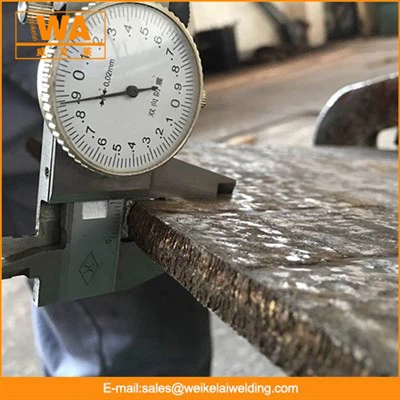
Let's start with the basics. Welding recondition involves using welding techniques to repair, rebuild, or restore various parts and equipment. For example, we often work on things like Repair Coal Mill Table Liners. These liners are crucial in coal mills, and instead of replacing them entirely, we can use welding to bring them back to life.


One of the major environmental benefits of welding recondition is the reduction of waste. Think about it. If we didn't have the option to recondition parts, we'd end up throwing a whole lot of stuff into landfills. For instance, when a roller in a machine starts to wear out, instead of tossing it away, we can do a Welding Rebuild On Roller. This not only saves the cost of buying a new roller but also keeps tons of metal out of landfills. Landfills are a huge environmental problem. They take up a lot of space, and the waste in them can release harmful chemicals and greenhouse gases over time. By reusing and reconditioning parts through welding, we're doing our part to reduce the amount of waste that ends up in these landfills.
Another aspect is the conservation of resources. Mining and producing new metal products require a significant amount of energy and natural resources. When we recondition parts through welding, we're essentially extending the lifespan of existing materials. This means we don't need to mine as much ore, which in turn reduces the environmental impact associated with mining operations. Mining can cause deforestation, soil erosion, and water pollution. It also consumes a large amount of energy, mainly from fossil fuels, which contribute to climate change. By focusing on welding recondition, we're making a more sustainable choice.
However, welding recondition isn't all sunshine and rainbows when it comes to the environment. There are some negative impacts that we need to be aware of and work on minimizing. One of the main issues is air pollution. Welding produces fumes and gases that can be harmful to both the environment and human health. These fumes contain things like metal oxides, ozone, and nitrogen oxides. Metal oxides can cause respiratory problems, and ozone and nitrogen oxides are major contributors to smog and acid rain.
To deal with this, we need to have proper ventilation systems in place. In our workshop, we've invested in high - quality ventilation equipment that can capture and filter out the harmful fumes. This not only protects our workers but also reduces the amount of pollutants released into the atmosphere. We also make sure to follow all the safety and environmental regulations regarding air quality.
Noise pollution is another concern. Welding can be a noisy process, especially when using certain types of welding equipment. The constant loud noise can be a nuisance to nearby residents and can also have an impact on wildlife in the area. To address this, we use noise - reducing measures such as sound - proof enclosures around our welding areas. This helps to keep the noise levels down and minimize the disturbance to the surrounding environment.
Welding also requires a significant amount of energy. Most of the energy we use comes from the electrical grid, which in many cases is still powered by fossil fuels. This means that our welding operations contribute to greenhouse gas emissions. To reduce our energy consumption, we're constantly looking for ways to improve the efficiency of our welding equipment. We're also exploring the use of renewable energy sources. For example, we're considering installing solar panels on our workshop roof to generate some of the electricity we need for welding. This would not only reduce our carbon footprint but also save us money on energy costs in the long run.
In addition to the environmental impacts during the welding process, there's also the issue of waste management of welding consumables. Welding rods, electrodes, and shielding gas cylinders are all consumables that we use in our work. If not managed properly, these can end up as waste. We make sure to recycle as many of these consumables as possible. For example, used welding rods can often be recycled to recover the metal, and empty gas cylinders can be refilled or recycled.
Now, let's talk about the economic and environmental benefits of our Welding Recondition On Roller services. When a company chooses to recondition a roller instead of buying a new one, they save a lot of money. This money can then be reinvested in other areas of the business. From an environmental perspective, as I mentioned earlier, it reduces waste and conserves resources. It's a win - win situation for both the company and the planet.
Overall, the environmental impacts of welding recondition are a mixed bag. There are clear benefits in terms of waste reduction, resource conservation, and cost - savings. But there are also some negative impacts like air pollution, noise pollution, and energy consumption that we need to address. At our company, we're committed to being as environmentally friendly as possible. We're constantly looking for new and better ways to reduce our environmental footprint while still providing high - quality welding recondition services.
If you're in the market for welding recondition services, whether it's for coal mill table liners, rollers, or any other equipment, we'd love to hear from you. Our team of experienced welders can provide you with top - notch reconditioning solutions that are both cost - effective and environmentally responsible. Contact us to start a conversation about your specific needs and how we can help you make the most sustainable choice for your business.
References
- Environmental Protection Agency. (2023). Welding Fume and Gas Emissions.
- International Journal of Sustainable Manufacturing. (2022). Resource Conservation through Welding Reconditioning.
- Occupational Safety and Health Administration. (2023). Noise Pollution in Welding Operations.