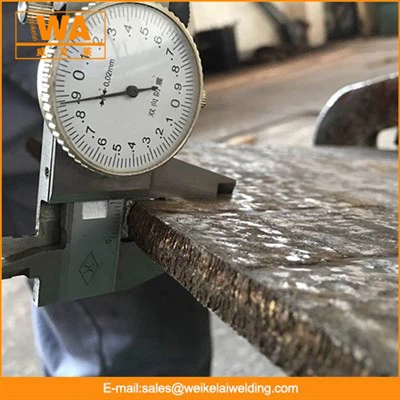
As a seasoned supplier of hardfaced pipes, I've witnessed firsthand the critical role these pipes play in various industries. Hardfacing is a process that involves applying a hard, wear-resistant material to the surface of a pipe to enhance its durability and performance. However, like any manufacturing process, hardfacing is not without its challenges. In this blog, I'll delve into the common defects that can occur in hardfaced pipes and discuss their potential causes and solutions.
Porosity
One of the most common defects in hardfaced pipes is porosity. Porosity refers to the presence of small holes or voids in the hardfacing layer. These pores can significantly reduce the hardness and wear resistance of the pipe, making it more susceptible to damage.
Causes of Porosity
- Inadequate Gas Shielding: During the hardfacing process, a shielding gas is used to protect the molten metal from atmospheric contamination. If the gas shielding is inadequate, oxygen and nitrogen can react with the molten metal, forming pores.
- Moisture in the Filler Material: Moisture in the filler material can also lead to porosity. When the filler material is heated, the moisture evaporates, creating bubbles that become trapped in the hardfacing layer.
- Improper Welding Parameters: Incorrect welding parameters, such as excessive heat input or slow travel speed, can cause the molten metal to become too fluid, resulting in porosity.
Solutions for Porosity
- Ensure Proper Gas Shielding: Check the gas flow rate and pressure regularly to ensure that the molten metal is adequately protected. Use high-quality shielding gas and make sure the gas nozzle is clean and free of blockages.
- Store Filler Material Properly: Keep the filler material in a dry environment to prevent moisture absorption. If the filler material has been exposed to moisture, it should be dried before use.
- Optimize Welding Parameters: Adjust the welding parameters to ensure that the molten metal has the right viscosity and solidifies properly. This may require some trial and error, but it's essential for minimizing porosity.
Cracking
Cracking is another significant defect that can occur in hardfaced pipes. Cracks can propagate through the hardfacing layer and into the base metal, compromising the integrity of the pipe and potentially leading to failure.
Causes of Cracking


- Residual Stress: During the hardfacing process, the rapid heating and cooling of the metal can create residual stress. If the residual stress exceeds the strength of the hardfacing layer, it can cause cracking.
- Mismatched Materials: Using a filler material that is not compatible with the base metal can also lead to cracking. The different thermal expansion coefficients of the two materials can cause stress to build up, resulting in cracks.
- Poor Welding Technique: Incorrect welding technique, such as improper bead placement or excessive weaving, can create weak points in the hardfacing layer, making it more prone to cracking.
Solutions for Cracking
- Relieve Residual Stress: Post-weld heat treatment can be used to relieve residual stress in the hardfaced pipe. This involves heating the pipe to a specific temperature and holding it there for a certain period of time before cooling it slowly.
- Select Compatible Materials: Choose a filler material that has similar properties to the base metal, including thermal expansion coefficient and chemical composition. Consult with a materials expert if necessary to ensure compatibility.
- Improve Welding Technique: Train welders to use proper welding techniques, such as consistent bead placement and appropriate weaving patterns. This can help to minimize stress concentration and reduce the risk of cracking.
Lack of Fusion
Lack of fusion occurs when the hardfacing layer does not bond properly to the base metal or to adjacent weld beads. This can result in a weak joint that is prone to separation and failure.
Causes of Lack of Fusion
- Insufficient Heat Input: If the heat input during the hardfacing process is too low, the filler material may not melt completely, resulting in poor fusion with the base metal.
- Contamination: Contaminants on the surface of the base metal, such as rust, oil, or dirt, can prevent the filler material from bonding properly.
- Incorrect Welding Angle: Using an incorrect welding angle can cause the filler material to be deposited in a way that does not promote good fusion.
Solutions for Lack of Fusion
- Increase Heat Input: Adjust the welding parameters to increase the heat input and ensure that the filler material melts completely. However, be careful not to overheat the metal, as this can lead to other defects.
- Clean the Base Metal: Thoroughly clean the surface of the base metal before hardfacing to remove any contaminants. This can be done using a wire brush, grinding wheel, or chemical cleaner.
- Use the Correct Welding Angle: Train welders to use the correct welding angle for the specific hardfacing process and joint configuration. This will help to ensure that the filler material is deposited in a way that promotes good fusion.
Hardness Variation
Hardness variation within the hardfacing layer can also be a problem. Inconsistent hardness can lead to uneven wear and premature failure of the pipe.
Causes of Hardness Variation
- Inconsistent Filler Material Composition: If the composition of the filler material varies from batch to batch, it can result in hardness variation in the hardfacing layer.
- Improper Heat Treatment: Inadequate or inconsistent heat treatment can cause the hardness of the hardfacing layer to vary.
- Welding Process Variation: Variations in the welding process, such as changes in travel speed or current, can affect the cooling rate of the molten metal and lead to hardness variation.
Solutions for Hardness Variation
- Use High-Quality Filler Material: Source filler material from a reputable supplier and ensure that it has a consistent composition. Conduct regular quality control checks on the filler material to verify its properties.
- Optimize Heat Treatment: Develop a proper heat treatment process and ensure that it is followed consistently. Monitor the temperature and time during heat treatment to ensure that the hardfacing layer achieves the desired hardness.
- Standardize the Welding Process: Establish standard operating procedures for the hardfacing process and train welders to follow them precisely. This will help to minimize variations in the welding process and ensure consistent hardness in the hardfacing layer.
Conclusion
In conclusion, while hardfaced pipes offer many benefits in terms of durability and wear resistance, they are prone to several common defects. By understanding the causes of these defects and implementing appropriate solutions, we can minimize their occurrence and ensure the quality of our hardfaced pipes.
At our company, we are committed to providing high-quality Hardfacing Abrasion Elbows, Hardfacing Abrasion Pipe, and Wear Resistant Pipe. We use advanced manufacturing techniques and strict quality control measures to ensure that our products meet the highest standards.
If you are in the market for hardfaced pipes and are looking for a reliable supplier, we invite you to contact us for a consultation. Our team of experts can help you select the right product for your specific application and provide you with the support you need to ensure its successful installation and operation.
References
- AWS D1.1/D1.1M:2020, Structural Welding Code - Steel
- ASME B31.3:2022, Process Piping
- ISO 15614-1:2017, Specification and qualification of welding procedures for metallic materials - Welding procedure test - Part 1: Arc and gas welding of steels and arc welding of nickel and nickel alloys