What are the anti - static properties of wear resistant pipes?
As a prominent wear resistant pipe supplier, I've witnessed firsthand the diverse needs and challenges our clients face in various industries. One aspect that often comes under scrutiny is the anti - static properties of wear resistant pipes. In this blog, we'll delve deep into this topic, exploring the significance, mechanisms, and practical implications of anti - static features in wear resistant pipes.
The Significance of Anti - Static Properties in Wear Resistant Pipes
In many industrial applications, wear resistant pipes are used to transport materials such as powders, granules, and slurries. During the transportation process, friction between the pipe wall and the conveyed materials can generate static electricity. Static electricity accumulation can lead to a series of problems.
Firstly, static charges can attract dust and other particulate matter to the pipe surface. This not only affects the cleanliness of the pipes but also can cause blockages over time, reducing the efficiency of material transportation. For example, in a cement manufacturing plant, if the wear resistant pipes used to transport cement powder accumulate static charges, the powder may stick to the pipe walls, leading to reduced flow rates and potential production bottlenecks.
Secondly, static electricity can pose a safety hazard. In environments where flammable or explosive substances are present, a static spark can trigger a fire or explosion. For instance, in the oil and gas industry, when transporting flammable liquids or gases through wear resistant pipes, any static spark can have catastrophic consequences. Therefore, anti - static properties in wear resistant pipes are crucial for ensuring the safety of personnel and equipment.
Mechanisms of Anti - Static Properties in Wear Resistant Pipes
There are several ways to endow wear resistant pipes with anti - static properties. One common method is to use conductive materials in the pipe manufacturing process. Conductive polymers or metals can be incorporated into the pipe material to provide a path for the static charges to dissipate.
For example, some wear resistant pipes are made with a composite material that includes a conductive carbon fiber layer. The carbon fibers act as conductors, allowing the static charges to flow along the pipe wall and be safely discharged to the ground. Another approach is to coat the inner surface of the pipe with an anti - static coating. These coatings typically contain conductive additives that help to neutralize the static charges generated during material flow.
In addition to using conductive materials and coatings, the design of the pipe can also influence its anti - static properties. Smooth inner surfaces can reduce friction between the pipe and the conveyed materials, thereby minimizing the generation of static electricity. Pipes with proper grounding systems can also ensure that any static charges are quickly and effectively removed.
Anti - Static Properties of Our Wear Resistant Pipe Products
As a wear resistant pipe supplier, we offer a range of products with excellent anti - static properties. Our Cco Abrasion Pipe is one such example. This pipe is made from a special composite material that combines high wear resistance with good conductivity. The conductive components in the material allow static charges to be quickly dissipated, reducing the risk of static - related problems.
Our Hardfacing Abrasion Pipe also features advanced anti - static technology. The hardfacing process not only enhances the pipe's wear resistance but also helps to improve its anti - static performance. The hardfacing layer contains conductive elements that can effectively conduct static charges away from the pipe surface.
For applications that require pipes with complex geometries, our Abrasion Resistant Elbows are designed to maintain their anti - static properties. The smooth inner surface of the elbows reduces friction, and the conductive materials used in their construction ensure that static charges are properly managed.
Practical Applications and Case Studies
Let's take a look at some practical applications where our anti - static wear resistant pipes have been successfully used. In a coal - fired power plant, our wear resistant pipes are used to transport coal powder from the storage silos to the boilers. The anti - static properties of the pipes prevent the coal powder from sticking to the pipe walls, ensuring a smooth and efficient flow. This has significantly reduced maintenance costs and improved the overall efficiency of the power generation process.
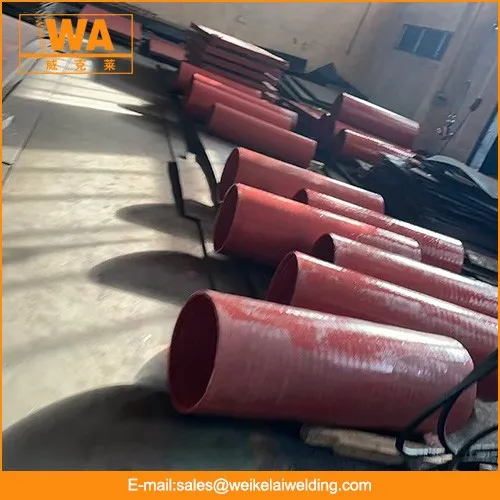

In a chemical processing plant, our pipes are used to transport various chemical substances. The anti - static features of the pipes have eliminated the risk of static - induced fires and explosions, providing a safe working environment for the plant operators.
Choosing the Right Anti - Static Wear Resistant Pipe
When choosing an anti - static wear resistant pipe, several factors need to be considered. Firstly, the type of material being transported is crucial. Different materials generate different levels of static electricity, so the pipe's anti - static performance should be matched to the specific application.
Secondly, the operating environment also plays an important role. In harsh environments with high temperatures, high pressures, or corrosive substances, the pipe needs to have not only good anti - static properties but also excellent wear resistance and chemical resistance.
Finally, the cost - effectiveness of the pipe is also a consideration. While it's important to invest in high - quality anti - static pipes, the cost should be balanced with the expected benefits.
Conclusion
In conclusion, the anti - static properties of wear resistant pipes are of great significance in many industrial applications. They can prevent material blockages, ensure safety, and improve the overall efficiency of material transportation. As a wear resistant pipe supplier, we are committed to providing our customers with high - quality pipes that offer excellent anti - static performance.
If you're in need of wear resistant pipes with anti - static properties for your industrial applications, we invite you to contact us for a detailed discussion. Our team of experts can help you choose the right pipe solution based on your specific requirements.
References
- "Industrial Pipe Engineering Handbook", John Wiley & Sons, 2018.
- "Materials Science for Pipe Applications", CRC Press, 2020.
- "Safety Standards for Static Electricity in Industrial Pipelines", International Electrotechnical Commission, 2019.