Hey there! I'm from a Roller Welding Repair supplier, and I've been in this industry for quite a while. Welding repair on rollers is a crucial process, but what comes after the welding is just as important. In this blog, I'll share with you the after - care measures for rollers after welding repair.
1. Initial Inspection
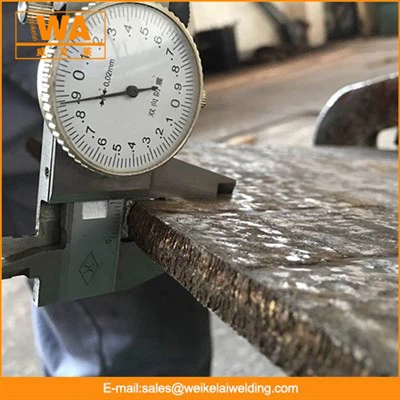
Right after the welding repair is done, the first thing we need to do is a thorough visual inspection. We look for any obvious signs of defects such as cracks, porosity, or uneven weld beads. These defects can compromise the integrity of the roller and lead to future problems.
For example, if there are cracks in the weld, it can cause stress concentration points. Over time, these points can expand under normal operating conditions, leading to a complete failure of the roller. We also check the dimensions of the roller to make sure it meets the required specifications. Any deviation in size can affect how the roller functions in the machinery it's installed in.
2. Heat Treatment
Heat treatment is a vital after - care step. After welding, the roller has gone through a significant thermal cycle, which can result in residual stresses. These stresses can make the roller more prone to cracking and reduce its overall strength.
We usually perform a stress - relieving heat treatment. This involves heating the roller to a specific temperature and then holding it there for a set period. The temperature and time depend on the material of the roller and the type of welding repair. For instance, for steel rollers, the stress - relieving temperature might be around 550 - 650 degrees Celsius, and we'll hold it at that temperature for a few hours.
This process helps to relax the internal stresses in the roller, making it more stable and less likely to fail prematurely. You can find more detailed information about the general welding recondition process on rollers at Welding Recondition On Roller.
3. Surface Finishing
Once the heat treatment is completed, the next step is surface finishing. The welded area might have a rough surface due to the welding process, and this can cause issues such as increased friction and wear when the roller is in use.
We use different methods for surface finishing, such as grinding and polishing. Grinding helps to remove any excess weld material and smooth out the surface. After grinding, we can further polish the surface to achieve a better finish. A smooth surface not only reduces friction but also makes the roller more resistant to corrosion.
In some cases, especially for rollers used in high - precision applications, we might also apply a coating. The coating can provide additional protection against wear, corrosion, and other environmental factors.
4. Non - Destructive Testing
Non - destructive testing (NDT) is an essential part of the after - care process. It allows us to detect any internal defects in the roller that might not be visible during the visual inspection.
There are several NDT methods we use, such as ultrasonic testing and magnetic particle testing. Ultrasonic testing uses high - frequency sound waves to detect internal flaws in the roller. If there are any cracks or other defects inside the roller, the sound waves will be reflected differently, and we can detect these variations using specialized equipment.
Magnetic particle testing is mainly used for ferromagnetic materials. We apply a magnetic field to the roller and then sprinkle magnetic particles on the surface. If there are any surface or near - surface defects, the magnetic particles will accumulate at these points, making the defects visible.
NDT helps us to ensure the quality and safety of the roller before it's put back into service. You can learn more about roller welding repair in general at Roller Welding Repair.
5. Lubrication and Maintenance
Once the roller has passed all the tests and is ready for use, proper lubrication and maintenance are crucial. Lubrication reduces friction between the roller and other components in the machinery.
We need to choose the right type of lubricant based on the operating conditions of the roller. For example, if the roller is operating in a high - temperature environment, we'll need a lubricant with high - temperature resistance.
Regular maintenance is also necessary. This includes checking the lubricant level, inspecting the roller for any signs of wear or damage, and tightening any loose bolts or connections. By performing regular maintenance, we can extend the lifespan of the roller and prevent costly breakdowns.
6. Monitoring and Record - Keeping
After the roller is installed and in operation, we need to monitor its performance. We can use various sensors and monitoring systems to measure parameters such as temperature, vibration, and rotational speed.
Abnormal changes in these parameters can indicate potential problems with the roller. For example, an increase in vibration might suggest that there is uneven wear or a misalignment in the roller. By detecting these issues early, we can take corrective actions before the problem becomes more serious.
It's also important to keep records of the roller's history, including the welding repair details, after - care measures, and monitoring results. These records can be very useful for future reference and can help us to improve our repair and maintenance processes.


7. Application - Specific Considerations
Different applications require different after - care measures. For example, rollers used in coal mills have unique requirements. Coal mill table liners are subject to severe wear and abrasion due to the grinding of coal.
If we're repairing coal mill table liners, we need to pay special attention to the hardness and wear resistance of the repaired area. We might use specific welding materials and techniques to ensure that the repaired liners can withstand the harsh operating conditions. You can find more information about repairing coal mill table liners at Repair Coal Mill Table Liners.
In conclusion, the after - care measures for rollers after welding repair are a comprehensive process that involves inspection, heat treatment, surface finishing, testing, lubrication, monitoring, and application - specific considerations. By following these steps, we can ensure that the rollers are in optimal condition and have a long service life.
If you're in need of roller welding repair services or have any questions about the after - care measures, feel free to contact us for a detailed discussion. We're always here to provide you with the best solutions for your roller repair needs.
References
- Welding Handbook, American Welding Society
- Machinery's Handbook, Industrial Press Inc.