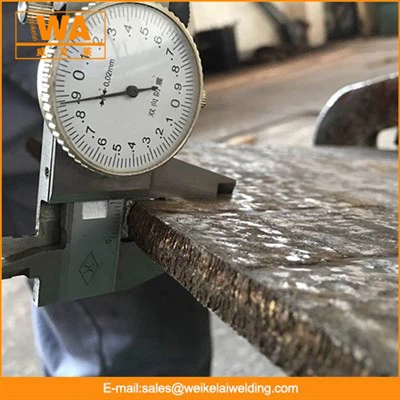
Wear plates are essential components in various industries where protection against wear, abrasion, and impact is crucial. As a wear plate supplier, I've had the opportunity to work with different types of wear plates, each with its unique characteristics and applications. In this blog, I'll share insights into the different types of wear plates available in the market.
Abrasion Resistant Steel Plate
Abrasion resistant steel plates are among the most commonly used wear plates. They are designed to withstand the wear caused by friction and the scraping of hard particles. These plates are made from high - strength steel alloys that have been heat - treated to enhance their hardness and wear resistance.


The main advantage of Abrasion Resistant Steel Plate is their versatility. They can be used in a wide range of applications, such as mining equipment, earth - moving machinery, and conveyor systems. For example, in a mining operation, the buckets of excavators and the liners of ore chutes are often made from abrasion resistant steel plates. These plates can significantly extend the service life of the equipment, reducing downtime and maintenance costs.
The hardness of abrasion resistant steel plates is usually measured on the Brinell hardness scale. The higher the Brinell hardness number, the more resistant the plate is to abrasion. Common hardness levels for these plates range from 300 to 600 Brinell. However, it's important to note that as the hardness increases, the plate may become more brittle, so a balance needs to be struck depending on the specific application.
Hardfacing Processed Plate
Hardfacing is a process where a hard, wear - resistant material is applied to the surface of a base metal to improve its wear resistance. Hardfacing Processed Plate is created using this technique. The hardfacing material can be a variety of alloys, including tungsten carbide, chromium carbide, and cobalt - based alloys.
One of the key benefits of hardfacing processed plates is that they can be tailored to specific applications. For instance, if an application requires high - temperature wear resistance, a hardfacing alloy with good thermal stability can be selected. In a steel mill, the rolls that come into contact with the hot steel are often hardfaced to withstand the extreme heat and abrasion.
The hardfacing process can be done using different methods, such as welding, thermal spraying, and laser cladding. Each method has its own advantages and limitations. Welding is a common method as it provides a strong bond between the hardfacing material and the base metal. However, it may require more skill and can cause some distortion of the base plate. Thermal spraying is a faster process and can be used to apply thinner layers of hardfacing material, but the bond strength may not be as high as that achieved by welding.
Chromium Carbide Overlay
Chromium carbide overlay (CCO) plates are a specialized type of wear plate. They consist of a layer of chromium carbide particles embedded in a matrix of steel or other alloys. Chromium Carbide Overlay plates offer excellent abrasion resistance, especially in applications where there is sliding or abrasive wear.
The chromium carbide particles in the overlay provide a hard and wear - resistant surface. The matrix material holds the particles in place and provides some toughness to the plate. This combination makes CCO plates suitable for use in industries such as cement production, power generation, and waste management. In a cement plant, the pipes that transport the raw materials and the liners of the crushers are often made from CCO plates.
The thickness of the chromium carbide overlay can vary depending on the application. Thicker overlays generally offer better wear resistance but may also be more expensive. The overlay can be applied to different base metals, such as carbon steel or stainless steel, depending on the requirements of the application.
Ceramic - Lined Wear Plates
Ceramic - lined wear plates are another option for applications that require extreme wear resistance. These plates consist of ceramic tiles or blocks that are bonded to a steel backing plate. Ceramics are known for their high hardness and chemical inertness, making them ideal for use in harsh environments.
In the chemical industry, where there is a lot of corrosive and abrasive wear, ceramic - lined wear plates can be used to protect the equipment. The ceramic lining can resist the attack of chemicals and the abrasion caused by the flow of abrasive materials. However, ceramics are brittle, so the design of the ceramic - lined plate needs to take into account the potential for cracking.
The bonding between the ceramic and the steel backing plate is crucial. Different bonding methods, such as epoxy bonding and mechanical fastening, can be used. Epoxy bonding provides a good seal and can help to absorb some of the shock, while mechanical fastening offers a more secure attachment but may require more complex installation.
Polyurethane - Coated Wear Plates
Polyurethane - coated wear plates are suitable for applications where there is impact and abrasion. Polyurethane is a polymer that has good elasticity and wear resistance. When applied as a coating to a steel plate, it can provide a cushioning effect and protect the plate from damage.
In the material handling industry, where there is a lot of impact when loading and unloading materials, polyurethane - coated wear plates can be used. The polyurethane coating can absorb the energy of the impact, reducing the wear on the steel plate. Additionally, polyurethane is resistant to many chemicals, so it can also be used in applications where there is a risk of chemical exposure.
The thickness of the polyurethane coating can be adjusted according to the requirements of the application. Thicker coatings generally offer better impact resistance but may also increase the cost. The coating can be applied using different methods, such as spraying or dipping.
Choosing the Right Wear Plate
When choosing the right wear plate for an application, several factors need to be considered. The type of wear (abrasion, impact, corrosion) is the most important factor. For example, if the wear is mainly due to abrasion, an abrasion resistant steel plate, a CCO plate, or a ceramic - lined plate may be suitable. If there is a lot of impact, a hardfacing processed plate or a polyurethane - coated plate may be a better choice.
The operating environment also plays a role. In high - temperature applications, hardfacing processed plates or ceramic - lined plates may be required. In corrosive environments, ceramic - lined plates or plates with a corrosion - resistant coating may be needed.
Cost is another consideration. Different types of wear plates have different price points. It's important to balance the cost with the expected service life and performance of the plate. Sometimes, a more expensive wear plate may be a better long - term investment as it can reduce downtime and maintenance costs.
As a wear plate supplier, I understand the importance of choosing the right wear plate for your specific needs. Whether you're in the mining, manufacturing, or any other industry that requires wear protection, I can help you select the most suitable wear plate. If you're interested in learning more about our wear plate products or would like to discuss your specific requirements, feel free to reach out to me. I'm here to assist you in finding the best solution for your wear protection needs.
References
- ASM Handbook Volume 13A: Corrosion: Fundamentals, Testing, and Protection
- Wear Control Handbook: ASM International
- Handbook of Hardfacing Technology: ASM International